[카테고리:] Asian Culture & Travel

  • The Fragrant Steam of Chinese Tea Smoking: How Lapsang Souchong Captures Fire and Forest

    How did soldiers marching through a Fujian village create this tea by accident?

    Crack open a tin of Lapsang Souchong and the first thing that hits you isn’t tea at all. It’s woodsmoke, thick and resinous, like standing too close to a campfire in a pine forest. For a tea that now sits in specialty shops next to delicate greens and floral oolongs, its origin story is refreshingly unglamorous.

    Traditionally, the tea is said to have emerged in the Wuyi Mountains of Fujian province, where local tea makers found their drying sheds occupied by passing troops during a period of unrest. With no time to wait for the usual slow drying process, farmers reportedly built fires from local pine to speed things along and get the leaves out the door before the buyers arrived.

    The result surprised everyone. Instead of ruining the batch, the pine smoke had infused the leaves with a flavor nobody had tasted before—sweet, tarry, faintly like dried longan fruit wrapped in campfire ash. What began as an emergency workaround became, over generations, a deliberate craft.

    Origin: Tongmu village, Wuyi Mountains, Fujian province

    Region: Southern China, particularly Fujian’s mountainous tea belt

    Era: Traditionally dated to the late Ming or early Qing period

    Best known for: Its distinctive pinewood-smoked aroma and taste

    Core value: Transforming a practical necessity into a defining regional flavor

    Photo by Max Chen on Unsplash

    Processing method: Withering, rolling, oxidation, then smoking over pine fire

    Why does pine smoke specifically define this tea’s character?

    Not just any wood will do. The pine used in traditional Lapsang Souchong production grows locally in the Wuyi range, and its resin content matters as much as its scent. Burning pine releases oils that cling to the tea leaves during the drying stage, embedding a flavor that black tea alone could never produce.

    This is where the tea earns its subtitle—fire and forest in a single cup. The forest supplies the raw material and the mountain air that shapes the tea bushes; the fire supplies transformation. Neither element works without the other, which is part of why this tea resists easy imitation elsewhere.

    Farmers outside the original growing region have tried smoking other black teas with pine to replicate the effect. The results are often close but rarely identical, since the local pine variety and the mineral-rich mountain soil both leave fingerprints that are difficult to separate from geography.

    How is the tea actually smoked, step by step?

    The process begins like most black tea production: leaves are withered, rolled, and allowed to oxidize until they darken. What sets Lapsang Souchong apart happens after oxidation, when the leaves move into a smoking room built above a pine fire.

    Here, the leaves rest on bamboo trays suspended over smoldering pinewood, absorbing smoke slowly over several hours. Workers monitor the fire carefully, since too much heat can scorch the leaves while too little leaves the smoke flavor thin and unconvincing.

    Once the smoking finishes, the leaves are left to rest so the smoky notes settle rather than overwhelm. A well-made batch balances the char with the tea’s natural sweetness, rather than tasting like pure ash.

    Photo by zhang kaiyv on Unsplash

    What makes brewing Lapsang Souchong different from brewing other black teas?

    Because the smoke flavor is strong, restraint matters more here than with most teas. A shorter steep, around three minutes in water just off the boil, lets the tea’s sweetness and smoke sit together instead of one drowning out the other.

    Some drinkers prefer a smaller amount of leaf per cup than they would use for a standard black tea, simply because the smokiness carries so much weight on its own. Milk is optional, though many purists skip it entirely to let the pine notes stand unfiltered.

    Reusing the leaves for a second steep is common practice, and interestingly, the second cup often reveals a gentler, more layered flavor once the initial smoke has softened.

    Why did this tea find such an unlikely following in the West?

    Lapsang Souchong reached European traders centuries ago, and its bold, unfamiliar profile made it stand out among the more delicate teas being shipped from China at the time. Some historians suggest its smoky punch traveled well over long sea voyages, retaining flavor even after months in a ship’s hold.

    That same boldness later made it a favorite ingredient in blended teas and even in certain whisky and cocktail recipes, where its campfire quality adds depth without needing much else. It’s a strange kind of crossover appeal for a tea that started as a practical shortcut in a mountain village.

    Today, drinking it feels less like sipping tea and more like tasting a specific place—the pine forests, the smoke rooms, the mountain air of Wuyi all compressed into a single steaming cup.

    What’s the best way to start exploring this tea yourself?

    If you’ve never tried Lapsang Souchong, start small. Buy a modest quantity from a shop that can tell you which region it comes from, since quality and authenticity vary widely under this name.

    Brew a single cup on its own, without food or distractions, and pay attention to how the smoke fades into sweetness by the time you finish. That shift—from fire to something almost fruity—is the whole point of this tea, and it’s easy to miss if you’re not paying attention the first time.

    Some teas taste of gardens; this one tastes of the fire that saved the harvest.

  • The Woven Shade of Korean Daenggi: Ribboned Braids as Cultural Identity

    Photo by Elist Nguyen on Unsplash

    A girl in a Joseon-era village sits still while her mother combs her hair a hundred strokes before dawn. The hair is gathered into a single thick braid running straight down the spine, and at its very end, a strip of dyed silk is tied into a knot that will stay there all day. That strip is not an accessory chosen for flair — it is a public statement about who this girl is, how old she might be, and whether she is available for marriage.

    Origin: Traditional Korean hair ribbon used to bind braided hair

    Region: Korean peninsula, worn across social classes with regional variation

    Era: Traditionally associated with the Joseon period, though braid-tying customs predate it

    Best known for: Signaling age, marital status, and ceremonial role through color and style

    Core value: Identity communicated through appearance rather than speech

    How did a length of ribbon come to define a Korean identity?

    Before marriage, both girls and boys in traditional Korea typically wore their hair in a single long braid rather than the coiled buns associated with married adults. The daenggi was tied at the tip of that braid, and its presence alone marked someone as unmarried. Removing it and changing the hairstyle was not a fashion choice — it was a life-stage transition.

    This is what makes the daenggi different from ordinary hair accessories. It did not decorate an already-fixed identity. It participated in constructing that identity, visible to anyone passing on the street.

    Photo by Photos of Korea on Unsplash

    Why did the color of a daenggi say what words did not?

    A young child might wear a simple black or dark daenggi for everyday life, functional and unremarkable. As a girl grew older and approached the age when marriage became a real prospect, red was traditionally favored, a color linked to vitality and to warding off misfortune.

    Certain ceremonial forms carried more specific meaning. The dwikkoji, worn at the nape rather than the very end of the braid, and other regional variants added layers of nuance that a local observer could read instantly — age bracket, family standing, even the occasion being marked that day.

    None of this required a single spoken word. The ribbon did the introducing.

    What role did the daenggi play on a Korean wedding day?

    The most elaborate version of the ribbon appeared only once in a woman’s life, at her wedding. The dotturak daenggi was wide, richly embroidered, and long enough to drape down the back over the bridal robe, worn alongside the tall jokduri headpiece.

    This was not the same modest strip a girl wore as a child. It was heavier, more ornamented, almost architectural in how it framed the body from behind. Guests watching the ceremony understood exactly what was happening the moment they saw it.

    How did marriage change a woman’s relationship to the daenggi?

    After the wedding, the single braid disappeared entirely. Hair was coiled into a low bun called jjokjin-meori and fixed in place with a binyeo, a long ornamental pin, often made of silver or jade depending on the family’s means.

    The daenggi era of her life was, quite literally, tied off. This shift mattered enough that a woman’s hairstyle alone could tell a stranger her marital status without any further inquiry — a system of visual shorthand that ran through much of traditional Korean dress.

    Photo by zero take on Unsplash

    How does the daenggi live on in Korea today?

    Few people braid their hair with a daenggi as daily practice now, but the ribbon has not disappeared. Folk festivals, hanbok experience studios, and Dano-related celebrations still feature it, often worn by children or performers reenacting village life.

    Historical dramas have also brought renewed attention to the daenggi, prompting younger viewers to search out what the different colors and styles actually meant. Some modern hanbok designers now reinterpret the ribbon as a subtle accessory for contemporary outfits, keeping the shape recognizable while loosening its old social rules.

    What survives is not the strict signaling system, but the idea behind it: that something as simple as a ribbon can hold a full narrative about a person’s stage of life.

    What can the daenggi teach us about reading identity through appearance?

    Modern fashion often treats accessories as purely aesthetic, chosen for how they look rather than what they announce. The daenggi worked the opposite way — its beauty existed alongside a clear social function.

    Looking closely at an object like this changes how you notice details in old photographs, museum textiles, or historical films. A ribbon tied one way instead of another was never accidental.

    If you want to experience this firsthand, look up a hanbok rental studio in Korea that offers traditional hairstyling with a daenggi, or search for footage of a Dano festival where the ribbon still appears in braided hairstyles. Pay attention to the color and placement — then you’ll be reading the same signals a Korean villager once read at a glance.

    A single ribbon once told strangers who you were before you spoke a word.

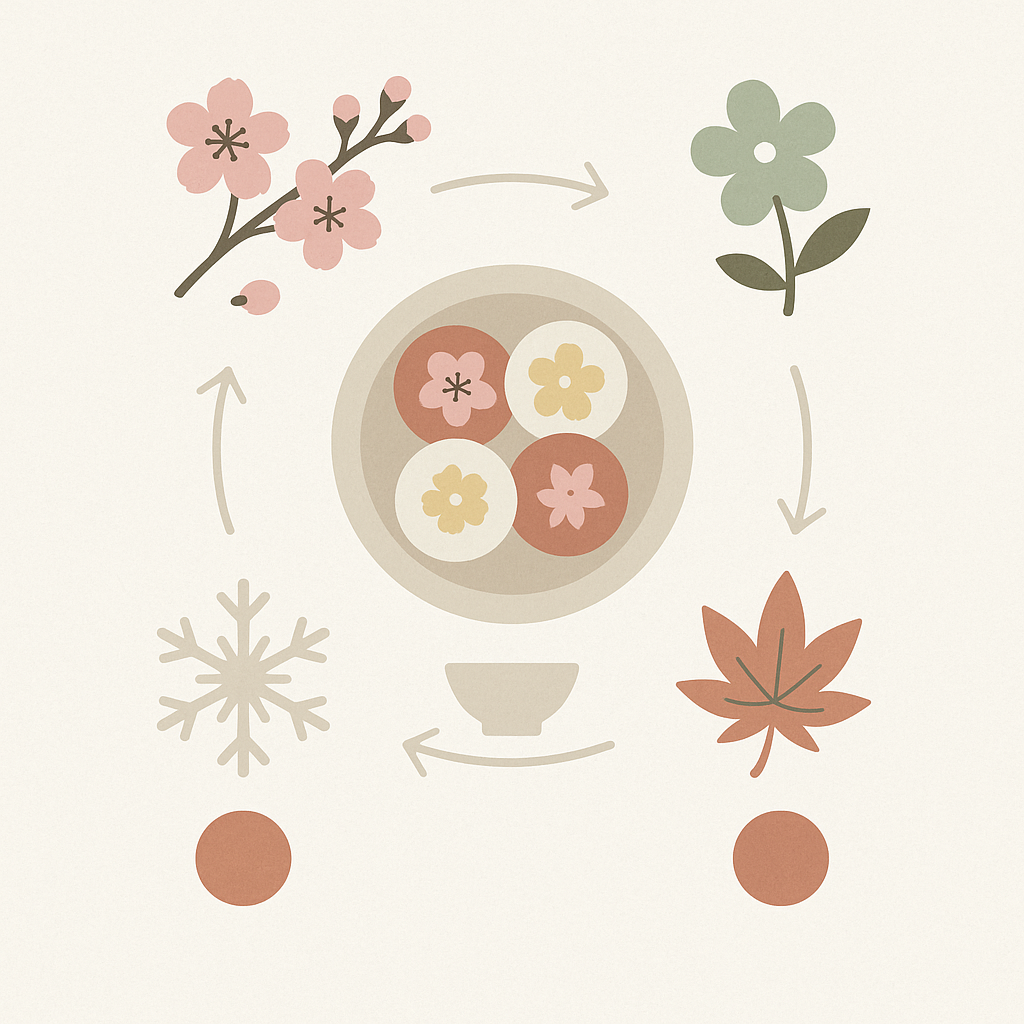
  • The Fragrant Alchemy of Korean Hwajeon: Eating Flowers Through the Seasons

    Why did Koreans start eating flowers instead of just admiring them?

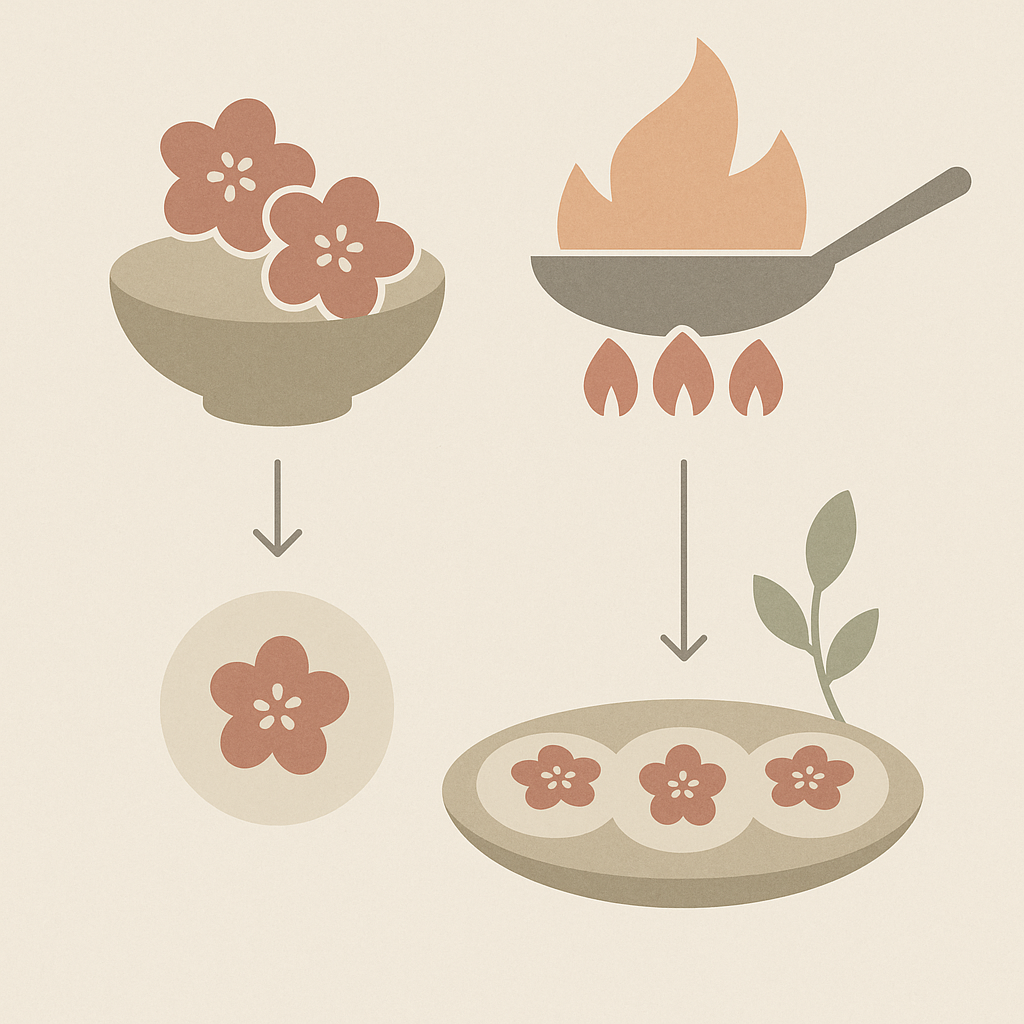
    The rice cake batter hits a hot, oiled griddle with a soft hiss, and before it firms into shape, someone presses three azalea petals into the pale surface. Not for decoration. The flower is the point—edible, fragrant, and gone in a bite.

    This is hwajeon, a pan-fried rice cake studded with real blossoms, and it asks a question most modern cooking has forgotten to ask: what does a season actually taste like?

    Traditionally, the practice is tied to agrarian life, where the arrival of a flower meant something specific about the soil, the temperature, the turning point of the year. Eating it was a way of absorbing that information, not just admiring it from a distance.

    Origin: Korea, with roots traditionally traced to the Goryeo and Joseon dynasties

    Region: Practiced nationwide, with strong associations to rural and royal court traditions

    Era: Traditionally linked to seasonal festivals, most notably Samjinnal in early spring

    Best known for: Azalea hwajeon in spring, rose hwajeon in summer, chrysanthemum hwajeon in autumn

    Core value: Eating in rhythm with the natural calendar rather than against it

    How does Samjinnal shape the timing of hwajeon making?

    Samjinnal, the third day of the third lunar month, is traditionally regarded as the day swallows return and flowers begin to open in earnest. It marks the unofficial start of hwajeon season.

    Women in villages would gather outdoors near streams or under blossoming trees, a custom sometimes called hwajeon-nori, or “flower cake play.” Cooking became inseparable from conversation, music, and simply sitting outside after a long winter indoors.

    What’s worth noting is that this wasn’t a solitary kitchen task. It was a social event built around a single fragile ingredient that would only be available for a week or two.

    What flowers go into hwajeon across the seasons?

    Spring belongs to the azalea, known in Korean as jindallae, whose petals are thin enough to nearly melt into the rice cake once fried. Their color bleeds slightly into the batter, leaving faint pink veins across the surface.

    Summer shifts to rose petals, sturdier and more fragrant, standing up better to the heat of a Korean summer kitchen. Their perfume tends to dominate, so cooks traditionally use fewer petals per cake.

    By autumn, chrysanthemum takes over, giving rise to gukhwajeon, a version tied closely to the harvest season and to Chuseok-adjacent gatherings. The petals are smaller, more numerous, and scattered rather than pressed whole.

    Each flower is not interchangeable. A cook choosing rose in spring or azalea in autumn would be seen as working against the calendar itself.

    How is hwajeon actually made, petal by petal?

    The base is glutinous rice flour, kneaded with hot water into a smooth, slightly sticky dough. Small rounds are flattened by hand, not rolled, so the thickness stays uneven and forgiving.

    These discs go onto a lightly oiled pan over low heat, where they turn translucent at the edges within a minute or two. This is the exact moment the petals are pressed in, while the surface is still soft enough to hold them without tearing.

    Photo by zero take on Unsplash

    Once the underside sets, the cake is flipped briefly, just long enough to warm the flower without scorching it. A light syrup of honey or sugar water is often drizzled on top afterward, giving the finished cake a faint sheen.

    Texture matters as much as appearance here. A properly made hwajeon should be chewy at the center, slightly crisp at the rim, and cool enough that the petal keeps its shape rather than wilting into mush.

    Why does hwajeon still matter in modern Korean kitchens?

    Contemporary Korean cooking has largely moved toward speed and convenience, which makes hwajeon feel almost deliberately inconvenient by comparison. You cannot rush a flower into bloom, and you cannot substitute one season’s petal for another’s.

    Some Korean cafes and traditional tea houses have reintroduced hwajeon, often paired with herbal teas like omija or citron, as a way of slowing down a meal rather than filling a stomach. It functions less as a dessert and more as a small ceremony marking that the season has changed.

    There’s also a quieter cultural argument embedded in the dish: that beauty and nourishment don’t have to be separate categories. The flower isn’t garnish sitting on top of the food. It is the food.

    That distinction is easy to miss until you’ve actually eaten one and realized the fragrance lingers slightly on your tongue, well after the rice cake itself is gone.

    What’s the simplest way to try this at home?

    You don’t need a griddle full of rare blossoms to start understanding hwajeon. A small batch of glutinous rice flour, a pan, and a handful of pesticide-free edible flowers—violets or pansies work well outside of Korea—are enough for a first attempt.

    Press one petal into one small cake before committing to a full batch. Notice how it changes with heat, how the color shifts, how the smell rises differently than it did raw.

    That single experiment tells you more about hwajeon than any description can: it is a dish built entirely around paying attention to a moment that won’t last.

    A flower eaten in season says more about time than any calendar hanging on the wall.

  • The Gentle Precision of Japanese Temari: Embroidered Spheres of Friendship and Fortune

    Photo by Bernd 📷 Dittrich on Unsplash

    Pick up an old temari and shake it gently—you’ll hear something rattle inside. That sound is often a bell, or in older examples, a coin or a bit of paper with a wish written on it. Before it was an art form displayed under glass, this was a toy children threw against porch floors, and the sound was part of the game.

    Origin: Traditionally rooted in everyday households across Japan, evolving from simple play balls into decorative embroidery

    Region: Practiced widely, with distinct regional styles in areas such as Sanuki (Kagawa) and Matsumoto

    Era: Traditionally traced back several centuries, with the embroidered form flourishing from the Edo period onward

    Best known for: Geometric thread patterns wound and stitched over a round core

    Core value: A handmade token of friendship, protection, and good fortune, often exchanged rather than sold

    Why did temari begin as scraps of leftover thread?

    Long before silk embroidery floss was designed specifically for temari, mothers reached for whatever thread remained after making or repairing kimono. Cotton scraps got wound into a dense ball, then wrapped again with brighter leftover thread to hold everything together. Nothing was wasted; the toy itself was a byproduct of textile thrift.

    This origin matters because it explains why temari feels so intimate as a craft. It wasn’t commissioned or produced for sale in its earliest form. It was made at home, often by a mother for a daughter, using the literal remnants of the family’s clothing.

    Photo by Thomas Marban on Unsplash

    How is a single temari sphere actually constructed?

    The base, called a shin, was traditionally formed from rice husks or cotton wadding, tightly bound with thread until it held a stable round shape. Over that base, plain thread is wound in even layers to create a smooth, firm sphere—this stage alone can take hours before a single decorative stitch appears.

    Only then does the embroidery begin. The maker divides the sphere into sections using pins and thin guide threads, the way you might mark longitude lines on a globe. Colored silk or cotton thread is then stitched along these guides, building geometric patterns entirely by counting stitches, without drawing anything on the surface first.

    There’s no room for correction once the thread is set. A miscounted stitch throws off the entire symmetry, so temari making rewards patience over speed in a way few crafts do.

    What do the geometric patterns actually mean?

    Many traditional motifs echo natural forms—chrysanthemum petals, pine needles, interlocking diamonds resembling rice fields seen from above. These aren’t random decoration; specific patterns carry specific associations, such as long life or abundant harvest, passed down through regional families of makers.

    Color choices matter just as much as pattern. A maker in one region might favor deep indigo and cream for a restrained, formal look, while another region’s temari bursts with magenta, gold, and green in tightly packed bands.

    Because the patterns rely on mathematical division of the sphere into equal sections, the same base structure can produce dramatically different results depending on how many divisions the maker chooses. Six, eight, or sixteen sections all yield distinct visual rhythms from the same starting technique.

    Why did temari become tied to New Year’s wishes?

    Temari traditionally circulate at the turn of the year, given as gifts meant to carry a quiet wish for the recipient’s coming months. The hidden bell or rattle inside connects to this—an object with something moving inside it, sealed away, echoes the idea of a wish held safely within.

    Photo by Clay Banks on Unsplash

    Grandmothers giving temari to grandchildren, or friends exchanging them between households, reinforced a social thread as much as a decorative one. The gift wasn’t valued for material cost; a temari made from scrap thread carried the same weight as one made from fine silk, because the labor and intention were the point.

    How do modern makers keep this craft alive?

    Contemporary temari artists now use synthetic foam or styrofoam cores instead of rice husks, and commercially dyed silk thread instead of kimono scraps. The construction principle, though, hasn’t changed—wind, divide, count, stitch.

    Workshops and small regional guilds continue teaching the base-stitch patterns to newer generations, often through hands-on repetition rather than written instruction. Because the technique depends so heavily on counting and muscle memory, it’s traditionally learned by sitting beside someone who already knows it, not from a diagram alone.

    Some makers now sell finished temari as decorative objects rather than toys or gifts, which has shifted how elaborate the patterns have become. A sphere meant to be displayed on a stand invites far more intricate stitching than one meant to survive being tossed around a yard.

    What does temari ask of the person making it?

    Unlike embroidery on flat fabric, a curved surface offers no straight lines to guide the eye. Every stitch has to account for the sphere’s roundness, which means the maker is constantly adjusting tension and spacing by feel rather than by ruler.

    That demand for attentiveness is arguably the real inheritance of temari—not the finished object, but the discipline of slow, exact hands. A single sphere might represent twenty or thirty hours of stitching before it’s ever given away.

    If you want to feel a small piece of that discipline yourself, try this: find a round object—an old ball, a foam sphere, even a tightly wound ball of yarn—and wrap a single contrasting thread around it in an even spiral, counting each wrap out loud. Notice how quickly your count slips if your attention wanders, and how much steadier your hand gets by the twentieth wrap.

    A wish stitched slowly into thread holds its shape longer than one merely spoken.

  • The Sacred Geometry of Chinese Bagua Mirrors: Warding Off Fortune’s Edge

    Photo by Victoria Wang on Unsplash

    Walk through an old hutong in Beijing and look up at the lintels. Above certain doorways hangs a small octagonal disc, sometimes convex, sometimes flat, its surface catching fragments of sky and passersby in a slightly warped reflection. No one explains it to you. The neighbors just know it’s there for a reason, and that reason is older than the buildings themselves.

    Origin: Rooted in Taoist cosmology and the I Ching (Yijing)

    Region: China, especially southern and coastal regions with strong feng shui practice

    Era: Traditionally traced to early Taoist philosophical development, refined over centuries

    Best known for: Deflecting negative energy (sha qi) from doorways and windows

    Core value: Balance between visible architecture and unseen cosmic forces

    Common form: Octagonal frame, eight trigrams, central mirror (convex, flat, or concave)

    Why do Chinese homes hang a mirror that reflects nothing back clearly?

    A bagua mirror isn’t meant to help you check your reflection. Its surface is often convex, bending light and distorting whatever stands in front of it. This distortion is the point: the mirror is designed to disrupt, not to flatter.

    Photo by 嘲 风 on Unsplash

    In feng shui thinking, sharp angles, oncoming roads, or a neighbor’s protruding wall corner can direct what’s called sha qi, a kind of aggressive or stagnant energy, toward a home’s entrance. The mirror’s job is to scatter that energy before it settles inside.

    How did the bagua mirror originate in Taoist cosmology?

    The mirror’s design traces back to the Yijing, the Book of Changes, a text that organized the universe into eight fundamental principles called trigrams. Taoist scholars traditionally built entire systems of divination and spatial arrangement around these eight configurations.

    Over time, artisans and geomancers began mounting mirrors at the center of an octagonal frame inscribed with the trigrams. The combination merged two older beliefs: mirrors as reflective, energy-repelling objects, and the trigrams as symbols mapping the structure of change itself.

    By the time this practice became common in home construction across southern China, the bagua mirror had shifted from a purely divinatory tool into an architectural one, hung outward-facing above doors and windows rather than kept as a handheld object.

    What do the eight trigrams actually represent?

    Each trigram is built from three stacked lines, either broken or unbroken, representing yin and yang in combination. Together they stand for natural forces: heaven, earth, thunder, wind, water, fire, mountain, and lake.

    Arranged in a circle around the mirror, these eight symbols aren’t decorative filler. Practitioners read them as a complete cosmological map, meaning the mirror at the center sits inside a miniature model of the universe’s balancing forces.

    How is a bagua mirror different from an ordinary mirror?

    Size matters less than intention here. A bagua mirror is almost never placed indoors for daily use like a bathroom or bedroom mirror. Its orientation is strictly outward, facing whatever is believed to be sending harmful energy toward the home.

    Photo by zhang kaiyv on Unsplash

    The curvature also carries meaning. A convex mirror is thought to push energy away, a concave one to draw energy in, and a flat mirror simply to reflect it back toward its source. Choosing the wrong type, practitioners say, can reverse the intended effect entirely.

    Why does placement matter more than the mirror itself?

    Hang a bagua mirror facing a neighbor’s front door, and you risk redirecting whatever you’re deflecting straight at them. This is why traditional feng shui consultants are often more concerned with angle and target than with the mirror’s craftsmanship.

    Some households avoid the practice altogether for exactly this reason, preferring interior remedies like plants or wind chimes that don’t project outward at all. The mirror is considered a more assertive, almost confrontational tool compared to these gentler alternatives.

    How do modern households use this ancient tool today?

    Contemporary apartment dwellers in cities like Guangzhou or Xiamen still buy bagua mirrors, though often smaller and mass-produced rather than hand-carved from wood. The belief persists even as the objects themselves have become simplified.

    Some buyers pair the mirror with a red ribbon or tassel, a detail believed to activate its protective function. Others consult a feng shui practitioner before installation, since improper placement is taken seriously enough that guesswork is discouraged.

    What hasn’t changed is the underlying logic: architecture and energy are treated as inseparable, and a small object above a door is trusted to mediate between the two.

    What can you take from this the next time you walk past a doorway?

    You don’t need to hang a mirror to appreciate the thinking behind it. Notice, instead, how much attention traditional Chinese design pays to thresholds, the exact point where outside becomes inside.

    If you want to experience this firsthand, look for a bagua mirror in a shop specializing in feng shui items and examine the trigram arrangement up close. Ask the seller which curvature they’d recommend for a specific doorway, and you’ll get a quick, practical lesson in a cosmology that’s still very much alive.

    Some doors need more than a lock; they need a mirror that knows which way to bend the light.

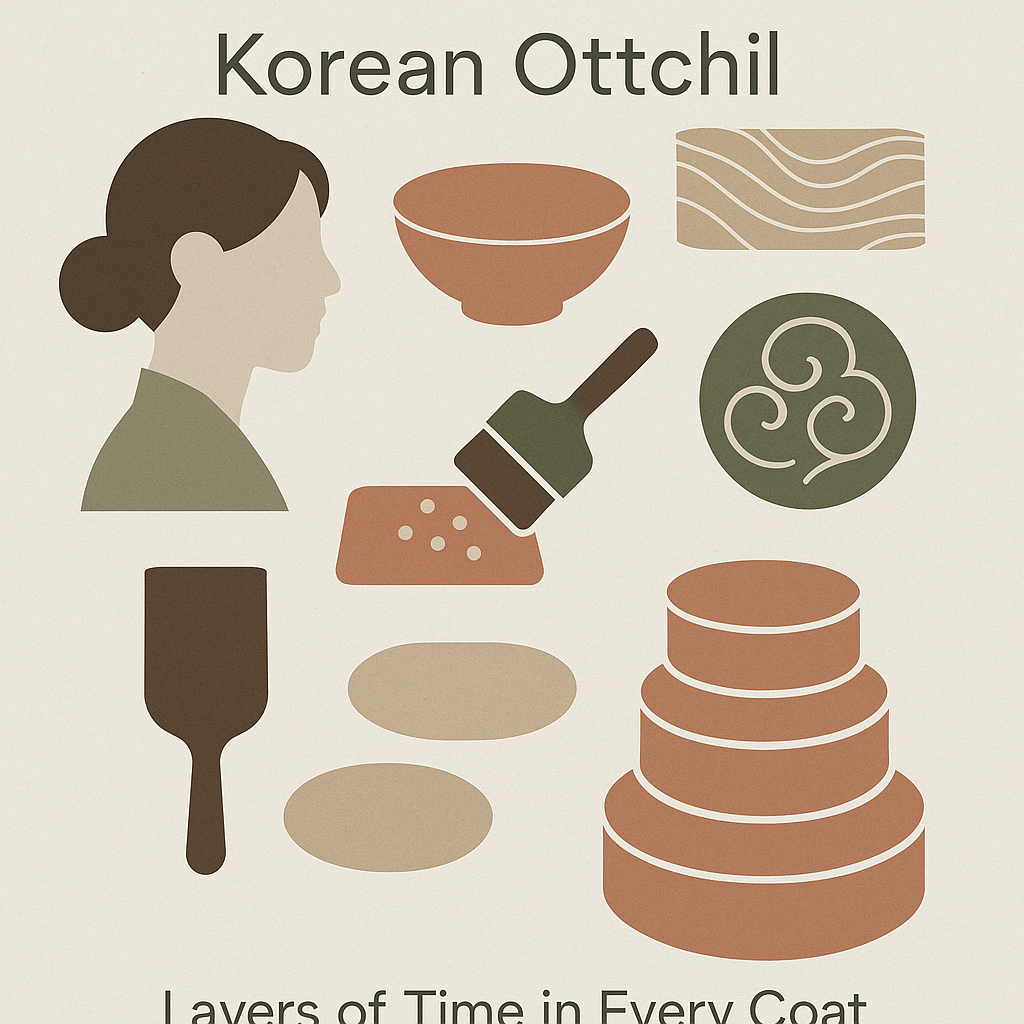
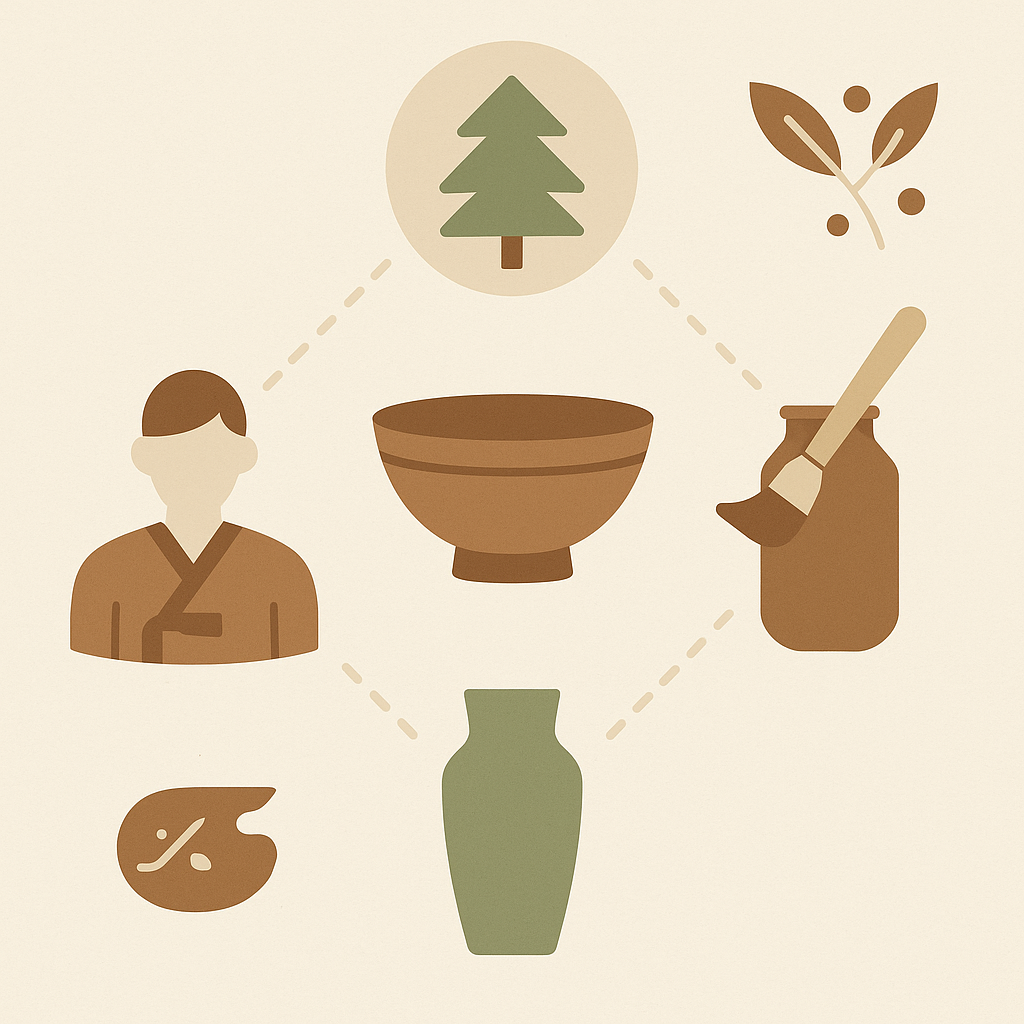
  • The Whispering Craft of Korean Ottchil Lacquerware: Layers of Time in Every Coat

    The first time raw lacquer sap touches unprotected skin, it raises a red, itching welt within hours. That is why artisans who work with Ottchil wear long sleeves even in August heat, wrap their hands, and turn their faces from the mixing bowl. This is not a craft that forgives shortcuts, and it never has been.

    Ottchil, Korea’s traditional lacquer, is made from the sap of the otnamu tree and applied in dozens of near-invisible coats. What looks like a simple black bowl or a small box may hold months of a craftsman’s patience inside its surface. That patience is the whole point.

    Origin: Sap of the native otnamu (lacquer tree), traditionally tapped by hand

    Region: Korean peninsula, historically concentrated around Tongyeong and other southern coastal areas

    Era: Traditionally traced to ancient tomb artifacts, with major flourishing during the Goryeo dynasty

    Best known for: Najeon chilgi, lacquerware inlaid with cut mother-of-pearl

    Core value: Layered patience — durability and depth built through repetition, not speed

    Why does a single bowl take months, not days, to finish?

    A finished Ottchil piece can carry twenty, thirty, sometimes closer to forty layers of lacquer, each one applied only after the last has fully cured. Rushing the process does not just risk a poor finish; it risks the whole object cracking apart within a year.

    Between coats, the piece rests in a controlled drying space, often for a full day or more, before being sanded back down to near-invisible smoothness. Then the next coat goes on. The craftsman is not decorating an object so much as growing it, coat by coat, the way sediment builds a riverbed.

    How did Ottchil become bound to Korea’s royal and religious life?

    Lacquered objects have turned up in ancient Korean tomb sites, suggesting the technique traditionally reaches back well over a thousand years. But it was during the Goryeo dynasty that Ottchil found its most celebrated expression, in najeon chilgi pieces made for Buddhist sutra boxes and courtly use.

    These weren’t decorative luxuries for their own sake. A lacquered sutra box protected sacred texts from humidity and insects for generations, which made the craft as much about preservation as beauty. That practical root still shapes how Ottchil is valued today.

    What makes the raw sap so difficult to tame?

    Otnamu sap is harvested in careful seasonal windows, usually collected in small quantities that make it precious from the very start. Once collected, it must be filtered to remove impurities and then blended, sometimes with iron oxide or other natural pigments, to reach the deep black or reddish-brown tones associated with the craft.

    Handling it wrong doesn’t just ruin a batch — it can leave a mark on the artisan’s own skin for days. This is one reason lacquer training in Korea has traditionally passed slowly, master to apprentice, rather than through quick instruction.

    Photo by zero take on Unsplash

    Why does humidity, not heat, control the outcome?

    Unlike paint or varnish, Ottchil doesn’t dry through evaporation. It cures through a slow oxidation process that actually requires a humid, relatively cool environment to harden properly.

    Too dry a room, and the lacquer stays tacky for weeks. Too much direct heat, and the surface can crack before it ever hardens. Artisans learn to read the air in their workshop almost the way a farmer reads the sky before harvest.

    What role does mother-of-pearl play in this tradition?

    Najeon chilgi takes the base craft one step further, setting thin, cut pieces of iridescent shell into the lacquered surface before additional coats seal them in place. The shell is shaped with fine saws, fitted into the surface, and only then buried under more layers of lacquer and polish.

    The final polish reveals the shell glowing faintly through the black, shifting color as the light and viewing angle change. It’s a quiet effect, closer to catching a glimpse of something than seeing it outright.

    How is this craft continuing in Korea today?

    A shrinking number of workshops, many concentrated in coastal towns with long lacquerware histories, still train apprentices in the traditional method. Some contemporary designers have begun pairing Ottchil techniques with simpler, more modern forms, aiming to keep the material relevant without abandoning its slow process.

    Craft museums and cultural centers across Korea now offer occasional demonstrations, letting visitors watch a single coat go on and understand, in real time, just how much waiting stands behind every finished piece.

    If you’re curious to experience this in a small way, look for a Korean craft museum or cultural center near you that features lacquerware demonstrations, or seek out a small najeon chilgi piece from a maker who documents their process. Spend a few minutes really looking at the surface before you touch it — count the depth in the shine, not just the shell.

    True depth is never applied all at once; it is built, one patient coat at a time.

  • The Painted Wisdom of Korean Minhwa: Folk Art as Everyday Blessing

    Photo by NK Lee on Unsplash

    Walk into an old Korean farmhouse, even a reconstructed one in a folk village, and you might find a tiger staring back at you from a folding screen. Its eyes are crossed, its stripes almost cartoonish, its expression closer to a grumpy house cat than a fearsome predator. That awkwardness is not a flaw. It is the entire point.

    This tiger was never meant to impress a king or hang in a palace gallery. It was painted by an anonymous craftsman for a family who needed a guardian at the gate, a blessing on the wall, something to make the ordinary business of living feel a little safer. That painting belongs to a tradition called minhwa, and it has quietly shaped Korean domestic life for generations.

    Origin: Anonymous folk painters working outside the royal court painting bureau

    Region: Korea, widespread across rural and urban households alike

    Era: Traditionally flourished during the later Joseon dynasty

    Best known for: Tiger-and-magpie scenes, peonies, cranes, and the ten symbols of longevity

    Core value: Everyday protection, good fortune, and moral instruction through symbol

    What made minhwa different from court painting?

    Joseon Korea had an official painting bureau where trained artists produced refined works for the aristocracy, following strict rules of composition and brushwork. Minhwa grew up outside that system entirely. The painters were often itinerant craftsmen, monks, or local artisans who never signed their names.

    Photo by KS KYUNG on Unsplash

    Because there was no court patron to please, minhwa painters had more room to bend perspective, flatten space, and repeat motifs until they became almost decorative pattern. A screen might show the same peony blossom six times across six panels, each slightly different, painted quickly for a client who needed it by the wedding day. Speed and function mattered more than academic polish.

    That freedom is exactly why the style feels so alive today. The lines are looser, the colors bolder, the mistakes left visible. Nothing about minhwa asks to be admired from a formal distance.

    Why did tigers and magpies appear together so often?

    The pairing of a tiger and a magpie, known as kkachi horangi, is probably the single most recognizable image in Korean folk painting. The magpie perches calmly above, sometimes seeming to scold the tiger below, who looks more baffled than menacing.

    Traditionally, the tiger represented a corrupt local official or an oppressive force, while the magpie stood for the common people delivering unwelcome news or quiet defiance. Hung at a New Year’s threshold, the image was believed to summon good tidings for the coming months and keep bad spirits from crossing in. Over time the satire softened into something gentler: a household charm meant to bring luck and laughter rather than social commentary.

    Either reading works, and that flexibility says a lot about minhwa itself. A single painting could carry a joke, a warning, and a blessing all at once, depending on who was looking.

    How did minhwa function as protection in daily life?

    Long before insurance or locked doors, Korean households leaned on painted images to guard what mattered. A tiger by the entrance was thought to frighten off evil spirits the way a real tiger might frighten off a wolf. A rooster near the kitchen was believed to crow away darkness and misfortune before it could settle in.

    These paintings were not treated as fine art to be preserved behind glass. They were used, replaced, repainted when faded, hung fresh for a specific occasion like a sixtieth birthday or a son’s wedding. Minhwa lived on walls the way a calendar or a charm might, doing quiet daily work rather than sitting for admiration.

    Photo by zero take on Unsplash

    This practical role explains why so few early minhwa survive in pristine condition. They were tools of hope, not museum pieces, and they were treated accordingly.

    What symbols recur and what do they mean?

    Certain images show up again and again across minhwa, forming a visual vocabulary any household could read at a glance. Cranes and pine trees signal long life. Lotus flowers point to purity and a mind untroubled by worldly noise. Peonies, painted large and full, stand for wealth and honor within the family.

    A particularly Korean grouping known as sipjangsaeng, the ten symbols of longevity, brings together the sun, mountains, water, clouds, pine, the fungus of immortality, turtles, deer, cranes, and rocks in a single composition. Traditionally commissioned for elders’ birthdays, these paintings functioned almost like a written wish, spelled out in image rather than word.

    Even chaekgeori paintings, still-life arrangements of books and scholarly objects, carried meaning beyond decoration. They expressed a family’s hope that a son might value learning and rise through it, long before formal education was open to everyone.

    How can minhwa’s spirit live in modern spaces?

    You do not need an antique screen to borrow something from this tradition. What matters is the underlying habit of mind: choosing an image not because it matches the sofa, but because it stands for something you actually want in your home.

    A small print of a magpie by the entryway, a peony motif near a wedding photo, a single crane sketch above a desk — these gestures echo the original impulse behind minhwa far more than a museum reproduction ever could. The tradition was always about intention placed into everyday objects, not about rarity or price.

    Contemporary Korean illustrators and ceramicists continue this line of thinking, reworking tiger and magpie imagery onto mugs, textiles, and stationery. The medium changes; the wish embedded in the image does not.

    What is worth trying today?

    Find one minhwa motif that speaks to something you actually want this year, whether it is good news, steadiness, or simple protection for your household. Look up a print or illustration of that specific symbol rather than a generic “Korean art” search, and place it somewhere you pass every day, not somewhere it merely decorates. Let it do the quiet work it was always meant to do.

    A painted tiger on a wall was never decoration; it was a family's hope, given a shape to guard the door.

  • The Rustic Charm of Japanese Mingei: Finding Beauty in Everyday Folk Craft

    Photo by Jonas Gerlach on Unsplash

    What Is Mingei, and Why Does the Word Resist Easy Translation?

    In a farmhouse kitchen in rural Japan, a wooden rice paddle sits on a shelf, its handle darkened and slightly uneven from decades of hands gripping it the same way. Nobody thinks of it as art. It was made to scoop rice, and it does that job well, which is precisely the point.

    The word Mingei combines “min,” meaning people, with “gei,” meaning art or craft. It refers to everyday objects made by anonymous craftspeople for practical use, not for display. There is no single English word that captures this, which is why the Japanese term is used directly in most discussions of the movement.

    Origin: Japan, as a named movement and philosophy

    Region: Rural and provincial Japan, especially pottery towns and farming villages

    Era: Traditionally dated to the 1920s-1930s, though the objects themselves are far older

    Best known for: Handmade pottery, textiles, baskets, and wooden tools made for daily use

    Core value: Beauty found in function, humility, and the unpolished mark of the human hand

    Key figure: Yanagi Sōetsu, philosopher who named and championed the movement

    How Did a Philosopher’s Frustration Spark a Movement?

    Yanagi Sōetsu was not a potter or a weaver. He was a philosopher who spent years looking at objects in antique shops and museums, increasingly bothered by what got labeled as fine art versus what got dismissed as mere craft.

    Photo by Jonas Gerlach on Unsplash

    He noticed that unsigned bowls made by unknown rural potters often had a quiet honesty that expensive, celebrated pieces lacked. Traditionally, this observation crystallized in the 1920s, when Yanagi began traveling through Japan with potters like Hamada Shōji and Kawai Kanjiro, collecting and documenting folk objects before they disappeared.

    Together they coined the term Mingei and eventually helped establish a folk crafts museum in Tokyo to house what they found. The goal was never nostalgia for its own sake. It was a rescue mission for a way of making things that industrialization was quietly erasing.

    Why Do Irregular, Handmade Objects Feel More Alive Than Mass-Produced Ones?

    Pick up a factory-made ceramic mug and a hand-thrown one side by side, and the difference is not really about quality in the technical sense. The factory mug is symmetrical, predictable, forgettable.

    The hand-thrown one has a faint list to one side, a thumbprint pressed into the glaze near the base, a rim that is not quite round. Yanagi called this quality “muji,” an unconscious beauty that emerges when a craftsperson works quickly, repeatedly, without ego or the pressure to sign their name.

    This is not carelessness. It is closer to the honesty of a handwriting sample compared to a printed font. The imperfection is evidence that a specific person, on a specific day, made this exact object and no other.

    How Did Regional Craft Traditions Shape the Mingei Aesthetic?

    Japan’s geography made Mingei almost inevitable. Mountain villages, fishing towns, and farming communities each developed their own materials and techniques out of necessity, using whatever clay, wood, or fiber was locally available.

    Potters in areas like Mashiko worked with coarse local clay that produced thick, earthy stoneware suited to daily use rather than delicate display. Weavers in colder regions turned to hemp and cotton, producing sturdy textiles meant to survive years of washing and wear.

    None of these makers were working toward a unified national style. Yanagi’s contribution was recognizing the shared spirit running underneath all this regional variation, a spirit rooted in usefulness rather than status.

    Photo by Clay Banks on Unsplash

    What Makes an Object Mingei Today?

    Contemporary potters and woodworkers still work within this tradition, though the line between folk craft and studio art has blurred considerably. A bowl made today can still qualify as Mingei in spirit if it is designed to be used daily, made without pretension, and priced within reach of ordinary households.

    What disqualifies an object is not skill but intention. A piece made purely to be admired on a shelf, signed prominently and sold as a limited edition, sits outside the original Mingei ethic even if it looks similar.

    The test Yanagi proposed was simple: does this object disappear into use, or does it demand to be noticed? Mingei objects are meant to fade into the rhythm of a household, not interrupt it.

    How Can This Philosophy Change the Way You Use Your Own Kitchen Tools?

    Most of us own at least one object that fits this description without realizing it, maybe a worn cutting board or a chipped mug that somehow still feels better in the hand than anything newer. Mingei asks us to notice that feeling rather than dismiss it as mere sentimentality.

    It suggests that value does not require rarity, and beauty does not require flawlessness. A tool used until it wears smooth has earned something that a pristine, untouched object never can.

    This is a quiet argument against constant upgrading, against the instinct to replace things the moment they show age. Mingei treats wear as a kind of authorship, proof that an object has lived a real life alongside the people who use it.

    What Should You Look For the Next Time You Shop for Something Handmade?

    Skip the pieces that look too flawless, too centered, too obviously designed to be photographed. Look instead for the slight asymmetry, the visible seam, the glaze that pooled unevenly near the base.

    Ask who made it and how often they make this exact item. A maker who has thrown the same bowl shape hundreds of times, without signing each one individually, is closer to the Mingei spirit than someone producing a single dramatic showpiece.

    The next time you’re in a market or a small pottery studio, pick up the plainest-looking bowl on the table instead of the flashiest one. Buy it planning to use it every single day, and notice how differently it starts to feel after the first few months of real wear.

    The most honest beauty is the kind that was never trying to be noticed at all.

  • The Sculptural Grace of Japanese Origami: Folding Paper into Philosophy

    Photo by Carolina Garcia Tavizon on Unsplash

    A single square of paper. Twenty-four folds. No scissors, no tape, no glue. By the time the last crease sets, that flat sheet has become a crane with wings that seem to hold tension, as if it might lift off the table if you look away for a second.

    That’s the quiet trick of origami — it doesn’t add anything to the paper. It only asks the paper to remember where it’s been folded, over and over, until memory becomes shape.

    Origin: Japan, evolving from ceremonial paper-folding traditions

    Region: Nationwide, with strong roots in Kyoto and Edo (Tokyo)

    Era: Traditionally traced to the Heian period, formalized by the Edo period

    Best known for: The crane (orizuru), modular folds, no-cut/no-glue technique

    Core value: Transformation through restraint — doing more with a single sheet

    How did paper folding become a Japanese art form?

    Paper itself arrived in Japan from the Asian continent, traditionally around the sixth century, and it was treated as something precious for a long time afterward. Court nobles and Buddhist temples used paper sparingly, reserving it for scripture, correspondence, and ceremony rather than everyday scribbling.

    Folded paper first mattered for what it represented, not what it looked like. Ceremonial folds called noshi accompanied gifts as a mark of respect, and folded paper strips called shide still hang at Shinto shrines today, marking a boundary between the ordinary and the sacred.

    Photo by Carolina Garcia Tavizon on Unsplash

    By the Edo period, paper had become more affordable, and folding shifted from ritual into play. Instruction sheets and woodblock-printed guides began circulating among commoners, turning what was once a courtly gesture into something a parent could teach a child at home.

    Why does the single sheet matter so much?

    Ask any origami practitioner why they refuse to cut the paper, and you’ll get some version of the same answer: cutting is cheating the problem, not solving it. The constraint isn’t a rulebook formality — it’s the entire creative challenge.

    Working within one uncut square forces a kind of patience that’s almost meditative. Every fold has to serve at least two purposes eventually, since there’s no extra material to hide a mistake or add a missing piece later.

    This is where origami stops being a craft technique and starts resembling a discipline. The paper doesn’t change in substance, only in form — and that distinction, between changing what something is versus how it’s arranged, sits at the center of a lot of Japanese aesthetic thinking.

    What does the crane represent beyond its shape?

    The orizuru, or folded crane, is the piece most people picture when they hear the word origami, and it carries weight well beyond its silhouette. In Japanese culture, the crane is traditionally associated with longevity and good fortune, a bird said to live for a thousand years.

    Strings of a thousand cranes, senbanzuru, are folded and offered as wishes for recovery, peace, or long life. The custom gained international recognition through the story of Sadako Sasaki, a young girl in Hiroshima who folded cranes while hoping for healing, and whose story turned the crane into a global symbol of peace.

    What’s striking is that the crane’s meaning doesn’t come from decoration. No paint, no embellishment — just folded angles suggesting a neck, a beak, a wing, and somehow that’s enough to carry centuries of hope.

    How does origami reflect a way of seeing the world?

    There’s a reason origami keeps getting described in philosophical terms rather than purely technical ones. The flat sheet holds every possible shape inside it already; folding doesn’t create the crane so much as reveal one version of what the paper could become.

    Photo by Clay Banks on Unsplash

    That idea echoes a broader current in Japanese aesthetics — that transformation happens through subtraction and restraint, not addition. A tea bowl valued for its imperfect glaze, a garden defined by empty space, a folded crane defined by what the paper is not cut away from: the logic repeats.

    Folding also teaches a specific kind of attention. Miss one crease by a few millimeters near the start, and the entire final shape drifts off course by the end — a small, physical lesson in how early choices compound.

    Why has origami reached far beyond paper crafts today?

    Engineers and scientists have borrowed origami’s folding logic for problems that have nothing to do with art. Solar panel arrays designed for satellites use origami-based folding patterns so they can collapse small for launch and unfold to full size in orbit.

    Medical devices have taken a similar path, with folded structures designed to enter the body compressed and expand once positioned. None of this borrows origami’s symbolism — it borrows its geometry, the practical fact that a flat surface can be engineered to become almost any three-dimensional form through folding alone.

    It’s a strange kind of legacy for something that started with sacred paper strips at a shrine gate. The philosophy behind the fold turned out to be exportable in ways nobody folding noshi centuries ago could have predicted.

    What’s a good way to start folding today?

    You don’t need special paper or any prior experience to feel what this article has been describing. A plain square of printer paper, cut to size, works fine for a first attempt.

    Find a diagram for the traditional crane, fold slowly, and pay attention to the moment when a flat shape suddenly pops into a three-dimensional one — that’s the part origami practitioners say never quite gets old, no matter how many cranes they’ve folded before.

    A single fold changes nothing about the paper, and everything about what it can become.

  • The Ink-Stained Art of Chinese Calligraphy: Brushstrokes as a Path to Inner Balance

    Photo by Marco Zuppone on Unsplash

    In a Beijing park before sunrise, an elderly man dips a giant sponge-tipped brush into a bucket of water and draws characters across the stone pavement. Within minutes, the sun dries his work into nothing. He doesn’t seem to mind. He simply starts again.

    This practice, known as “ground calligraphy,” has no market value and leaves no lasting trace. Yet it captures something essential about Chinese calligraphy that gallery scrolls and museum pieces often obscure: the act itself, not the artifact, is the point.

    Origin: Traditionally linked to the earliest Chinese writing systems, evolving over several millennia

    Region: Mainland China, with deep roots in scholarly and imperial court traditions

    Era: Refined especially during the Han, Tang, and Song dynasties

    Best known for: Five major script styles and its link to painting, poetry, and philosophy

    Core value: Discipline of mind and body expressed through controlled, breathing brushwork

    Why did calligraphy become more than writing in Chinese culture?

    Writing systems exist everywhere, but few cultures elevated penmanship into a spiritual discipline the way China did. Part of the answer lies in the tools themselves. A brush, unlike a pen, responds to the smallest shift in pressure, angle, or breath.

    Scholars in imperial China were expected to master calligraphy alongside poetry, painting, and music. These were called the arts of the cultivated person. A poorly formed character wasn’t just sloppy — it suggested a poorly cultivated mind.

    Photo by Marco Zuppone on Unsplash

    This is why calligraphy scrolls hung in studies and reception halls, not just as decoration but as a kind of character reference. Visitors could judge a host’s temperament from the rhythm of their strokes before a single word was spoken.

    How did the Four Treasures of the Study shape the practice?

    Traditional practitioners speak of four essential tools: the brush, ink stick, inkstone, and paper. Together they’re called the Four Treasures of the Study, and each demands its own patience.

    The ink stick must be ground against the stone with water, slowly, until the mixture reaches the right density — too thin and the strokes bleed, too thick and the brush drags. This grinding process alone can take several minutes, and practitioners often describe it as a meditation before the meditation.

    Paper matters just as much. Xuan paper, prized for its absorbency, shows every hesitation and every confident stroke with unforgiving clarity. There’s no correcting a mark once ink touches this surface, which is exactly why it teaches commitment.

    What happens in the body when brush meets paper?

    Watch an experienced calligrapher work and you’ll notice something odd: their arm often hovers above the paper, elbow lifted, wrist loose. This stance, common in formal practice, removes the wrist as a pivot point and forces movement from the shoulder and core.

    The breath synchronizes with the stroke. A long vertical line might correspond to one slow exhale, while a series of short dots follows quick, controlled breaths. This isn’t decorative technique — it’s structural to how the ink flows evenly across the page.

    Practitioners often describe entering a state where they stop thinking about the character as a symbol and instead feel it as a sequence of pressure and release. Some compare this feeling to the focus found in tai chi, where the goal is fluid continuity rather than isolated, forceful motion.

    How do the major script styles reflect different states of mind?

    Chinese calligraphy developed several distinct script styles over time, and each carries its own emotional register. Seal script, with its rounded, deliberate curves, feels formal and archaic, still used today mostly for stone carvings and official seals.

    Photo by zhang kaiyv on Unsplash

    Clerical script flattens and widens the characters, giving them a grounded, almost architectural weight. Regular script, the most commonly taught form today, balances clarity with structure, making it the style most students learn first.

    Then there’s cursive script, where characters blur and connect in rapid, flowing strokes that can look almost illegible to the untrained eye. Historical accounts describe master calligraphers producing their finest cursive work after wine, when inhibition loosened and the brush moved with unusual freedom. Whether myth or memory, the story reflects a real truth: cursive script rewards letting go rather than gripping tighter.

    What can stillness in ink teach us about modern life?

    Most of our daily writing today happens through taps and swipes, gestures too small and too fast to carry any weight of intention. Calligraphy asks for the opposite: slowness, weight, and full presence in a single stroke that cannot be undone.

    This is likely why the practice has found new audiences far beyond scholars and artists. Therapists and educators in various settings have pointed to brush practice as a way to calm a racing mind, precisely because it demands attention to breath, posture, and the present moment all at once.

    There’s also a quiet lesson in impermanence, most visible in that Beijing park at dawn. The water calligrapher’s characters vanish within minutes, yet he returns daily, unfazed by the erasure. The practice was never about preserving the mark — it was about the clarity gained in making it.

    How can you start experiencing this practice yourself?

    You don’t need decades of training to feel what calligraphy offers. A simple felt-tip brush pen and a notebook are enough to begin noticing your own breath and posture as you write.

    Try writing a single word slowly, five times in a row, paying attention only to the pressure in your fingers and the pace of your exhale. Notice how the sixth attempt feels different from the first — steadier, perhaps, or more honest.

    The stroke fades, but the stillness it teaches you to find remains.