Category: Asia Economy

  • Korea’s Top Court Upholds $13.9M Broadcom Fine Over Samsung Deal

    Korea’s Top Court Upholds $13.9M Broadcom Fine Over Samsung Deal

    South Korea’s Supreme Court has finalized an antitrust fine of 18.664 billion won — roughly $13.8 to $13.9 million depending on the exchange rate used — against U.S. chipmaker Broadcom, closing out a years-long dispute over how the company treated Samsung Electronics in a component supply deal, according to Yonhap, The Korea Herald, The Korea Times and BusinessKorea.
    a large machine in a large building
    Photo by Homa Appliances on Unsplash
    Key facts

    • South Korea's Supreme Court dismissed Broadcom's appeal on Oct. 27, finalizing an 18.664 billion won fine ($13.8–13.9 million, depending on exchange rate used), according to Yonhap, The Korea Herald and The Korea Times.
    • The Korea Fair Trade Commission (FTC) first imposed the penalty in September 2023 for Broadcom's conduct toward Samsung Electronics, per BusinessKorea.
    • In 2020, Broadcom reportedly demanded Samsung commit to buying at least $760 million worth of components annually for three years starting in 2021, with Samsung required to cover any shortfall, according to all four outlets.
    • The FTC found Broadcom halted purchase-order approvals, shipments, production and technical support when Samsung resisted the terms, per BusinessKorea.
    • The Seoul High Court had already ruled against Broadcom in May before the case reached the Supreme Court, according to Yonhap and The Korea Times.

    What happened

    The Supreme Court’s First Petty Bench, presided over by Justice Cheon Dae-yeop, dismissed an appeal filed by Broadcom’s U.S. headquarters and affiliated companies, according to BusinessKorea. The ruling, issued Oct. 27 and confirmed by legal sources in the following days, finalizes a Seoul High Court decision from May that had already sided with Korea’s Fair Trade Commission (FTC), as reported by Yonhap and The Korea Times.

    The case traces back to a contract Samsung signed with Broadcom in March 2020. Under the deal, Samsung committed to purchasing at least $760 million worth of Broadcom components annually for three years starting in 2021, with a clause requiring Samsung to pay the difference if actual purchases fell short, according to all four outlets.

    BusinessKorea reported that Samsung only agreed to these terms after Broadcom suspended approval of purchase orders and halted shipments, production, and some technical support — actions the FTC said were designed to force Samsung’s hand. Samsung reportedly feared disruptions to its smartphone production if it did not comply.

    Why it matters

    The FTC concluded that Broadcom’s tactics restricted Samsung’s ability to choose alternative suppliers and blocked rivals from competing for the business, according to BusinessKorea. The regulator estimated that the restrictions cost Samsung at least $160 million in additional expenses based on exchange rates at the time.

    Our read: the ruling signals that Korea’s antitrust enforcement extends firmly to foreign suppliers dealing with domestic manufacturers, even when the supplier holds significant leverage over a critical part of the supply chain. For global chip companies operating in Korea, the case underscores that aggressive supply-chain tactics can draw regulatory scrutiny and costly, multi-year legal battles.

    a large building with a clock on the front of it
    Photo by Babak Habibi on Unsplash

    Background

    The FTC first imposed the corrective order and penalty surcharge on Broadcom in September 2023, according to BusinessKorea. Broadcom challenged the decision in a lawsuit filed in November 2023, per The Korea Times and Yonhap. The case proceeded through Korea’s standard appeals process: an FTC decision, once contested, goes to the Seoul High Court, with further appeals possible to the Supreme Court, as Yonhap noted.

    The Seoul High Court sided with the FTC in May, finding the fine justified, according to Yonhap. It also reportedly determined that Broadcom used unusual means — namely the unilateral halt on parts supply — to compel Samsung into a contract whose terms were disadvantageous to the Korean company, per BusinessKorea.

    What to watch

    With the Supreme Court’s dismissal, the FTC’s fine and corrective order against Broadcom are now final, closing this particular chapter of the dispute. The case may factor into how other multinational suppliers structure long-term contracts with Korean manufacturers going forward, particularly around exclusivity and minimum-purchase clauses.

    It also reflects a broader pattern of Korean regulators scrutinizing the bargaining practices of dominant global tech and component suppliers. How Broadcom adjusts its commercial relationships with Samsung and other Korean partners in light of this outcome remains to be seen.

    Frequently asked questions

    How much was Broadcom fined?

    The Korea Fair Trade Commission fined Broadcom 18.664 billion won, reported as roughly $13.8 to $13.9 million depending on the exchange rate cited by different outlets.

    What did Broadcom do to Samsung?

    According to BusinessKorea, Broadcom pressured Samsung into a 2020 long-term supply contract by suspending purchase-order approvals, shipments and technical support, pushing Samsung to commit to buying at least $760 million in parts annually for three years.

    What did the Supreme Court decide?

    The Supreme Court's First Petty Bench, led by Justice Cheon Dae-yeop, dismissed Broadcom's appeal on Oct. 27, confirming the Seoul High Court's earlier ruling that upheld the FTC's penalty, per BusinessKorea and Yonhap.

    Sources

    This article was prepared with AI assistance from the reports listed above and automatically checked against them. See About for how we work.
  • Why KOSPI Jumped 2% After Friday’s Tech-Led Plunge

    Why KOSPI Jumped 2% After Friday’s Tech-Led Plunge

    Seoul’s benchmark KOSPI index closed up 2.24 percent at 5,859.08 on Monday, clawing back much of the ground lost in a sharp sell-off three sessions earlier, according to Yonhap. The rebound came as investors snapped up technology shares that had been sold off heavily, even though broader unease about the payoff from artificial intelligence spending had not disappeared.

    New york stock exchange building with american flags
    Photo by David Vives on Unsplash
    Key facts

    • KOSPI closed up 128.34 points, or 2.24 percent, at 5,859.08 on Monday, after plunging more than 3 percent the previous Friday, according to Yonhap
    • Institutional investors were net buyers while foreign and retail investors were net sellers; exact figures differ slightly between Yonhap/Korea Herald (1.23 trillion won institutional buying) and Korea Times (1.36 trillion won)
    • SK hynix gained 3.81 percent to 1,472,000 won and Samsung Electronics rose 1.78 percent to 229,000 won, Yonhap reported
    • South Korea's October exports rose more than 90 percent year-on-year, with chip shipments up 259 percent, according to Yonhap
    • The rebound followed a sharp sell-off in U.S. chip stocks, including a 28 percent drop in Intel shares after weak guidance, the Korea Times reported

    What happened

    The index gained 128.34 points and briefly touched 5,910.83 during the day, Yonhap reported. That followed a drop of more than 3 percent on the previous Friday. Trading volume was described as light, at 186.4 million shares worth 14.9 trillion won (roughly $11.1 billion), with winning stocks outnumbering losers by 651 to 229.

    Sources differ slightly on the exact flow of money. Yonhap and the Korea Herald reported that foreign and retail investors together sold a net 1.72 trillion won in shares, while institutions bought a net 1.23 trillion won. The Korea Times put institutional buying at 1.36 trillion won, with foreign investors selling 43.09 billion won and retail investors selling 1.41 trillion won. Either way, all three outlets agree that institutional buying was the key force pulling the index back up after it opened the session lower.

    Chip and defense-linked names led the gains. SK hynix rose 3.81 percent to 1,472,000 won and Samsung Electronics gained 1.78 percent to 229,000 won, Yonhap reported. SK Square advanced 5.91 percent after outlining plans to return at least 4.3 trillion won to shareholders from dividends tied to SK hynix, according to the Korea Times. Shipbuilder Hanwha Ocean jumped 9.8 percent after its parent, Hanwha Aerospace, said it became the first South Korean company to deliver a medium landing ship to the U.S. Navy, Yonhap noted. Not every large stock advanced: KB Financial fell 1.35 percent and Samsung SDI slipped 0.92 percent.

    Why it matters

    The rebound shows how closely South Korea’s stock market is tied to the fortunes of its semiconductor exporters. Daishin Securities analyst Lee Kyoung-min argued that investors had reassessed disappointing U.S. chip-sector earnings and refocused on the strength of Korea’s own memory chip makers, according to Yonhap. Lee described the Korean market as trading at a “historic discount,” suggesting room for recovery if earnings remain solid.

    That view was reinforced by trade data: South Korea’s October exports rose more than 90 percent from a year earlier, driven largely by chip demand, with chip shipments alone up 259 percent year-on-year, Yonhap reported. The Korea Times added that total October shipments reached $115.3 billion.

    macro photography of black circuit board
    Photo by Alexandre Debiève on Unsplash

    Background

    The swings in Seoul followed turbulence in U.S. markets, where chip stocks were hit hard after Intel issued weaker-than-expected sales guidance for the fourth quarter, citing softening PC demand, according to the Korea Times. Intel shares fell roughly 28 percent and the Philadelphia Semiconductor Index dropped 7.2 percent in the same session. Investors have been debating whether the earnings miss reflects fading demand for memory chips broadly or simply rising costs squeezing PC makers’ margins, a distinction the Korea Times said is increasingly favoring the latter interpretation. This broader debate over whether heavy AI-related investment will pay off has been unsettling markets globally in recent sessions.

    What to watch

    The Korea Times reported that analysts expect volatility to continue this week, pointing to upcoming U.S. midterm elections and an employment report as potential catalysts. Our read: with institutional buyers stepping in while foreign and retail investors pulled back, the durability of this rebound may depend on whether upcoming U.S. economic and political signals ease or deepen worries about AI-related tech valuations.

    Frequently asked questions

    How much did the KOSPI rise on Monday?

    The index closed up 2.24 percent, or 128.34 points, at 5,859.08, according to Yonhap, after rising as high as 5,910.83 during the session.

    Why did the market fall on Friday before this rebound?

    The KOSPI had plunged more than 3 percent on Friday amid a rout in U.S. semiconductor stocks, including a sharp drop in Intel shares after weak sales guidance, as reported by the Korea Times.

    Which investors drove the Monday rebound?

    Institutional investors were net buyers of Korean shares, while foreign and retail investors were net sellers, according to Yonhap and the Korea Times, though the two outlets cite slightly different net figures.

    Sources

    This article was prepared with AI assistance from the reports listed above and automatically checked against them. See About for how we work.
  • HD Hyundai Robotics Teams Up With Palantir on Physical AI

    HD Hyundai Robotics Teams Up With Palantir on Physical AI

    HD Hyundai Robotics, the robotics arm of South Korean shipbuilding conglomerate HD Hyundai, has partnered with U.S. software firm Palantir Technologies Inc. to build so-called physical AI solutions for industrial sites, the company said in a press release cited by Yonhap on Nov. 1.

    a factory filled with lots of orange machines
    Photo by Simon Kadula on Unsplash
    Key facts

    • HD Hyundai Robotics, a unit of shipbuilding conglomerate HD Hyundai, announced a partnership with Palantir Technologies Inc. on Nov. 1, according to Yonhap.
    • The companies aim to develop 'physical AI' solutions that change how engineers oversee industrial robots.
    • HD Hyundai Robotics reported that AI-agent-assisted problem solving since August cut average task time from 21.5 days to 7.9 days, a roughly 63% reduction, per BusinessKorea.
    • The company expects robot programming costs to fall by more than 50% as a result, BusinessKorea reported.
    • Palantir's Sovereignty Bootcamp in New York, where the partnership was presented, drew about 450 executives from roughly 250 organizations, according to BusinessKorea.

    What happened

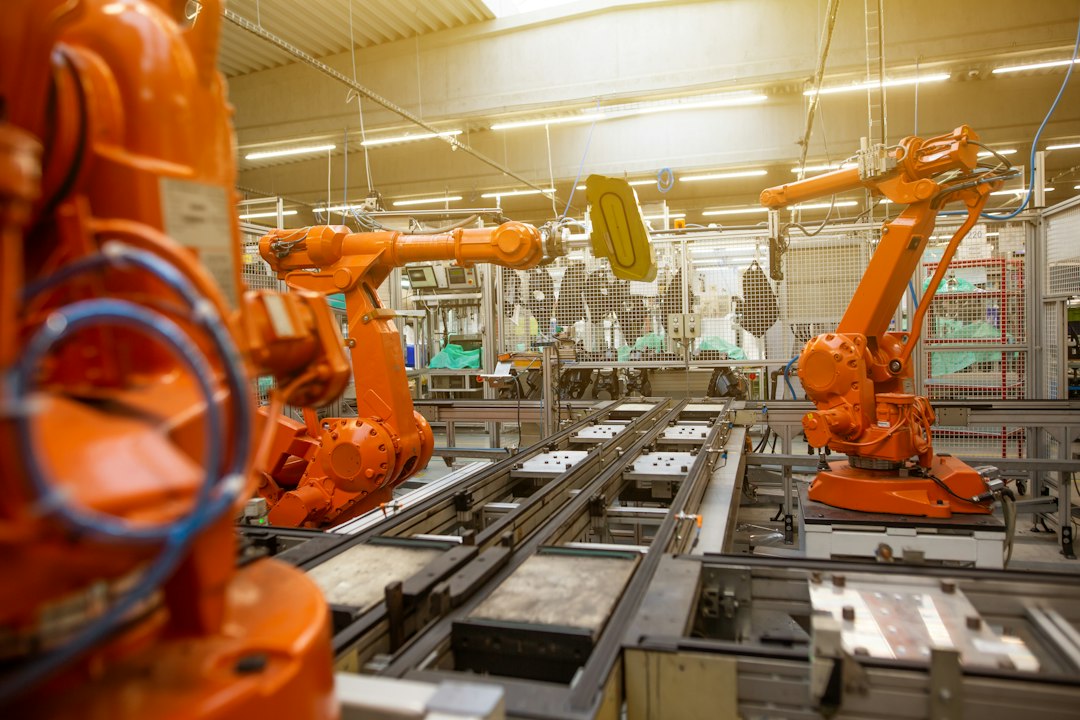
    The partnership is intended to change how work is carried out on factory floors by applying physical AI, and to reshape the responsibilities of engineers who currently oversee industrial robots, according to Yonhap. The company’s technology chief, Ahn Seong-hwan, presented the plan at Palantir’s “Sovereignty Bootcamp” in New York, an event focused on strengthening AI-driven competitiveness while protecting corporate data. BusinessKorea reported that the event drew roughly 450 executives from about 250 organizations worldwide.

    At the bootcamp, Ahn laid out HD Hyundai Robotics’ approach to physical AI and detailed the progress made with Palantir so far, Yonhap reported. BusinessKorea described the core of the collaboration as a shift away from robot control that depends on experienced engineers manually adjusting speed and movement paths, toward an AI-based system in which an AI agent first analyzes robot programs and proposes improvements, with engineers then refining the results for real-world conditions.

    Why it matters

    The companies say the shift is already producing measurable gains. BusinessKorea reported that after HD Hyundai Robotics began using AI agents for problem-solving in August, the average time needed to resolve issues dropped from 21.5 days to 7.9 days, a cut of about 63%. The company also expects robot programming costs to fall by more than half as a result of the changes, according to BusinessKorea.

    Palantir Chief Revenue Officer Ryan Taylor said the two sides “started with work that can deliver measurable impact in the short term,” according to Yonhap, and added that linking HD Hyundai Robotics’ machines to Palantir’s AI platform should help create new business opportunities.

    Business meeting with people around a conference table
    Photo by Beatriz Cattel on Unsplash

    Background

    HD Hyundai is best known as a major shipbuilder, and its robotics unit has been working to expand into AI-assisted industrial automation. Palantir has positioned itself as a provider of data and AI platforms for large organizations, often emphasizing data security alongside AI deployment, which was a focus of the Sovereignty Bootcamp where this partnership was presented.

    Our read: the partnership fits a broader pattern among industrial manufacturers seeking to pair heavy machinery with AI software companies, aiming to reduce reliance on specialized human expertise for routine technical adjustments. This suggests a shift in how engineering roles may be defined at industrial sites going forward.

    What to watch

    BusinessKorea reported that HD Hyundai Robotics plans to retrain field engineers from robot installation and testing roles into what it calls “field solution experts,” who define problems and apply AI-driven fixes. The company also plans to set up a regular steering committee involving senior executives from both firms to prioritize collaborative projects and identify further use cases, according to BusinessKorea.

    Yonhap’s reporting and BusinessKorea’s account agree on the broad outline of the partnership and the New York event, though Yonhap identifies Ahn as Chief Technology Officer while BusinessKorea refers to him as an executive director. Readers interested in how this collaboration evolves should watch for further detail on specific industrial use cases as the joint steering committee begins its work.

    Frequently asked questions

    What did HD Hyundai Robotics and Palantir agree to do?

    According to Yonhap, the two companies partnered to develop physical AI solutions aimed at transforming industrial workplace operations and changing the role engineers play in managing robots.

    What results has the partnership already produced?

    BusinessKorea reported that since August, using AI agents to assist with problem solving cut average task completion time from 21.5 days to 7.9 days, a reduction of about 63%.

    Who represented HD Hyundai Robotics at the Palantir event?

    Ahn Seong-hwan, identified by Yonhap as the company's Chief Technology Officer and by BusinessKorea as an executive director, gave a keynote presentation at Palantir's Sovereignty Bootcamp in New York.

    Sources

    This article was prepared with AI assistance from the reports listed above and automatically checked against them. See About for how we work.
  • Samsung’s Lee Visits Japan Lab to Boost AI Chip Packaging

    Samsung’s Lee Visits Japan Lab to Boost AI Chip Packaging

    Samsung Electronics Executive Chairman Lee Jae-yong visited the company’s advanced chip-packaging research lab in Yokohama, Japan, on Sunday, reviewing technology progress and discussing closer cooperation with local suppliers, according to Samsung Electronics as reported by Hankyoreh and The Korea Times.

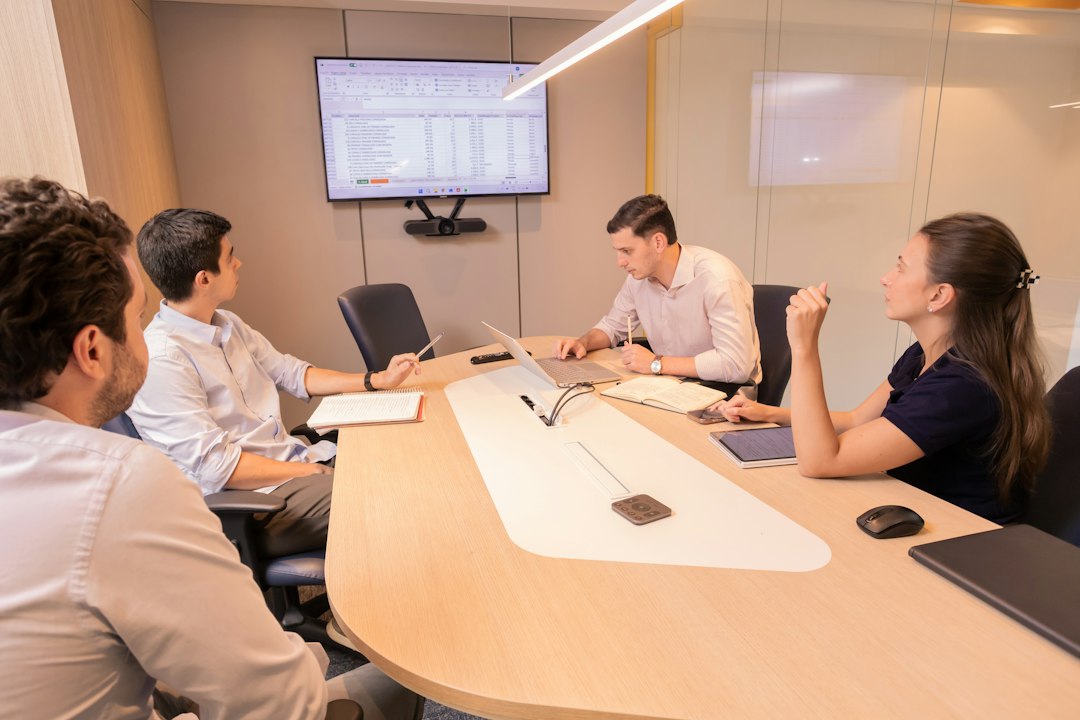
    a close up of a pattern of small squares
    Photo by Maxence Pira on Unsplash
    Key facts

    • Samsung Executive Chairman Lee Jae-yong visited the Advanced Package Lab (APL) in Yokohama, Japan, on Sunday, according to Hankyoreh and The Korea Times.
    • APL began operating in 2023 and held its official opening ceremony on September 8 this year, per Hankyoreh and Korea Times.
    • Samsung Electronics has been investing 40 billion yen (about $254 million) over five years starting in 2024 to build the lab's research infrastructure, according to Korea Times.
    • Lee was accompanied by Kawahira Hiroichi, vice president and head of DS Research Japan, and Kariya Takashi, the executive director leading APL, per Hankyoreh.
    • Last month, Lee reportedly called Samsung's chip division head Jeon Young-hyun and devices division head Roh Tae-moon to Japan for a related meeting, according to Hankyoreh.

    What happened

    Lee toured the Advanced Package Lab (APL), accompanied by Kawahira Hiroichi, vice president and head of DS Research Japan, and Kariya Takashi, the executive director who leads APL, Hankyoreh reported. During the visit, Lee checked on the development of materials and process technologies used in advanced semiconductor packaging and spoke with researchers about expanding ties with Japan’s materials, parts and equipment companies, according to the outlet. The Korea Times added that Lee pledged to keep growing APL’s research staff and to turn it into a global hub for next-generation packaging work.

    The trip followed an earlier gathering last month, when Lee reportedly summoned Samsung’s semiconductor division head Jeon Young-hyun and its devices division head Roh Tae-moon to Japan for discussions, Hankyoreh noted.

    Why it matters

    Advanced packaging involves combining different chip components — such as GPUs, high-bandwidth memory, and accelerator chips — into a single package. This step directly affects how an AI system performs in terms of data bandwidth, power efficiency, and heat management, according to Hankyoreh. As global demand for AI processors rises, packaging technology is increasingly seen as being just as important as chip fabrication itself.

    Lee reportedly stressed that securing strong packaging capabilities is critical, since these techniques are becoming central to competitiveness in AI processor chips, according to Korea Times.

    a large body of water with a city in the background
    Photo by bady abbas on Unsplash

    Background

    APL began operating in 2023 and held its formal opening ceremony on September 8 this year, according to both Hankyoreh and Korea Times. Samsung Electronics said it has been investing 40 billion yen, roughly $254 million, over five years starting in 2024 to build research infrastructure in Japan and strengthen its packaging technology, Korea Times reported.

    The lab is meant to connect Samsung’s chip design and manufacturing operations with Japan’s network of materials, parts, and equipment suppliers, including firms like Tokyo Electron and Ibiden, according to Hankyoreh. APL’s research focus differs from that of the packaging unit at Samsung’s Semiconductor R&D Center in Korea, and the two teams plan to coordinate closely for added synergy, Korea Times reported.

    Samsung also pointed to Japan’s government support for the semiconductor and AI sectors as a reason the country remains an attractive base for packaging research and local partnerships, according to a company statement cited by Hankyoreh. More broadly, Japan has long been home to a dense network of specialized chip equipment and materials makers, giving global chipmakers access to an established supply chain even as the country builds fewer leading-edge chip factories than some competitors.

    What to watch

    Future signals to track include whether APL expands its headcount and research scope as Samsung has indicated, and whether the company deepens its sourcing relationships with Japanese materials and equipment firms. Our read: the visit suggests Samsung sees packaging technology, not just transistor miniaturization, as a key front in the broader AI chip race, with Japan’s supplier base playing a growing part in that strategy. Additional announcements on investment levels, staffing, or specific technology milestones at APL would offer clearer evidence of how quickly this approach is advancing.

    Frequently asked questions

    What is Advanced Package Lab (APL)?

    APL is Samsung Electronics' semiconductor packaging research site in Yokohama, Japan, that develops and tests materials and process technologies for advanced chip packaging, according to Hankyoreh and Korea Times.

    How much has Samsung invested in the Japan lab?

    Samsung Electronics has been investing 40 billion yen, about $254 million, over five years starting in 2024 to build research infrastructure there, per Korea Times.

    Why does packaging matter for AI chips?

    Advanced packaging combines components like GPUs, high-bandwidth memory, and accelerator chips into a single unit, directly shaping an AI system's bandwidth, power efficiency, and heat performance, according to Hankyoreh.

    Sources

    This article was prepared with AI assistance from the reports listed above and automatically checked against them. See About for how we work.
  • G20 Ministers Leave Atlanta Without Deal on Minerals, Ukraine

    G20 Ministers Leave Atlanta Without Deal on Minerals, Ukraine

    G20 foreign ministers wrapped up two days of discussions in Atlanta on Saturday without settling on a joint position on several pressing issues, including critical minerals, according to reports from SCMP and Korea Times.

    brown wooden 9-piece office table and chairs
    Photo by S O C I A L . C U T on Unsplash
    Key facts

    • The two-day G20 foreign ministers' gathering in Atlanta closed on Saturday without a shared agreement, according to Korea Times and SCMP.
    • Rather than a joint communique, the session will be summed up through a chairman's statement issued by US Secretary of State Marco Rubio, diplomats told Korea Times.
    • Rubio pressed fellow G20 members to shore up supply chains and protect key trade routes as Washington tries to cut reliance on China for critical minerals, SCMP reported.
    • Friday's customary group photo was called off after some European officials objected to Russian Foreign Minister Sergey Lavrov's presence, per Korea Times.
    • Polish Foreign Minister Radosław Sikorski, attending a G20 meeting for the first time, said the outcome was not unexpected given the conflicts involving countries at the table.

    What happened

    Instead of the usual joint communique, the gathering concluded with a summary statement from the chair, delivered by US Secretary of State Marco Rubio, diplomats who took part told Korea Times. The absence of a unified document reflected how deeply the group remained split, particularly over Russia’s invasion of Ukraine, a rift that had already strained the opening of the talks.

    Tensions surfaced even before formal sessions began. Rubio scrapped the traditional group photo on Friday after several European representatives pushed back against sharing the frame with Russian Foreign Minister Sergey Lavrov, with some threatening to skip the photo entirely or walk away from it, Korea Times reported.

    Why it matters

    Despite the lack of a formal agreement, Rubio told reporters there was broad understanding among G20 members about the significance of topics such as critical minerals, supply chain resilience, and freedom of navigation, SCMP reported. He urged other members to work on reinforcing supply networks and safeguarding key trade corridors, part of a wider US push to reduce dependence on China for critical minerals.

    Our read: the gap between stated agreement on priorities and the failure to produce a joint text shows how geopolitical rifts, especially around Ukraine, are spilling into economic diplomacy even when members share similar goals on resource security.

    brown and blue stone fragment
    Photo by USGS on Unsplash

    Background

    The G20 brings together the world’s largest economies to coordinate on shared economic and security concerns. Gatherings like this one in Atlanta are typically meant to produce a collective statement showing alignment among members, though that has become harder as global conflicts create friction at the negotiating table.

    Polish Foreign Minister Radosław Sikorski, who was attending a G20 meeting for the first time as a guest, said he wasn’t caught off guard by the lack of consensus. He noted that with ongoing wars and some of their participants present at the same table, reaching common ground was, in his words, “very difficult to agree on a common line,” according to Korea Times.

    What to watch

    Some diplomats who were present, speaking anonymously because the sessions were closed to the public, said members still intend to work through their disagreements, Korea Times reported. Their stated goal is to help ensure that next month’s G20 leaders summit, which the United States will host under President Donald Trump in Florida, delivers a more productive outcome.

    Whether that effort narrows the divide over Ukraine or produces firmer commitments on critical minerals and supply chains remains to be seen. For now, the Atlanta meeting illustrates how security disputes can overshadow economic coordination, even among governments that publicly agree on the importance of issues like resource security and trade routes.

    Frequently asked questions

    Why didn't the G20 ministers release a joint statement?

    Diplomats cited sharp disagreements, especially over Russia's war in Ukraine, which prevented a unified communique; instead, Secretary of State Marco Rubio issued a chairman's summary, according to Korea Times.

    What did the US push for regarding critical minerals?

    Marco Rubio called on G20 members to strengthen supply chains and secure trade routes as part of a broader effort to reduce dependence on China for critical minerals, SCMP reported.

    Why was the group photo canceled?

    European diplomats objected to Russian Foreign Minister Sergey Lavrov being included and threatened to skip or leave the photo, so Rubio called it off, per Korea Times.

    Sources

    This article was prepared with AI assistance from the reports listed above and automatically checked against them. See About for how we work.

  • Samsung Executives Meet Sam Altman to Rethink AI Strategy

    Samsung Executives Meet Sam Altman to Rethink AI Strategy

    Roughly 50 senior executives from Samsung Group sat down with OpenAI CEO Sam Altman on Saturday, Oct. 31, for a closed-door session on how artificial intelligence might reshape the conglomerate’s management and open fresh business lines, Samsung said, as reported by Yonhap, Korea Times and Korea Herald.

    people sitting on chair inside building
    Photo by Rodeo Project Management Software on Unsplash
    Key facts

    • About 50 senior Samsung executives met OpenAI CEO Sam Altman on Saturday, Oct. 31, at Samsung's Human Resources Development Center in Yongin, Gyeonggi Province, according to Yonhap and Korea Times.
    • The session was themed 'The Next 10 Years Shaped by AI: The Enterprise's Choice,' per Korea Herald.
    • Altman said a real competitive edge comes not from simply adopting AI but from using it to move faster and build better products, Samsung told Yonhap and Korea Times.
    • Attendees came from Samsung's electronics, finance and biotechnology affiliates, including Samsung Electronics, per Korea Times and Yonhap.
    • Samsung Electronics and OpenAI signed a letter of intent last October for global AI infrastructure cooperation, including memory chip supply tied to OpenAI's Stargate Project, according to Hankyoreh.

    What happened

    The gathering took place at Samsung’s Human Resources Development Center in Yongin, Gyeonggi Province, just south of Seoul. According to Korea Herald, it was organized under the theme “The Next 10 Years Shaped by AI: The Enterprise’s Choice,” bringing together presidents and top leaders from affiliates spanning electronics, finance and biotechnology.

    Korea Times and Yonhap both describe the event as part of a broader series of leadership seminars meant to push forward Samsung’s internal AI transformation drive. Discussions reportedly centered on how AI could change corporate decision-making and daily operations, along with the kind of leadership skills executives will need as the business environment shifts quickly.

    During the exchange, Altman reportedly told the room that simply adopting AI tools isn’t enough to win in today’s market. Samsung quoted him as saying that the real advantage comes from using the technology to move faster, build stronger products and stay ahead of competitors — a line carried by both Korea Times and Yonhap.

    Why it matters

    Samsung is one of the world’s largest electronics and semiconductor makers, so how its leadership thinks about AI has ripple effects across its chip, device and biotech businesses. Bringing in an outside voice like Altman, rather than relying only on internal strategy teams, signals that Samsung wants fresh outside perspective as it rewires its organization around AI.

    Our read: the session’s framing — looking at the “next 10 years” — suggests Samsung executives see this as a long-term structural shift in how the company is run, not a one-off technology upgrade.

    close up of dark blue circuit board
    Photo by Vishnu Mohanan on Unsplash

    Background

    This was not the first point of contact between the two companies. According to Hankyoreh, Samsung Electronics and OpenAI signed a letter of intent last October covering cooperation on global AI infrastructure, including a plan to supply memory chips for OpenAI’s Stargate Project. Hankyoreh also reports that Samsung Electronics Chairman Lee Jae-yong visited OpenAI’s headquarters in San Francisco in July.

    Samsung has increasingly framed its AI push as a company-wide transformation effort rather than a project confined to its electronics division. In general terms, large conglomerates with businesses across hardware, finance and biotechnology often look to centralize and align AI strategy across units once they view the technology as core to future competitiveness, rather than treating it as a side initiative for any single affiliate.

    What to watch

    None of the reports in the source material detail specific follow-up actions, new products or investment figures stemming from Saturday’s meeting. Future disclosures from Samsung — particularly around its semiconductor supply agreements tied to OpenAI’s infrastructure projects — would offer a clearer sense of whether this session translates into concrete business moves.

    It will also be worth watching whether Samsung holds similar sessions with other AI companies as part of its ongoing leadership seminar series, which Korea Times and Yonhap both describe as an established format for exposing executives to outside AI expertise.

    Frequently asked questions

    Who took part in the meeting with Sam Altman?

    About 50 senior Samsung executives from its electronics, finance and biotechnology affiliates, including Samsung Electronics, attended, according to Korea Times and Yonhap.

    What was Altman's main message to Samsung leaders?

    He said according to Samsung that gaining a competitive edge is not about simply adopting AI, but about using it to move faster, build better products and outpace rivals.

    Had Samsung and OpenAI worked together before this session?

    Yes — Hankyoreh reports the two signed a letter of intent last October on AI infrastructure and chip supply, and Samsung Electronics Chairman Lee Jae-yong visited OpenAI's San Francisco headquarters in July.

    Sources

    This article was prepared with AI assistance from the reports listed above and automatically checked against them. See About for how we work.

  • North Korea Linked to Record $6.3B Binance Crypto Heist

    North Korea Linked to Record $6.3B Binance Crypto Heist

    Binance, the world’s largest cryptocurrency exchange, said on Oct. 30 that hackers made off with approximately $6.3 billion in digital assets, a sum Yonhap reported as $6.36 billion citing blockchain intelligence firm TRM Labs. Investigators have linked the breach to TraderTraitor, a hacking group tied to North Korea, in what analysts describe as the largest cryptocurrency theft ever recorded.

    person using black and gray laptop computer
    Photo by Kanchanara on Unsplash
    Key facts

    • Binance disclosed on Oct. 30 that roughly $6.3 billion in crypto was stolen, with Yonhap citing TRM Labs at $6.36 billion, the largest such theft on record
    • TRM Labs says the group known as TraderTraitor took funds across 10 blockchain networks, with most of the haul moved in about 20 minutes after roughly 36 hours of preparation
    • Around $2.7 to $3 billion of the stolen assets have reportedly been frozen through cooperation among crypto firms, while about $2.4 billion in Bitcoin and Ethereum remained with the hackers, per Yonhap
    • Chainalysis says North Korea had already stolen at least $6.75 billion in crypto through the end of 2025, and researcher Michael Barnhart puts the regime's cumulative total near $13.5 billion after the Binance hack
    • Bitcoin fell about 4% to the $78,000 range, its lowest in a month, and South Korea's Upbit warned users about withdrawals tied to Binance, BusinessKorea reported

    What happened

    According to TRM Labs, the attackers spent at least 36 hours preparing before striking, ultimately pulling funds from 10 separate blockchain networks and moving most of the stolen assets within roughly 20 minutes. The firm said it believes the hackers gained entry to systems that authorize cryptocurrency transfers, and BusinessKorea reported that the intrusion traced back to an unauthorized withdrawal path accessed through an engineer’s laptop. TRM Labs also raised the possibility that the signature system behind Binance’s internet-connected hot wallet had been compromised.

    Binance halted deposits and withdrawals while reviewing its security and said customer funds remained safe, pledging to cover losses using insurance reserves and company funds. Co-CEO Richard Teng wrote on social media platform X that the exchange was working continuously to resolve the situation. Industry-wide cooperation has reportedly frozen between $2.7 billion and $3 billion of the stolen assets, according to TRM Labs and Binance, though Yonhap reported that hackers still held about $2.4 billion worth of Bitcoin and Ethereum, with concerns they could attempt to obscure the funds by shifting them across platforms and networks.

    Why it matters

    The theft dwarfs North Korea’s previous record haul, the $1.5 billion taken from exchange Bybit in February 2025, which U.S. authorities also attributed to TraderTraitor. Cybersecurity experts told Straits Times that proceeds from such thefts help finance North Korea’s weapons programs. The shock rippled through markets: Bitcoin dropped about 4% to the $78,000 range, its weakest level in a month, while stablecoin issuers Tether and Circle moved to freeze tokens tied to Binance, BusinessKorea reported. South Korea’s largest exchange, Upbit, told users to be cautious with transfers to Binance amid the fallout.

    Matrix movie still
    Photo by Markus Spiske on Unsplash

    Background

    TraderTraitor first drew formal attention in a 2022 joint advisory from the FBI, CISA and the U.S. Treasury, which detailed how the group used malicious software, bogus job postings and fake interviews to infiltrate developers and IT staff at crypto firms, extracting login credentials and sensitive data. Researcher Michael Barnhart of DTEX described the unit as North Korea’s most capable hacking operation, staffed by veterans of the regime’s former APT38 cyber ranks. Beyond Bybit, the group was also tied to a $387 million theft from exchange Bitget in September, and Chainalysis reported that North Korea had stolen at least $6.75 billion in crypto through the end of 2025 alone. Barnhart estimates the country’s cumulative crypto theft now stands near $13.5 billion. Yonhap noted that U.S. officials have previously said North Korea relies on overseas nationals and facilitators in countries including China, Russia, Cambodia and Vietnam to convert stolen assets into usable currency.

    What to watch

    Attention now turns to whether the roughly $2.4 billion still in hackers’ hands can be tracked or frozen before it is laundered through additional networks. Binance’s compensation process and the outcome of its security review will likely shape user confidence, while South Korea has seen separate incidents, including a breach of customer data at Bithumb and a smaller theft of around 100 million won, roughly $75,000, in virtual assets, according to BusinessKorea. Our read: the scale and speed of this attack suggest exchange security measures may need to evolve faster than the threat posed by state-linked hacking groups.

    Frequently asked questions

    How much was stolen from Binance?

    Binance said on Oct. 30 that the theft totaled about $6.3 billion, while Yonhap reported blockchain firm TRM Labs put the figure at $6.36 billion, making it the largest crypto theft on record.

    Who is blamed for the hack?

    Blockchain investigators TRM Labs and Chainalysis attribute the attack to TraderTraitor, a North Korean hacking group also linked to the 2025 Bybit and Bitget hacks.

    Has any of the stolen money been recovered?

    Binance and partner firms say they have frozen between roughly $2.7 billion and $3 billion of the stolen funds, though around $2.4 billion in Bitcoin and Ethereum reportedly remained under the hackers' control, according to Yonhap.

    Sources

    This article was prepared with AI assistance from the reports listed above and automatically checked against them. See About for how we work.

  • What Caused Incheon Airport’s Check-In Meltdown on 13 Airlines

    What Caused Incheon Airport’s Check-In Meltdown on 13 Airlines

    A technical fault in the computer network linking airlines to Incheon International Airport’s check-in software triggered widespread delays on Friday, Oct. 30, 2026, leaving passengers at 13 carriers facing long waits, according to Yonhap and The Korea Times.

    building interior photograph
    Photo by Nick Fewings on Unsplash
    Key facts

    • The malfunction began around 4:30 a.m. on Friday, Oct. 30, 2026, according to Incheon International Airport Corp., as cited by Yonhap and The Korea Times.
    • Thirteen airlines were affected in total — eight operating from Terminal 1 and five from Terminal 2 — with intermittent connectivity problems, per Yonhap.
    • By 2:19 p.m., check-in processing had come to a near-total stop for three Chinese carriers: China Southern Airlines, China Eastern Airlines and Air China, The Korea Herald and The Straits Times reported.
    • The airport operator said the issue likely stemmed from instability within ARINC, a US-based global airline network provider, according to Yonhap and The Korea Times.
    • Passengers formed long lines at counters, with some saying airlines gave no estimate of when service would resume despite nearing departure times, Yonhap reported.

    What happened

    The airport operator, Incheon International Airport Corp., said the trouble surfaced at roughly 4:30 a.m. inside the digital system that connects airlines to their ticketing platforms at the country’s busiest gateway. Communication between several carriers and the airport’s check-in infrastructure became unreliable throughout the morning, with eight airlines based in Terminal 1 and another five in Terminal 2 experiencing on-and-off outages, Yonhap reported.

    The situation worsened as the day went on. By 2:19 p.m., three Chinese airlines — China Southern Airlines, China Eastern Airlines and Air China — had effectively lost the ability to process passengers at all, according to both The Korea Herald and The Straits Times. Queues stretched out from check-in desks as staff struggled to manage travelers manually, and some passengers told reporters, per Yonhap, that airline staff could not tell them when the system might be restored even as their boarding times approached.

    Why it matters

    Incheon is South Korea’s primary international airport, and a breakdown affecting over a dozen airlines at once shows how dependent modern air travel is on shared digital infrastructure. When one piece of that network falters, the effects can ripple across multiple carriers and terminals simultaneously rather than staying isolated to a single airline.

    Our read: incidents like this highlight a vulnerability in commercial aviation — airlines increasingly rely on outside vendors for core functions such as ticketing, so a single point of failure can cascade into delays affecting thousands of travelers regardless of which airline they booked with.

    a sign that is in front of a building
    Photo by Jametlene Reskp on Unsplash

    Background

    The airport corporation traced the likely source of the problem to ARINC, a US-based company that operates a global data network used by airlines for operations such as passenger processing, according to Yonhap and The Korea Times. Disruptions tied to shared aviation technology providers are not unique to South Korea; airports and airlines worldwide depend on similar third-party systems to keep check-in and boarding running smoothly, and any instability in those networks can quickly affect multiple carriers at different locations.

    An airport official, quoted by The Straits Times, said that flight delays were concentrated among the airlines whose ticketing had been suspended and noted that a detailed review of the incident would follow.

    What to watch

    It remains to be seen how Incheon Airport Corp. and ARINC will explain the root technical cause once their assessment is complete, and whether any structural fixes will be announced to prevent a repeat. Travelers flying with the affected carriers, particularly China Southern, China Eastern and Air China, may want to confirm check-in status directly with their airline before heading to the airport in the near term.

    Reporting from Yonhap, The Korea Times, The Korea Herald and The Straits Times is consistent on the timeline and the airlines involved, with Yonhap and The Korea Times providing the additional detail that ARINC’s network was the suspected source of the instability.

    Frequently asked questions

    What triggered the Incheon Airport check-in disruption?

    According to Incheon International Airport Corp., as reported by Yonhap and The Korea Times, the trouble was likely linked to instability in the network run by ARINC, a US-based aviation service provider used for ticketing connections.

    Which airlines were hit hardest?

    Three Chinese carriers — China Southern Airlines, China Eastern Airlines and Air China — saw their check-in processing effectively stop by early afternoon, per The Korea Herald and The Straits Times.

    How many airlines were affected overall?

    Thirteen airlines experienced some level of disruption — eight based in Terminal 1 and five in Terminal 2 — according to Yonhap's report citing the airport operator.

    Sources

    This article was prepared with AI assistance from the reports listed above and automatically checked against them. See About for how we work.
  • Why Korean Stocks Sank Over 3% on Global AI Jitters

    Why Korean Stocks Sank Over 3% on Global AI Jitters

    South Korea’s benchmark KOSPI index tumbled 3.48 percent on Friday, closing at 5,730.74 after a wave of selling hit semiconductor stocks, as global investors grew increasingly anxious about whether massive spending on artificial intelligence will actually pay off, according to Yonhap and The Korea Herald.

    graphical user interface, application
    Photo by Anne Nygård on Unsplash
    Key facts

    • KOSPI closed at 5,730.74, down 206.92 points or 3.48 percent, after dropping as low as 5,599.42, according to Yonhap and The Korea Herald
    • The Korea Exchange activated a sell-side sidecar shortly after 10 a.m., the first such halt in 11 trading sessions, The Korea Times reported
    • SK hynix dropped 7.08 percent and Samsung Electronics fell 3.02 percent, per Yonhap
    • Alphabet shares plunged more than 12 percent after third-quarter revenue of $127.58 billion came in below market expectations, Yonhap reported
    • The Kosdaq index fell 3.83 percent to 724.38, and the Korean won strengthened against the US dollar, according to Korea Herald and Hankyoreh

    What happened

    The index opened nearly 3 percent lower and kept sliding, briefly touching 5,599.42 before paring some losses, Yonhap reported. The drop was steep enough to trigger a sell-side sidecar on the Korea Exchange shortly after 10 a.m. local time — a mechanism that temporarily halts program sell orders when KOSPI 200 futures fall 5 percent or more within a minute. The Korea Times noted this was the first such activation in 11 trading sessions.

    Chip giants bore the brunt of the decline. SK hynix slid 7.08 percent and Samsung Electronics dropped 3.02 percent, Yonhap reported, dragging down the broader market given their outsized weight in the index. The tech-focused Kosdaq index also fell, closing down 3.83 percent at 724.38. Foreign investors were net sellers of Korean shares, while local institutions and individuals bought in, cushioning some of the day’s losses, according to Yonhap.

    Why it matters

    The rout traces back to Wall Street, where disappointing earnings from major US technology firms reignited doubts about the profitability of AI-related spending. Alphabet, Google’s parent company, saw its shares plunge more than 12 percent even though quarterly revenue rose 25 percent year-on-year to $127.58 billion — the growth simply fell short of what investors had been expecting, Yonhap reported. Amazon’s results and forward guidance also disappointed, drawing attention to the rising cost of building out AI infrastructure, The Korea Times noted.

    Because Korean chipmakers supply the memory and processing components that power AI systems worldwide, any wobble in confidence about AI’s near-term payoff tends to ripple quickly into their stock prices. Analyst Kang Jin-hyuk, cited by both Yonhap and The Korea Times, said back-to-back earnings disappointments from big tech firms and chipmakers sparked selling across the entire AI supply chain.

    blue circuit board
    Photo by Umberto on Unsplash

    Background

    Friday’s slide happened against a backdrop of persistent questions about how long the current AI investment boom can continue without clear signs of matching revenue. Major technology companies have been pouring enormous sums into AI infrastructure, and markets have grown more sensitive to any earnings report that suggests those bets are not generating sufficient returns. South Korea’s stock market, heavily weighted toward semiconductor exporters, is particularly exposed to swings in sentiment around global tech and AI spending.

    What to watch

    Analysts quoted in Korean media offered differing read on what comes next. Kang Jin-hyuk, cited in a Hankyoreh report, suggested the drop may reflect concerns over investment costs and monetization speed rather than a fundamental erosion of AI’s growth prospects, leaving room for a technical rebound after the sharp decline. He also pointed to unresolved foreign investor caution as a factor that could keep selling and buying pressure in tension for a while.

    Our read: the episode underscores how tightly linked Korean chip stocks have become to sentiment swings among a handful of US tech giants. Investors will likely watch upcoming earnings from major chipmakers and shifts in foreign fund flows for signs of whether this was a temporary correction or the start of a longer reassessment of AI-related valuations.

    Frequently asked questions

    Why did Korean stocks fall so sharply?

    A sell-off in semiconductor shares, triggered by weak US tech earnings and renewed doubts about returns on AI investment, pulled the KOSPI down 3.48 percent, according to Yonhap.

    Which Korean companies were hit hardest?

    Chipmaker SK hynix sank 7.08 percent and Samsung Electronics fell 3.02 percent, per Yonhap, as both are closely tied to global AI-related semiconductor demand.

    What triggered the US tech sell-off?

    Alphabet's quarterly revenue missed market expectations despite 25 percent year-on-year growth, sending its shares down more than 12 percent and unsettling AI-linked stocks worldwide, Yonhap reported.

    Sources

    This article was prepared with AI assistance from the reports listed above and automatically checked against them. See About for how we work.
  • US Economy Grows 3.4% in Q3 as Inflation Stays Elevated

    US Economy Grows 3.4% in Q3 as Inflation Stays Elevated

    The US economy expanded at an annualized rate of 3.4% in the third quarter, outpacing forecasts even as a key inflation gauge climbed further above the Federal Reserve’s comfort zone, according to the Commerce Department’s Bureau of Economic Analysis.

    a large building with columns and a flag on the corner
    Photo by Joshua Woroniecki on Unsplash
    Key facts

    • US GDP expanded at a 3.4% annualized rate in the third quarter, topping the 3.2% pace economists polled by Reuters had expected, according to the Commerce Department's Bureau of Economic Analysis
    • The Fed's preferred inflation measure, the PCE price index, rose 3.6% year-on-year in September, up from the prior month, Korea Times reported
    • Consumer spending climbed 3.8% and business equipment investment jumped 20.9%, largely tied to AI-related spending, per Korea Times
    • The Federal Reserve left its benchmark rate unchanged in a 3.75%-4.00% range this week, saying inflation remains elevated
    • Average US gasoline prices were up 42% versus year-ago levels, according to AAA data cited by Korea Times, which linked the increase to the US-Israel conflict with Iran

    What happened

    Commerce Department data released Thursday showed gross domestic product growing faster than the 3.2% pace economists polled by Reuters had anticipated, and marking the strongest quarterly reading in roughly a year, Korea Times reported. The agency attributed the gain to higher investment, steady household spending and increased government outlays, which were only partly offset by a drop in exports.

    Consumer spending advanced 3.8% for the quarter, while business investment in equipment leapt 20.9%, driven in large part by companies pouring money into artificial intelligence systems and the infrastructure needed to run them, Korea Times noted. At the same time, the PCE price index — the inflation measure the Fed tracks most closely — rose 3.6% from a year earlier in September, up from August’s reading.

    Why it matters

    The combination of brisk growth and persistent price pressure puts the Fed in an awkward spot. The central bank left its policy rate unchanged in a 3.75% to 4.00% range this week, noting that inflation has yet to cool to target, Korea Times reported. Economists quoted in the coverage argued that the GDP and inflation figures together make a case for the Fed tightening policy again in December rather than loosening it.

    RSM chief economist Joseph Brusuelas, cited by Korea Times, said the data illustrated an economy running near full capacity alongside an unprecedented wave of business investment, adding that anyone looking for evidence to justify further Fed action on prices would find plenty in the latest spending and inflation numbers.

    grocery store aisle with stocked shelves
    Photo by Franki Chamaki on Unsplash

    Background

    The growth figures land awkwardly for the Trump administration, which has pointed to economic strength even as many households report feeling squeezed by costs. Public sentiment has soured, with the president’s approval ratings reportedly at record lows and consumer confidence slipping, according to Korea Times. The gap between strong macro data and gloomy household perceptions has become a recurring theme in US economic coverage this year.

    Elevated energy costs are part of that disconnect. Korea Times reported that average US gasoline prices have risen 42% compared with a year earlier, according to AAA, a jump the outlet linked to retaliatory measures following the US-Israel conflict with Iran that pushed global energy prices higher. Trump’s broader tariff agenda has also been cited as a factor reshaping trade flows and adding to price pressures.

    What to watch

    The GDP and inflation releases arrived just before US midterm elections, in which control of both chambers of Congress is at stake, according to Korea Times. Analysts will be watching whether voters weigh the strong growth numbers more heavily than their own cost-of-living concerns at the ballot box.

    On the policy side, the Fed’s next meeting in December will be closely watched given the acknowledgment that inflation remains elevated even as growth beats expectations. Our read: a resilient economy paired with sticky inflation narrows the Fed’s room to maneuver, making its coming decisions a key signal for how it balances growth against price stability. Markets will likely parse any fresh data on consumer spending, business investment and inflation for clues on the central bank’s next move.

    Frequently asked questions

    How fast did the US economy grow in the third quarter?

    The US economy expanded at an annualized rate of 3.4%, according to the Commerce Department's Bureau of Economic Analysis, beating the 3.2% pace economists polled by Reuters had forecast.

    What happened to inflation in September?

    The PCE price index, the Fed's preferred inflation gauge, rose 3.6% year-on-year in September, an acceleration from the previous month, Korea Times reported.

    Did the Federal Reserve change interest rates?

    No, the Fed kept its benchmark rate in the 3.75%-4.00% range this week while acknowledging that inflation remains elevated, according to Korea Times.

    Sources

    This article was prepared with AI assistance from the reports listed above and automatically checked against them. See About for how we work.