[카테고리:] Home Decor

  • The Layered Craft of Chinese Dough Lantern Carving: Bamboo and Silk in Festival Light

    Photo by Flowdzine Creativity on Unsplash

    In a workshop in Zigong, an artisan presses a thumbnail-sized figure of a carp into being from a ball of dyed wheat dough, then sets it aside to dry before pinning it onto a lantern frame no bigger than a lunchbox. Nearby, another worker stretches raw silk over a bamboo skeleton so thin it flexes like a wrist. Neither task looks related to the other until the lantern is lit, and the carp seems to swim inside a glowing paper pond.

    This is the layered logic behind Chinese festival lanterns that combine three separate crafts into one object: bent bamboo for structure, stretched silk for skin, and sculpted dough for ornament. Few visitors to a lantern fair realize how many hands and how many different materials passed through a single piece before it ever reached a pole or a doorway.

    Origin: Rooted in Chinese folk craft traditions combining lantern-making and dough sculpture (miandiao)

    Region: Widely practiced in Sichuan, Shandong, and parts of North China, with Zigong especially known for elaborate lantern displays

    Era: Lantern-making traditionally traced to the Han and Tang dynasties; dough figure ornamentation added over later centuries

    Materials: Split bamboo frames, silk or thin cotton covering, dyed wheat-flour dough for figures

    Best known for: Festival lanterns displayed during the Lantern Festival and other seasonal celebrations

    Core value: Layering separate crafts—structure, light, and figure—into a single unified object

    Photo by Nguyễn Hiệp on Unsplash

    Why did bamboo become the skeleton of choice for Chinese lanterns?

    Bamboo grows fast, splits cleanly along its grain, and bends without snapping when soaked or heated. For lantern makers working before modern materials existed, this combination mattered more than almost anything else. A frame needed to hold its curve for years, survive humid storage between festivals, and still weigh little enough to hang from a single string.

    Craftsmen traditionally split bamboo into narrow strips, then shaved each strip thinner near the joints where bending would occur. This uneven thinning is deliberate. A strip left too thick at a bend point will crack under tension, while one shaved evenly along its full length loses the stiffness needed to hold shape once the frame is tied.

    What results is a structure that looks fragile but resists collapse remarkably well. The same bamboo logic underlies furniture, boat hulls, and scaffolding across Chinese building traditions, so lantern frames were never an isolated invention—they borrowed from skills already common in daily life.

    How does silk transform a bamboo frame into a glowing form?

    Once a frame is tied and dried, silk gets stretched over it in overlapping panels rather than one single sheet. This matters because silk shrinks slightly when it dries after being dampened for shaping, and a single oversized panel would pull unevenly across curved bamboo ribs.

    Artisans traditionally brush a thin rice-paste adhesive along the bamboo ribs before pressing silk into place, working from the center of each panel outward to avoid trapping air bubbles. The silk chosen for lanterns tends to be thinner and less tightly woven than silk meant for clothing, since light needs to pass through without being fully blocked.

    Color enters here as well. Dyed silk in red, amber, or pale yellow doesn’t just decorate the lantern—it shifts how the light inside reads once a candle or bulb is lit, turning a plain glow into something with warmth and depth that a bare frame could never produce on its own.

    What role does dough sculpture play inside a festival lantern?

    Dough sculpture, known as miandiao, developed separately from lantern-making as a folk practice tied to offerings and festival food. Wheat flour dough, sometimes mixed with a small amount of honey or oil to keep it pliable, gets shaped by hand into figures of animals, deities, or seasonal symbols, then colored with natural or food-safe dyes before air-drying.

    Photo by zhang kaiyv on Unsplash

    When these figures moved from tabletops into lantern interiors, the craft had to adapt. Dough meant for eating or short-term display doesn’t need to survive heat from a lit candle, but dough placed near a light source inside a lantern does. Artisans traditionally dried the figures longer and sealed them with a light coating to keep them from softening near warmth.

    Placed just behind the silk skin, a dough figure throws a shadow or a colored silhouette that shifts as the light flickers. A carp, a rabbit, or a small figure of a folk character seems to hover inside the lantern rather than sit flat against it, which is really the entire point of combining these three crafts in the first place.

    Why do these three crafts need each other to work at all?

    None of the three elements—bamboo, silk, dough—can produce the finished effect alone. A bamboo frame without silk is just a cage. Silk without a frame has no shape to hold. A dough figure without light passing through silk is a static object sitting in the dark, no different from a shelf ornament.

    This interdependence is why lantern workshops traditionally organized labor around specialists rather than generalists. One person spent years learning to split and bend bamboo correctly; another focused entirely on silk stretching and dyeing; a third trained in dough sculpture separately, often within a family lineage passed down through festival seasons rather than formal schooling.

    The layering isn’t just physical—it’s also a layering of separate skill traditions that happened to find a shared purpose in festival light. That convergence, more than any single technique, is what makes these lanterns worth looking at closely rather than walking past.

    How can you see this layered craft up close today?

    Regional lantern festivals, particularly larger displays in Sichuan, still commission handmade lanterns that use this bamboo-silk-dough method rather than mass-produced alternatives. Walking slowly around a lantern rather than viewing it from one angle reveals the dough figures’ shadows shifting as you move relative to the light source inside.

    If you want a hands-on entry point, look for a local workshop or cultural center offering a basic miandiao dough-sculpting session. Even without the bamboo and silk stages, shaping a small dough figure yourself gives a physical sense of why this material was chosen for delicate festival ornamentation in the first place.

    Three crafts, three hands, one flicker of light—that is how a festival lantern learns to breathe.

  • This Woven 3-Tier Hanging Basket Is Quietly Solving Our Small-Space Storage Struggles

    Photo by Daniel von Appen on Unsplash

    Ever stood in front of a cluttered bathroom door or a tiny nursery closet, wondering where on earth you’re supposed to put anything else? That was us a few weeks ago, staring at a growing pile of rolled towels and diaper essentials with zero flat surfaces left to work with. That’s when the TeoKJ Over the Door Hanging Storage Basket landed on our radar.

    A Storage Solution That Doesn’t Touch the Floor

    The whole appeal here is simple: it hangs over your door instead of taking up floor or shelf space. For dorm rooms, nurseries, or small bathrooms where every square foot counts, that’s not a small thing. You get three separate woven tiers stacked vertically, which means you’re storing more without spreading out horizontally.

    We used ours in a laundry room to corral rolled washcloths, dryer sheets, and a stray box of dryer balls that used to just sit on top of the machine. Having three distinct compartments meant we could actually sort items instead of tossing everything into one bin and digging around later.

    The Boho Jute Look Actually Fits Real Rooms

    The woven jute and cotton construction gives it that relaxed, boho texture that’s easy to work into a lot of different decor styles, not just one narrow aesthetic. It doesn’t scream “storage bin” the way a plastic organizer does. In a nursery or bedroom, it reads more like a decor piece that happens to be functional, which is a nice bonus if you don’t want your storage to look purely utilitorian.

    It’s the kind of detail that makes a shared space, like a dorm room or a small bathroom, feel a little more intentional instead of just crammed with bins.

    Adjustable Rope and Multiple Hooks Matter More Than You’d Think

    One feature we didn’t expect to appreciate as much: the adjustable rope. Doors vary in thickness and height, and not every closet or bathroom door is standard. Being able to adjust the length means you’re not stuck with tiers dangling too low or bunched up too high near the top of the door.

    The multiple hooks are also a practical touch. Instead of relying on a single point of contact that can shift or twist under weight, the design distributes the load, which helps the whole thing hang more evenly and stay put once you’ve got it positioned.

    One Thing Worth Knowing Before You Buy

    Here’s the honest caveat: this is a woven fabric organizer, not a rigid shelf system. That means it’s best suited for lighter, everyday items like linens, toiletries, toys, or laundry accessories rather than heavy or bulky objects. If you’re picturing stacking heavy boxes or large jars in each tier, this probably isn’t the right tool for that job. Think “soft organization” rather than heavy-duty storage.

    That said, for the kinds of things most of us actually need to corral in a bathroom, nursery, or dorm room, the weight range fits pretty naturally.

    Where It Makes the Most Sense

    Based on our experience, this basket earns its spot in smaller or shared spaces where a dresser or extra shelf isn’t an option. Nurseries benefit from having diapers, small toys, or burp cloths within arm’s reach without adding furniture. Dorm rooms benefit from the vertical storage without needing to drill anything into the door or wall.

    It’s also just genuinely satisfying to open a door and see everything sorted into its own tier instead of one messy catch-all bin.

    This post contains an affiliate link. If you purchase through it, we may earn a small commission at no extra cost to you.

    If you’re curious to see the details for yourself, you can check out the TeoKJ Over the Door Hanging Storage Basket here.

    Sometimes the best storage fix isn’t a bigger space, but a smarter use of the one you already have.

    🛒 Check the Current Price on Amazon

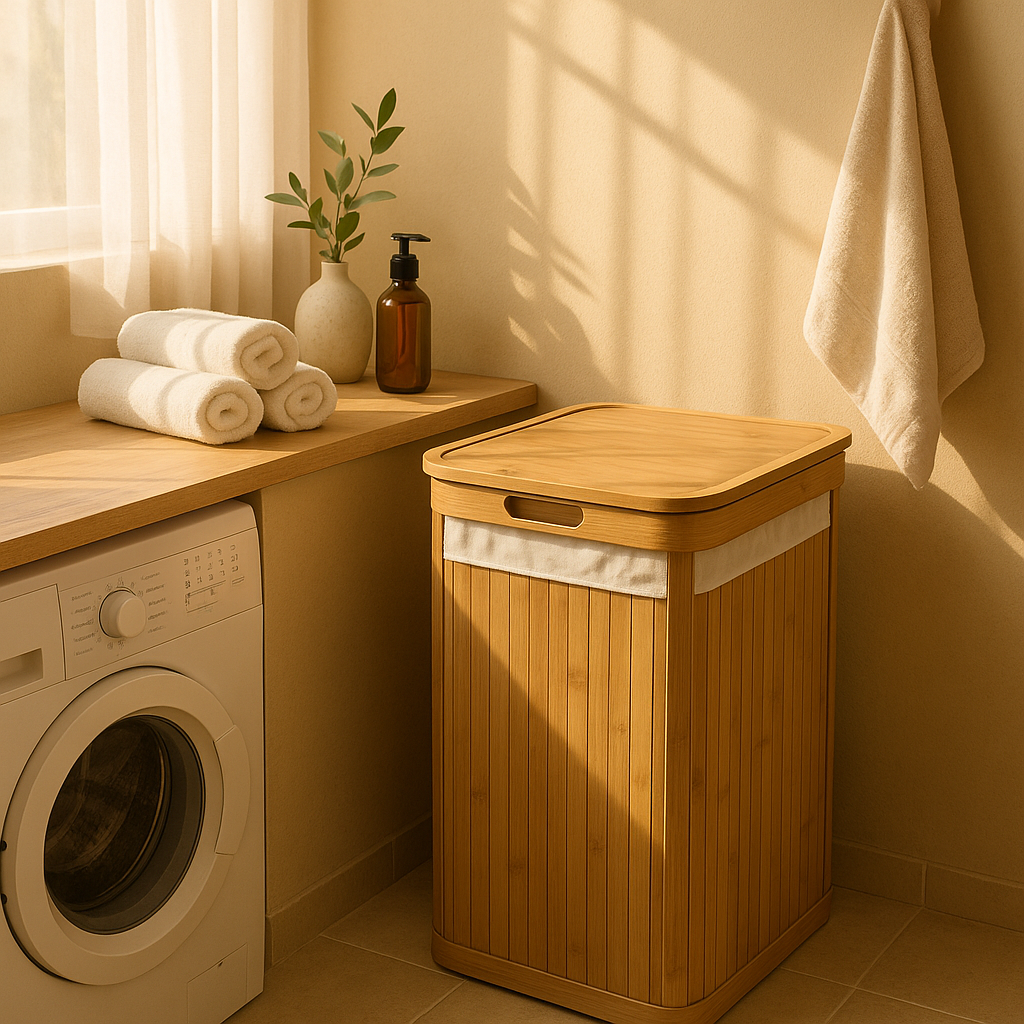
  • A Spa Day for Your Laundry Room: Oceanstar’s Bamboo Hamper Review

    Ever walk past your laundry pile and wish it looked less like a chore and more like part of the room’s décor? That’s the exact itch the Oceanstar Spa-Style Bamboo Laundry Hamper seems designed to scratch. It’s one of those small upgrades that quietly changes how a space feels, without demanding a full room redo.

    First Impressions: Function Meets Calm

    The “spa-style” label isn’t just marketing fluff — it points to a genuine design philosophy. Instead of a plastic bin shoved in a corner, you get something that looks like it belongs next to a stack of folded towels and a diffuser. That matters if your laundry area doubles as a bathroom or an open closet space visible from the hallway.

    Bamboo as a material choice also does real work here. It brings a warm, natural texture that softens a utilitarian space, and it tends to hold up well over time compared to flimsier storage materials. For anyone leaning into a minimalist or Japandi-inspired home aesthetic, this hamper reads more like furniture than laundry equipment.

    Why the Details Matter

    A hamper is one of those items you interact with daily — tossing in clothes, hauling it to the washer, lifting the lid one-handed while balancing a basket. When the basic experience feels smooth and sturdy, it removes one small friction point from your routine. That’s the kind of “boring but important” upgrade that’s easy to overlook until you’ve lived with a wobbly, cheap hamper for a few years.

    The current rating — 4.6 out of 5 stars from 1,162 reviews — suggests that a large number of buyers have found it reliable enough to recommend. That’s a meaningful sample size, and consistency at that volume is worth noting when you’re comparing it to lesser-known alternatives.

    One Honest Caveat

    Here’s the thing worth flagging: exact dimensions and capacity aren’t something we’re guessing at in this review, so if you have a very specific space in mind — a tight bathroom corner, a narrow closet — it’s worth checking the product listing carefully before you buy. Hampers can look deceptively large or small in photos, and bamboo construction, however well-made, isn’t something you want to measure wrong on the first try.

    Where It Fits in a Real Home

    This isn’t a hamper you’d hide in a closet out of embarrassment — it’s one you might actually leave out. That’s really the appeal: laundry storage that doesn’t fight against the rest of your home’s look, whether your style leans coastal, minimalist, or quietly Asian-inspired.

    If you’re the type who notices when a room feels slightly “off” because of one clashing item, this is the kind of small fix that can quietly resolve that. It won’t do your laundry for you, but it might make doing laundry feel a little less like a task and a little more like part of a calmer routine.

    You can take a closer look at the Oceanstar Spa-Style Bamboo Laundry Hamper right here to see if it fits your space.

    This post contains an affiliate link. If you purchase through it, we may earn a small commission at no extra cost to you.

    Sometimes the smallest corners of a home deserve just as much thought as the ones everyone sees.

    🛒 Check the Current Price on Amazon

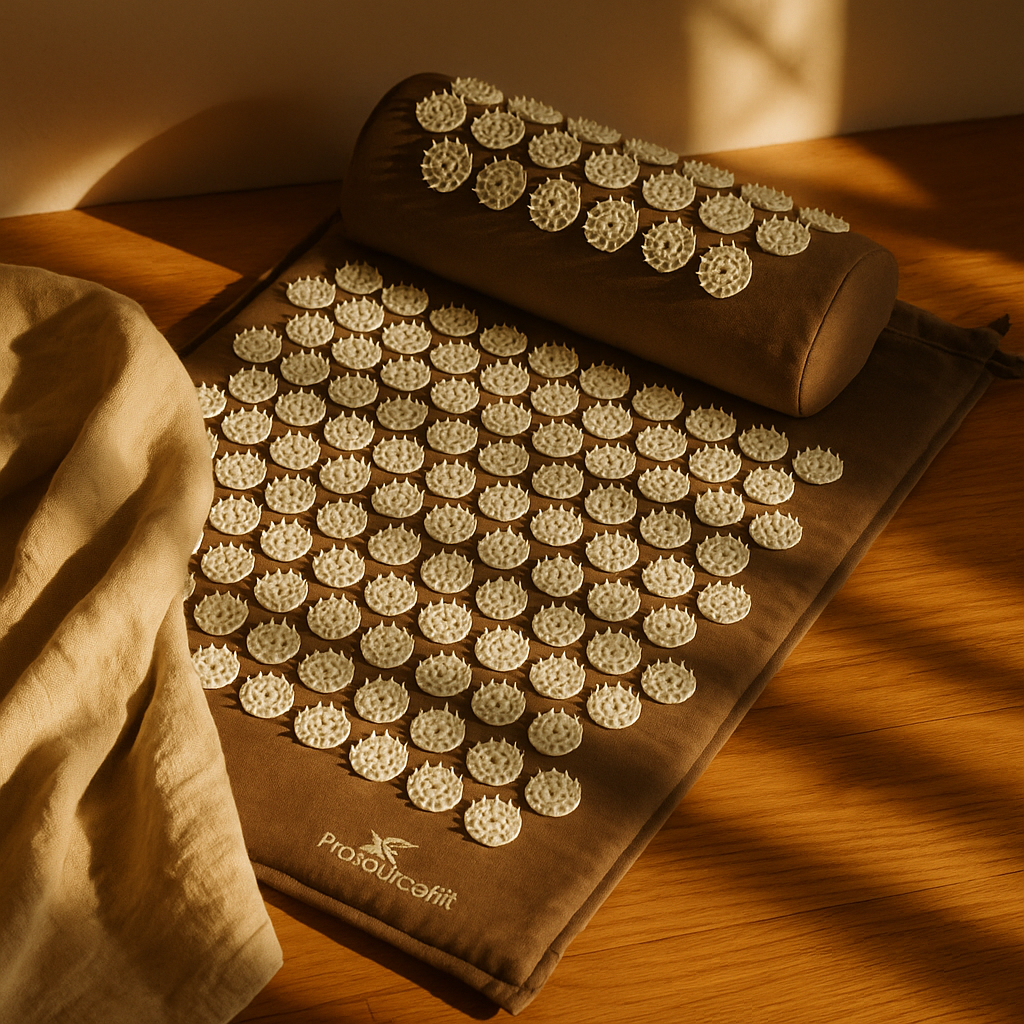
  • Can a Mat Full of Spikes Actually Fix Your Back Pain? We Tried the ProsourceFit Acupressure Set

    It’s 9 p.m., you’ve been hunched over a laptop or a stove all day, and your neck feels like it’s made of rusted hinges. You’ve tried stretching. You’ve tried complaining to whoever will listen. Maybe it’s time to try lying on a mat covered in hundreds of tiny plastic spikes.

    That’s the basic premise behind the ProsourceFit Acupressure Mat and Pillow Set, a two-piece set designed around the same pressure-point principles used in acupuncture and traditional Chinese massage, minus the needles. Instead, you get thousands of small plastic points pressing into your skin as you lie back and let gravity do the work.

    The Set: Mat Plus Pillow

    Unlike a lot of acupressure products that are just a single mat, this one comes with a matching pillow. That matters because neck and upper-back tension often need different pressure angles than your lower back or shoulders.

    Being able to prop the pillow under your neck while the mat supports your spine means you can target both areas in one lying-down session, instead of buying two separate products or awkwardly repositioning a single mat under your neck.

    Acupressure Points, Not Guesswork

    The mat’s surface is covered in clusters of plastic points arranged in a pattern meant to distribute your body weight evenly, rather than digging into one or two spots. This is the whole reason acupressure mats don’t feel like lying on a bed of nails once you settle in — the pressure spreads out across dozens of points instead of concentrating in a few painful ones.

    That distribution is also what allows people to actually relax on it for 15-20 minutes at a time, since the goal is sustained, mild stimulation rather than a sharp poke.

    Color and Simplicity

    This particular version comes in blue, which is a small detail, but if you’re rolling this mat out on your living room floor a few times a week, it’s nice that it doesn’t look like medical equipment. It reads more like a yoga accessory than a therapy device, which makes it easier to actually leave out and use instead of hiding it in a closet.

    An Honest Caveat

    Here’s the thing nobody tells you upfront: the first few times you lie on an acupressure mat, it is genuinely uncomfortable, sometimes intensely so. Your body needs to adjust to the sensation, and some people find the first session more “ouch” than “ahh.”

    If you’re sensitive to pressure or new to acupressure entirely, easing in with a shirt on or starting with just a few minutes is worth considering before committing to the full lie-down experience. It’s not a flaw in the product, more a heads-up about the learning curve.

    Worth Noting

    With over 52,000 ratings and a 4.2-star average, this isn’t a niche or unproven product. That volume of reviews suggests a lot of people have incorporated it into a regular routine, whether for tension headaches, desk-job back pain, or just winding down before bed.

    It’s also a low-effort form of self-care: no plugging anything in, no apps, no learning a routine. You unroll it, lie down, and let the mat do its job while you breathe.

    The Bottom Line

    The ProsourceFit Acupressure Mat and Pillow Set isn’t a miracle cure, but it’s a simple, low-tech tool for people looking to build a few minutes of intentional relaxation into their day. The pillow-and-mat combo covers more ground than a mat alone, and the initial discomfort tends to fade as your body gets used to it.

    If you want to see the current listing and pricing, you can check it out here: ProsourceFit Acupressure Mat and Pillow Set.

    This post contains an affiliate link. If you purchase through it, we may earn a small commission at no extra cost to you.

    Sometimes the smallest daily rituals end up doing the most to quiet a restless body.

    🛒 Check the Current Price on Amazon

  • This 5-in-1 LED Lamp Might Be the Only Nightstand Gadget You Need

    Ever find yourself juggling a phone charger, a Bluetooth speaker, a lamp, and an alarm clock on one tiny nightstand, cords tangled like a bowl of noodles? That was basically my bedroom setup until I came across the LeeNabao 5 in 1 LED Table Lamp. It promises to fold all of that into a single device, and honestly, that’s the kind of decluttering I can get behind.

    One Device, Five Jobs

    The core idea here is simple: this is a lamp, a wireless charger, a Bluetooth speaker, a night light, and an alarm clock rolled into one. Instead of five separate gadgets fighting for outlet space, you get one unit that handles bedtime scrolling, music, charging, and waking up on time.

    For anyone setting up a small desk or a minimalist bedroom corner, this kind of multi-tasking matters more than it sounds. Fewer cords means less visual clutter, which fits right in with the calm, uncluttered aesthetic a lot of Asian-inspired interiors go for.

    Wireless Charging Without the Extra Pad

    The built-in wireless charging feature is one of the more practical additions here. Instead of keeping a separate charging pad next to your lamp, you just set your phone on the designated spot and let it charge while the lamp does its thing overhead. It’s a small change, but it means one less accessory taking up desk real estate.

    This is especially handy for teens or young adults who tend to fall asleep with their phone in hand. Having the charger built into the lamp base makes it more likely the phone actually gets charged overnight instead of ending up dead on the floor.

    App Control and Night Light Mode

    Because this lamp is app controlled, you’re not limited to a single on/off switch. You can adjust settings without getting out of bed, which is a nice touch for late-night reading or when you just want to dim things down before sleep.

    The night light function adds another layer of usefulness, particularly for anyone who likes a soft glow instead of total darkness. Combined with the alarm clock feature, this lamp is clearly designed with bedside convenience in mind rather than just being a desk accessory.

    A Speaker Built Into Your Lamp

    The Bluetooth speaker component rounds out the “5 in 1” claim, letting you stream music or podcasts right from the same unit lighting your room. For a bedroom or office desk, this means one less speaker to plug in and one less thing to remember to charge separately.

    It’s a thoughtful pairing when you think about it: ambient lighting and ambient sound coming from the same spot. That’s a nice detail for anyone setting up a cozy reading nook or a calming home office corner.

    One Honest Caveat

    With any multi-function gadget like this, it’s worth remembering that combining five features into one device means you’re trusting all of them to work well together long-term. If one function has an issue, like the speaker or the app connectivity, it could affect how much you rely on the whole unit. The 4.0-star rating across 1,337 reviews suggests most buyers are happy, but as with any electronic gift, it’s smart to test all the features early after unboxing.

    That said, for the price of managing five separate purchases, having them consolidated into one lamp is a pretty appealing trade-off, especially as a Christmas or birthday gift for teens and adults who like tech-forward decor.

    This post contains an affiliate link. If you purchase through it, we may earn a small commission at no extra cost to you.

    If you want to check it out for yourself, here’s the LeeNabao 5 in 1 LED Table Lamp.

    Sometimes the best kind of home upgrade is the one that quietly does more so your space can hold less.

    🛒 Check the Current Price on Amazon

  • The Golden Warmth of Korean Ondol Culture’s Cousin: How Japanese Irori Hearths Shaped Family Life

    Photo by Gabriela Starzec on Unsplash

    The Smell That Never Leaves the Wood

    Walk into a restored farmhouse in Japan’s mountain regions and the first thing you notice isn’t the low ceiling or the worn tatami. It’s the smell — decades of pine smoke soaked into the beams, a scent that clings to clothing long after you’ve left. That smell is the residue of the irori, the sunken hearth that once sat at the center of nearly every rural Japanese home.

    Unlike a fireplace tucked against a wall, the irori occupies the middle of the main room, a square pit cut into the floor and filled with ash and burning embers. Everyone faces inward, toward the fire and toward each other. There was no getting around it — if you lived in the house, you lived around that fire.

    Where the Custom Comes From

    The irori’s roots reach back further than most people expect. Archaeological reconstructions of Jomon-period pit dwellings show central fire pits serving nearly identical purposes thousands of years ago — cooking, lighting, and warmth in a single sunken space. That basic layout survived, largely unchanged, into the farmhouses (minka) of the Edo period, when it became the architectural and social anchor of rural family life.

    What kept the design alive for so long wasn’t sentimentality. Smoke rising from an open hearth traveled up through the thatched roof, drying and preserving the straw while also driving off insects and rot. The fire wasn’t just for people — it was maintaining the house itself, day and night, season after season.

    A Seating Chart Written in Fire

    Sit at an irori and you’re not choosing a random spot. Traditionally, each side of the square hearth carried a fixed social meaning. The yokoza, facing the entrance, belonged to the household head — the person who could see who was coming and going.

    Across from him sat guests, in the kyakuza. To one side, nearest the kitchen area, women worked and sat in the kakaza, close enough to tend pots without leaving the fire’s warmth. Children and junior members took the remaining seat, the kijiriza, often the coldest spot, farthest from both the entrance and the cooking side.

    Photo by Gabriela Starzec on Unsplash

    Nobody needed to announce these positions out loud. A child learned the household’s hierarchy simply by learning where not to sit.

    The Hook That Held the House Together

    Above the flames hung a jizaikagi, an adjustable pothook suspended from the ceiling on a bamboo or wooden rod. By sliding a peg up or down, whoever tended the fire could raise or lower an iron kettle to control how hard it boiled.

    Many of these hooks were carved in the shape of a fish, and the choice wasn’t decorative whimsy. Fish live in water, and a wooden fish hanging over an open flame was believed to guard the house against the one disaster a wooden building feared most: an uncontrolled fire. The kettle itself, kept simmering through the day, meant hot water was always on hand for tea, for cooking, for washing — the irori functioned less like a stove and more like a household utility line.

    Not the Same Fire as Ondol, Just a Cousin

    It’s tempting to lump the irori together with Korea’s ondol as variations on the same idea, but the mechanics diverge in a telling way. Ondol channels smoke and heat beneath a raised stone or clay floor, warming the room by conduction from below while keeping the fire itself out of sight in a separate furnace space.

    The irori does the opposite. The fire stays visible, at floor level, radiating heat directly and filling the room with smoke that has to escape upward through the roof rather than through underground flues. Where ondol warms the body through the floor you sit on, irori warms you by proximity to flame you can watch, tend, and gather around. Both grew out of a need to survive cold seasons in wooden or stone dwellings, but each culture solved the problem with a completely different relationship between people and fire.

    Photo by zero take on Unsplash

    Why the Fire Went Out

    By the mid-twentieth century, the irori was disappearing from Japanese homes at a steady pace. Gas stoves cooked faster and cleaner, electric heaters didn’t fill your eyes with smoke, and thatched roofs — the kind that needed constant smoke-curing — were being replaced by tile and metal.

    What got lost wasn’t just a heating method. It was the daily ritual of a family arranging itself around a single point of warmth, in seats that told everyone their place without a word spoken.

    Where You Can Still Find One

    Today, working irori survive mostly in preserved villages like Shirakawa-go and in countryside ryokan that market the experience deliberately to travelers. Sit at one of these hearths, order grilled fish skewered on bamboo and propped at an angle around the embers, and you’ll notice how conversation slows down. There’s no screen competing for attention, just the occasional pop of sap in burning wood.

    If you’re near a region with a preserved minka or a ryokan advertising an irori dinner, book a seat at the hearth rather than a table. Notice where you’re asked to sit, and ask your host what that seat traditionally meant — it’s a small question that opens up centuries of quiet household order.

    A fire in the center of a room doesn't just warm a house — it decides who sits where, and who belongs.

  • The 3-Tier Round End Table That Solves the Small-Space Struggle

    Photo by Orkun Azap on Unsplash

    You know that spot next to the couch or beside your bed that’s just… empty? Too small for a bookshelf, too awkward for a full-size nightstand, but you still need somewhere to set down a mug, your phone, or that stack of books you swear you’ll finish this month.

    That’s the exact gap this Round Small End Table is built to fill. It’s designed specifically for tight corners and small spaces, which makes it a natural fit for apartments, reading nooks, or that narrow strip between your armchair and the wall.

    Three Tiers Instead of One Flat Surface

    Most small end tables give you a single tabletop and call it a day. This one uses a 3-tier oval design, which means you actually get layered storage instead of just one crowded surface.

    That matters more than it sounds. The top tier can hold your lamp or drink, the middle tier can catch your remote or glasses, and the bottom tier becomes a landing spot for books or a plant. You’re not stacking everything precariously in one place.

    Rustic Wood and Metal, Built to Blend In

    The rustic brown wood paired with metal legs gives it that Asian-inspired, understated look that works whether it’s sitting next to a couch or doubling as a nightstand. It’s not trying too hard to be a statement piece, which is honestly the point of a good side table.

    The metal frame also does practical work here. It’s what allows the tiered design to stay open and airy instead of feeling like a boxy cabinet, so it doesn’t visually crowd a small room the way bulkier furniture can.

    Easy to Assemble Actually Means Something

    The listing specifically calls out that it’s easy to assemble, and for a piece like this, that’s not a throwaway detail. A three-tier table has more parts to align than a basic single-top table, so straightforward assembly instructions save you from an afternoon of frustration.

    If you’ve ever wrestled with furniture that looked simple in photos but turned into a puzzle once the box was open, you’ll appreciate when a brand actually delivers on that promise.

    One Honest Caveat

    Because this table is designed for small spaces, it’s not going to give you the surface area of a full-size console or a wide coffee table. If you’re picturing a spot to spread out a laptop, snacks, and a candle all at once, the tiers help, but each individual shelf is still on the smaller side. It’s built for compact convenience, not sprawling storage.

    Where It Fits Best

    Think tight bedroom corners where a bulky nightstand won’t fit, small apartment living rooms, or that narrow gap beside a recliner. The oval shape also helps it tuck into spaces where a square table’s corners would feel like they’re in the way.

    It’s a table that seems designed around the reality that not every room has room to spare, which is exactly the problem it’s solving.

    This post contains an affiliate link. If you purchase through it, we may earn a small commission at no extra cost to you.

    If you’ve been putting off filling that awkward empty corner, this one’s worth a look: Round Small End Table – 3 Tier Oval Accent Table.

    Sometimes the right piece of furniture isn’t the biggest one in the room, it’s the one that finally makes an awkward space make sense.

    🛒 Check the Current Price on Amazon

  • The Little Table That Solves Big Small-Space Problems

    Photo by Alex Padurariu on Unsplash

    You know that awkward corner in your bedroom or the sliver of space next to your couch that’s too small for furniture but too big to ignore? We’ve all stared at that gap wondering what could possibly fit there without making the room feel cramped.

    That’s exactly the puzzle this 3-tier oval accent table seems built to solve. It’s compact enough for tight spots but still gives you three separate surfaces to work with, which is a rare combination in small-space furniture.

    Three Tiers, Three Jobs

    The obvious win here is the tiered design itself. Instead of one flat surface where your lamp, phone, book, and coffee mug all compete for room, you get three distinct levels to spread things out.

    This matters more than it sounds. A single-tier nightstand often turns into a cluttered mess within a week, while a tiered layout naturally encourages you to designate a spot for each item, like books on the bottom, lamp up top, glasses in the middle.

    Rustic Wood Meets Metal Frame

    The rustic brown wood paired with a metal frame gives it a look that fits comfortably into farmhouse, industrial, or Asian-inspired minimalist spaces without screaming for attention. It’s the kind of piece that blends in rather than competes with your existing decor.

    The metal frame construction also matters for a practical reason: it typically holds up better than an all-wood build when you’re using the table as a nightstand and reaching for it in the dark, or when it’s doing double duty as a couch-side table that gets bumped into regularly.

    Genuinely Easy to Assemble

    Furniture assembly is often the part nobody wants to talk about until it’s a frustrating hour with an Allen wrench. This table is specifically built to be easy to assemble, which is worth calling out since not every “accent table” delivers on that promise.

    For anyone who’s ever sworn off flat-pack furniture after a bad experience, this is a small but meaningful detail.

    One Honest Caveat

    Because this is a small end table designed specifically for tight spaces, it’s not going to work as a primary coffee table or a surface for larger lamps and decor pieces. If you’re picturing something that can hold a stack of oversized books plus a large plant plus a lamp all at once, this may feel limited. Measure your space and your intended use before buying, since “small” is the whole point of this design, not a bonus.

    Where It Fits Best

    This table seems best suited for exactly the spaces its name suggests: a bedroom nightstand, a narrow gap beside a couch, or any small living room corner that needs function without bulk. If your space is genuinely tight, the round oval shape also helps it avoid sharp corners that can make small rooms feel more cramped.

    This post contains an affiliate link. If you purchase through it, we may earn a small commission at no extra cost to you.

    If this sounds like the piece your small space has been missing, you can check it out here: Round Small End Table – 3 Tier Oval Accent Table.

    Sometimes the smallest pieces in a room end up doing the most quiet, consistent work.

    🛒 Check the Current Price on Amazon

  • How Korean Ondol Floor Heating Shaped Traditional Home Layouts

    The Floor That Decides Where You Sit

    Step into an old Korean home in winter and the first thing you notice isn’t a fireplace or a radiator. It’s the floor itself, warm enough that you instinctively want to sit down, then lie flat against it. Your palm on the varnished paper-covered surface feels almost like touching sun-warmed stone.

    That warmth wasn’t an accident of design. It was the starting point. Korean builders didn’t add heating to a finished house plan; they built the entire house around the question of how heat would travel under the floor and where people would naturally gather once it arrived.

    Fire, Smoke, and the Shape of a House

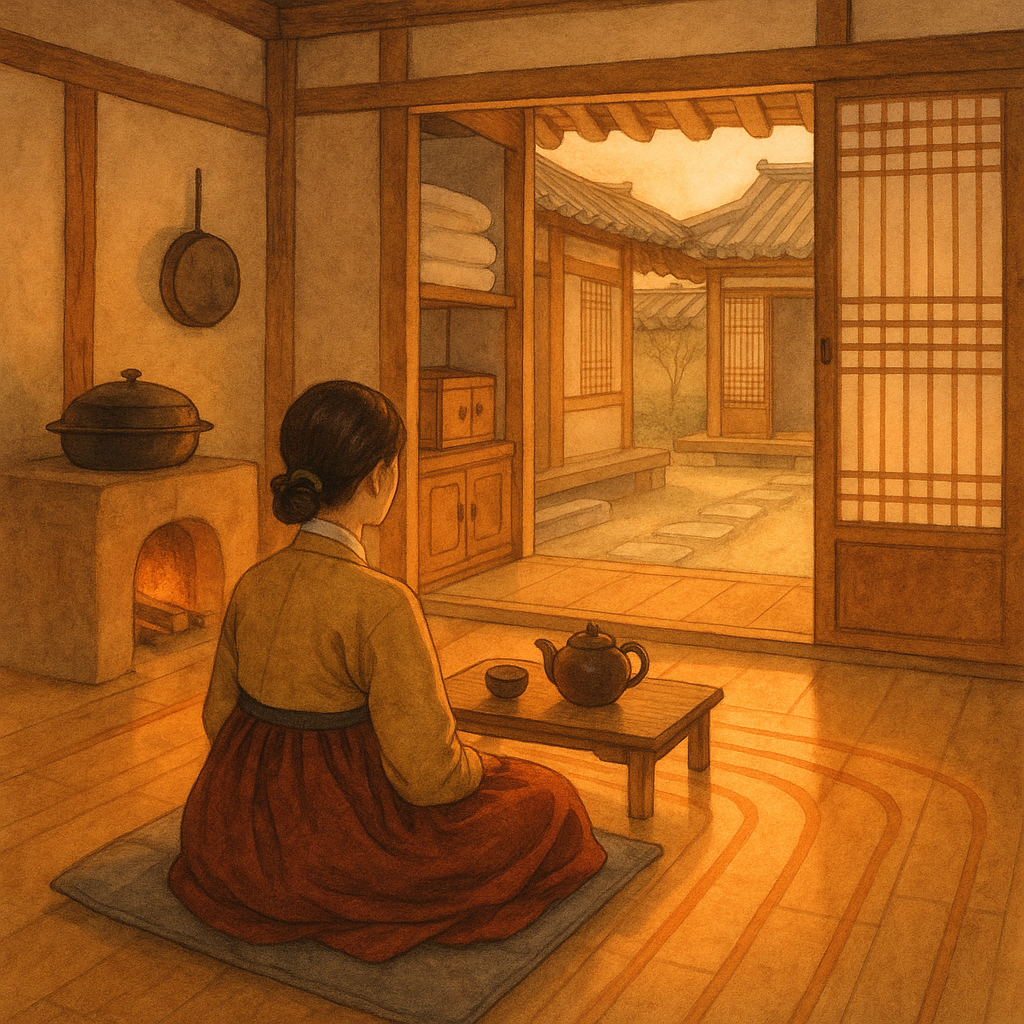
    The system is called ondol, and its logic is mechanical before it’s cultural. A fire lit in a low hearth, the agungi, sends heat and smoke through a network of stone flues running beneath the floor slab, called gudeul, before the smoke exits through a chimney on the far side of the house.

    Because heat moves in one direction, from firebox to chimney, the kitchen almost always sat lower than the main living rooms and shared a wall with them. This is why traditional hanok kitchens feel sunken compared to the raised wooden floors of the sarangbang or anbang rooms next door.

    The chimney’s placement mattered just as much. Builders positioned it away from the entrance and prevailing wind so smoke wouldn’t blow back into the courtyard, which quietly dictated where doors, courtyards, and even neighboring buildings could sit on the property.

    A Heating System With Centuries of Memory

    Ondol’s underfloor heating principle developed over centuries, with archaeological traces of heated floor channels found in dwellings long before the technique became the standard for Korean homes nationwide. Over time it spread from northern regions, where cold winters made floor heating a practical necessity, southward into homes across the peninsula.

    By the Joseon dynasty, ondol had become close to universal in Korean residential architecture, regardless of a family’s wealth. A modest farmhouse and a yangban scholar’s house might differ enormously in scale and ornament, but both were built around the same underfloor flue system.

    Living Low: Furniture, Posture, and the Multi-Use Room

    Because the floor itself was the heat source, sitting or lying directly on it made far more sense than perching on a chair above the warm air. This single fact explains why traditional Korean furniture sits so close to the ground: low tables (soban), floor cushions (bangseok), and folded bedding (yo and ibul) rather than raised beds.

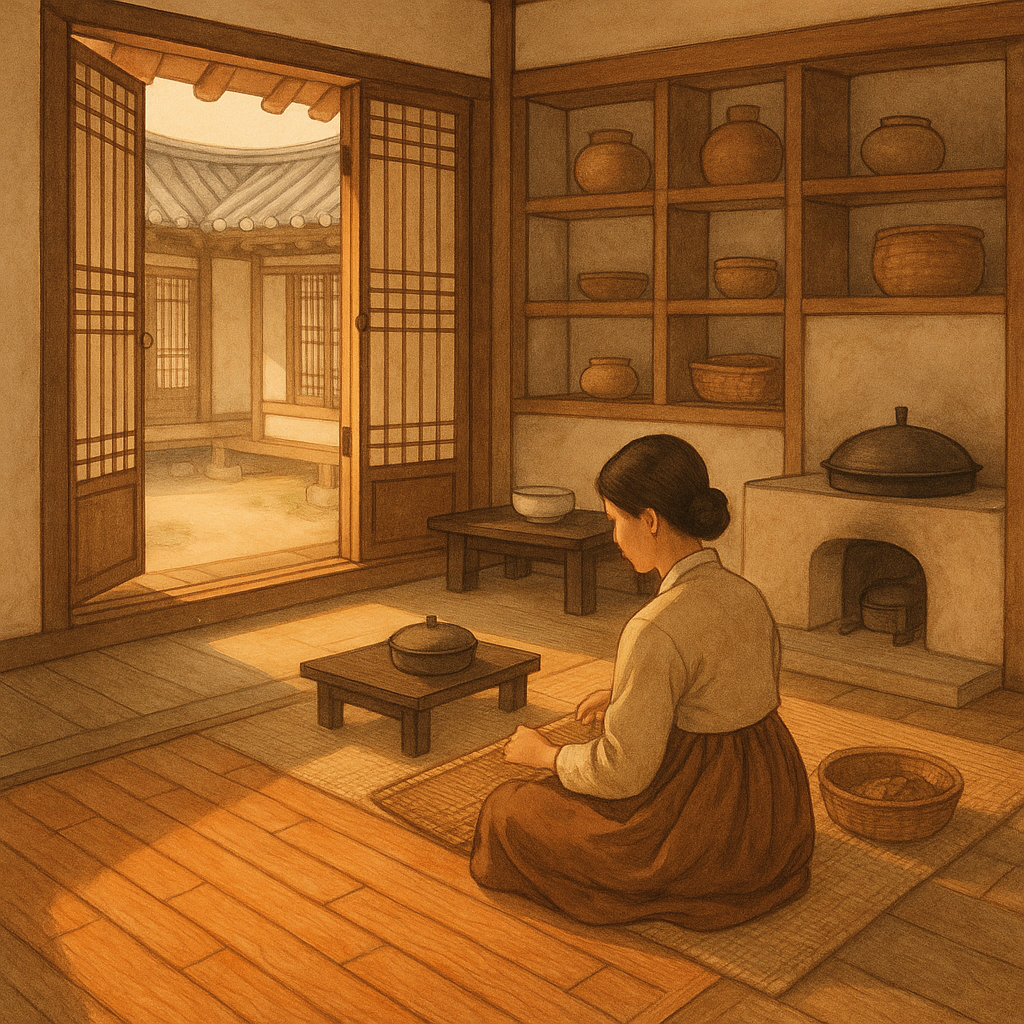
    It also explains why a single room could serve several purposes across a day. A room used for eating at a low table in the evening became a bedroom once the bedding was unrolled directly onto the warm floor, then a sitting room again once everything was folded and stored in a wall closet by morning.

    Western homes needed separate rooms labeled by function because furniture was fixed and often bulky. Ondol rooms stayed flexible because the heat, not the furniture, defined what the room could be used for.

    The Warmest Spot and the Family Hierarchy

    Not every part of an ondol floor heats evenly. The area closest to the firebox, called the arraetmok, stays noticeably hotter, while the far end near the chimney, the utmok, cools off faster.

    Photo by zero take on Unsplash

    Households used this temperature gradient socially. The warmest spot was traditionally reserved for the eldest member of the family or an honored guest, while children and younger family members sat or slept toward the cooler end. A floor plan that looks perfectly uniform on paper actually organized a household’s social order every single evening.

    From Wood Fire to Hot Water Pipes

    Modern Korean apartments still run on ondol, but almost none of them burn wood or coal anymore. Hot water circulates through pipes embedded in the concrete floor slab, heated by a gas boiler tucked into a utility closet rather than an open hearth.

    Yet the architectural habits the old system created haven’t disappeared. Korean apartments are still built with the expectation that people will sit on the floor, which is why living rooms often include low tables and why many households still keep folded bedding rather than permanent bed frames in at least one room. Underfloor heating even shaped how Korean restaurants are laid out today, with low tables and floor seating sections still common alongside Western-style chairs.

    The materials changed from stone flues to PEX piping, but the basic decision, heat the floor and let people gather on it, has stayed remarkably consistent from the Joseon countryside to a Seoul high-rise.

    Try It for Yourself

    If you want to feel the difference ondol makes rather than just read about it, book a night at a hanok stay in Jeonju’s Hanok Village or Seoul’s Bukchon district, where many guesthouses still heat rooms the traditional way with wood-fired gudeul. Notice where the staff place the bedding, and ask which spot is the arraetmok before you choose where to sleep.

    If travel isn’t an option right now, look for a Korean restaurant near you with a floor-seating section, take off your shoes, and sit for a full meal at a low table. Pay attention to how differently your body settles in when the floor beneath you is warm instead of just carpeted.

    Warmth rises from the floor, not the air, and a room arranges itself around where heat gathers.

  • Feng Shui Basics for Arranging a Peaceful Living Room

    Photo by Spacejoy on Unsplash

    Why Your Sofa Might Be Working Against You

    Picture a living room where the couch backs directly onto the front door, and every time someone rings the bell, whoever is seated feels a small jolt of unease. That reaction isn’t just about noise. In feng shui, it’s a textbook example of a “commanding position” problem — you can’t see what’s coming toward you, and your body registers that as vulnerability, even if your mind doesn’t consciously notice.

    This is the starting point for understanding feng shui in a living room: it isn’t about hanging a bamboo flute in the correct corner or buying a jade frog from a gift shop. It’s a system for observing how a space makes the body feel, refined over centuries in China through close attention to landscape, wind direction, and water flow.

    Where the Practice Actually Comes From

    Feng shui — literally “wind” (feng) and “water” (shui) — developed in ancient China as a method for siting graves, homes, and later entire cities in relation to hills, rivers, and prevailing winds. Farmers and scholars alike noticed that certain orientations toward sun, water, and mountain backing seemed to correlate with better harvests and calmer households.

    Over generations, these landscape observations were codified into a body of knowledge involving the compass, the five elements (wood, fire, earth, metal, water), and the concept of qi — a kind of vital energy believed to circulate through any environment. Imperial architects used feng shui principles when planning palace layouts, and the practice eventually filtered down into ordinary domestic life, including how a family arranged the main room where guests were received.

    That domestic layer — not the grand palace version — is what most of us are working with when we rearrange a living room today.

    The Commanding Position: Feng Shui’s Most Practical Rule

    If you take away only one principle, make it this one. Your main seating — usually the sofa — should have a solid wall behind it, a clear view of the room’s entry point, and enough distance from the door that it doesn’t feel like foot traffic will collide with your knees.

    Photo by Ariel Domenden on Unsplash

    A sofa floating awkwardly in the middle of a room, with its back to a doorway or hallway, creates a low-grade sense of exposure. You may not name it as “feng shui,” but you’ve probably felt it: a restlessness that makes you want to move the furniture without knowing why. Anchoring the sofa against a solid wall, angled so anyone sitting there can see who walks in, tends to settle that feeling almost immediately.

    Reading the Room Through the Five Elements

    Traditional feng shui maps five elements onto color, material, and shape: wood (green, rectangular forms, plants), fire (red, triangular shapes, candlelight), earth (yellow and terracotta tones, low square furniture), metal (white, gray, round or oval objects), and water (black, blue, flowing or irregular shapes). A balanced living room doesn’t need all five in equal measure — it needs enough variety that no single element dominates and starves the others.

    A room built entirely of glass, chrome, and white leather, for instance, is heavy on metal and light on wood and fire — it can read as sleek but cold, almost clinical under bright light. Adding a wooden side table, a wool throw in deep red or rust, or a cluster of leafy plants near the window brings warmth back without abandoning the room’s original character.

    This is less about strict rules and more about noticing imbalance the way you’d notice a dish that’s missing salt.

    Clutter, Sharp Edges, and “Poison Arrows”

    Traditional feng shui pays close attention to sha qi, sometimes translated as “poison arrows” — the sensation of being subtly attacked by sharp corners, exposed beams, or narrow hallways pointed directly at where people sit. A glass coffee table with knife-edge corners aimed at the sofa is a common modern offender.

    Photo by Spacejoy on Unsplash

    The fix is usually simple: round the edges with a table runner or plant, angle the furniture slightly, or swap the piece for one with softened corners. Clutter carries a related but separate weight. Stacks of mail on a side table, cables snaking across the floor, and shoes piling up near the entrance all block qi from moving freely through the room, according to the tradition — and even without invoking energy at all, a cluttered surface visibly raises stress levels every time you walk past it.

    Light, Plants, and the Bagua Map

    Natural light is treated as a carrier of qi, so heavy curtains that block daytime sun are generally discouraged unless privacy demands them. Sheer fabric in linen or cotton, in soft cream or pale green, lets light diffuse through the room rather than cutting it off at the window.

    Many practitioners also use the bagua map, an eight-sided diagram overlaid onto the floor plan to identify zones linked to areas of life — wealth, health, relationships, and so on. Applying it to a living room might mean placing a small money plant or a piece of art with rich green tones in the far-left corner from the entrance, which is traditionally associated with abundance. You don’t need to follow the bagua map with architectural precision; even a rough alignment, paired with a plant that’s actually kept alive and watered, does more good than a perfectly measured corner with a wilting fern.

    Try This in Your Own Room Tonight

    Start with the sofa. Stand at your living room’s main entrance and check whether the seating faces you or turns its back to you — if it’s the latter, spend ten minutes tonight pulling it against the nearest solid wall.

    Then do a five-minute clutter sweep: clear the coffee table, coil loose cables, and remove anything by the door that’s been sitting there for more than a week. Finally, pick one element your room is missing — a small wooden bowl, a red cushion, a trailing pothos in a terracotta pot — and add just that single piece before buying anything else. Small, deliberate changes like these are closer to how feng shui was actually practiced in Chinese households for generations: through ongoing attention, not a single dramatic overhaul.

    A room finds its calm when the furniture faces life, the clutter clears, and one true element remains.