Tag: south-korea

  • Why South Korea Is Delaying Its Crypto Tax Again, to 2029

    Why South Korea Is Delaying Its Crypto Tax Again, to 2029

    South Korea’s finance ministry wants to put off taxing cryptocurrency profits for another two years, moving the planned start date to 2029 instead of 2027. Finance Minister Lee Hyoung-il announced the shift at a briefing on Nov. 5, according to Yonhap, in what would be the fourth time Seoul has pushed back the long-promised levy.
    man in blue dress shirt sitting on rolling chair inside room with monitors
    Photo by Austin Distel on Unsplash
    Key facts

    • Finance Minister Lee Hyoung-il said Nov. 5 that Seoul will push the start of crypto gains taxation back two years, from 2027 to 2029, according to Yonhap.
    • If approved, this would mark the fourth postponement since the tax was first legislated in 2020 for a planned 2022 rollout, Yonhap reported.
    • Under the pending rules, a 22% levy (including local income tax) would apply to yearly crypto profits above 2.5 million won, roughly $1,869–$1,900, per Korea Times and Yonhap.
    • The government cited the 2029 start of virtual-asset information sharing with the United States and pending changes under the proposed Digital Asset Basic Act as reasons for the delay, Yonhap and Korea Times reported.
    • Ruling Democratic Party of Korea chief Kim Min-seok had formally asked for another postponement just a day before the minister's announcement, according to Korea Times.

    What happened

    Speaking in Seoul, Lee said his ministry intends to work with lawmakers to formally postpone the tax, which was originally legislated in 2020 and had been due to take effect in 2022 before three earlier delays, Yonhap reported. He acknowledged the difficulty of asking for yet another extension after so many previous ones, per Yonhap’s account of his remarks.

    The timing is notable: the announcement came roughly a month after officials had reaffirmed plans to move forward with the tax as scheduled, and just one day after Kim Min-seok, chairman of the ruling Democratic Party of Korea, publicly called for another delay, according to Korea Times.

    Under the rules awaiting implementation, profits from selling or lending digital assets would be treated as miscellaneous income. Gains above an annual threshold of 2.5 million won — about $1,869 to $1,900, depending on the source — would face a combined rate of 22%, covering both national and local income tax, once deductions for acquisition costs and related expenses are applied, per Korea Times and Yonhap.

    Why it matters

    Repeated delays raise questions about how predictable and credible Korean tax policy is, a concern Korea Times says critics have voiced alongside suspicions of political motives behind the latest reversal. For investors and exchanges, the shifting timeline makes it harder to plan for compliance costs or adjust trading strategies.

    The finance ministry frames the delay differently, saying in a statement cited by Yonhap that the goal is to preserve the basic principle that crypto income should eventually be taxed, while improving how both domestic and cross-border transactions are assessed and making the system fairer for taxpayers overall.
    people walking on gray concrete pathway near green and brown building during daytime
    Photo by Markus Winkler on Unsplash

    Background

    A major driver behind the new timeline is an international arrangement: South Korea is set to begin exchanging virtual-asset transaction data with the United States starting in 2029. Officials argued that taxing crypto gains domestically before that information-sharing system is active could leave Korean exchanges and investors at a competitive disadvantage compared with overseas platforms, according to both Korea Times and Yonhap.

    The government also pointed to an in-progress Digital Asset Basic Act, which is expected to redefine how digital assets and service providers are classified and regulated. Finalizing that broader framework first, officials said, would make the eventual tax rules more coherent.

    What to watch

    The finance ministry plans to set up a joint public-private working group to iron out technical details, refine filing procedures, and develop clearer rules for different types of crypto transactions, Yonhap reported. That group is expected to hold its first meeting soon, with discussions continuing through the first half of next year.

    Separately, the government is considering letting investors carry forward crypto losses to offset future taxable gains, within a three-year limit — a mechanism similar to practices in the United States and the United Kingdom, according to Yonhap. Legislative amendments covering the delay are expected to go before the National Assembly during its regular 2027 session.

    Our read: with tax-sharing deadlines and new regulatory frameworks both tied to 2029, officials are betting that aligning the tax rollout with those milestones will outweigh the political cost of a fourth postponement. Whether lawmakers and the public accept that trade-off may shape how much credibility future tax timelines carry.

    Frequently asked questions

    When would South Korea's crypto tax now take effect?

    The finance ministry wants the levy to begin in 2029 instead of 2027, pending approval from the National Assembly, according to Yonhap.

    How much tax would investors pay once it starts?

    Annual crypto profits exceeding 2.5 million won (about $1,869–$1,900) would be taxed at 22%, including local income tax, per Korea Times and Yonhap.

    Why is the government delaying the tax again?

    Officials point to the 2029 start of tax-data sharing with the U.S. and the need to finalize rules under a planned digital asset law, Yonhap reported.

    Sources

    This article was prepared with AI assistance from the reports listed above and automatically checked against them. See About for how we work.
  • POSCO Future M, Hyundai Eye Vietnam Battery Anode Plant Deal

    POSCO Future M, Hyundai Eye Vietnam Battery Anode Plant Deal

    South Korean battery materials maker POSCO Future M and Hyundai Motor Group have signed a letter of intent covering a synthetic graphite anode plant in Vietnam, with Hyundai weighing an equity stake worth 100 billion won, according to BusinessKorea and The Korea Herald. BusinessKorea converts that sum to about $72.7 million, while The Korea Herald puts it at roughly $74.4 million.

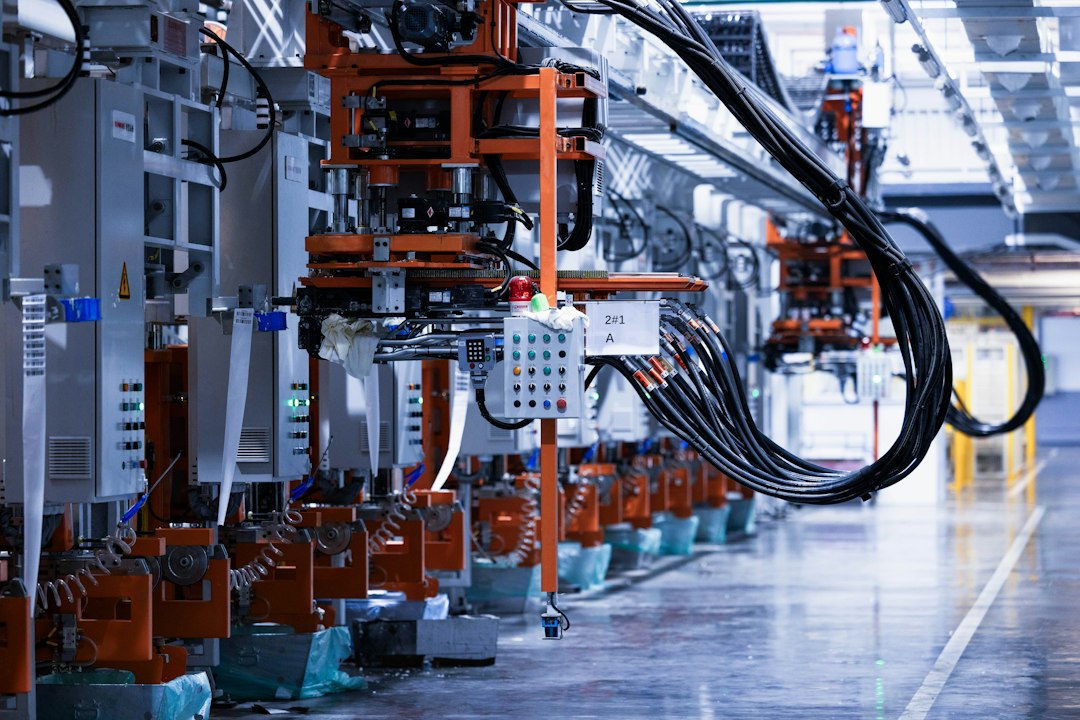
    a line of electrical equipment in a factory
    Photo by Homa Appliances on Unsplash
    Key facts

    • POSCO Future M and Hyundai Motor Group signed a letter of intent on Nov. 3 covering a synthetic graphite anode project in Vietnam, according to BusinessKorea and The Korea Herald.
    • Hyundai is considering an equity stake worth 100 billion won, reported as about $72.7 million by BusinessKorea and about $74.4 million by The Korea Herald.
    • If the investment goes through, Hyundai would gain priority purchasing rights for anode material made at the plant.
    • POSCO Future M has already begun building the facility in Thai Nguyen, Vietnam, and is aiming for mass production by 2028.
    • The companies say this builds on a cooperation agreement from April of last year covering steel and battery materials.

    What happened

    The two companies finalized the agreement on Nov. 3, outlining Hyundai’s potential investment in POSCO Future M’s Vietnam-based synthetic graphite anode material business, both outlets reported. Should the investment proceed, Hyundai would be granted priority purchasing rights for the anode materials manufactured at the site. The firms also plan to work together on early-stage product development and quality testing aimed at meeting the demands of higher-performance electric vehicles, according to the reports.

    Why it matters

    Synthetic graphite anodes are valued in battery production because they can improve fast-charging ability and extend battery lifespan compared with natural graphite alternatives, per BusinessKorea. Securing a steady supply of this material has become more pressing as rules like the foreign entity of concern requirements in the United States and the European Union’s Industry Acceleration Act push companies to diversify where they source battery components, the outlet noted.

    For POSCO Future M, bringing in a major automaker as an investor could help it move faster on expanding production capacity abroad. For Hyundai, locking in a supply line and buying priority for a key EV material could support its push to localize and secure battery inputs outside of existing supply chains.

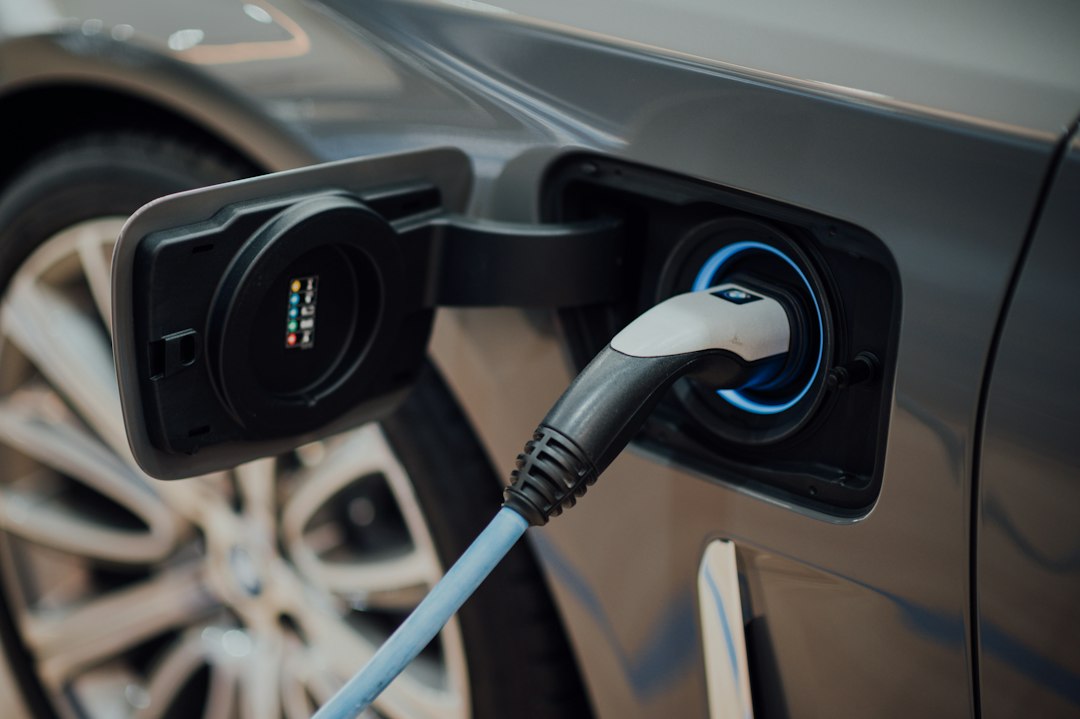
    electric vehicle charging cable plugged into car
    Photo by CHUTTERSNAP on Unsplash

    Background

    This latest step follows an earlier cooperation agreement the two companies struck in April of last year, which focused on joint work across steel production and secondary battery materials, according to BusinessKorea. The companies describe the new Vietnam initiative as part of a broader effort to deepen their partnership as global trade rules shift and industries adjust their supply networks.

    POSCO Future M has already started construction on the anode plant in Thai Nguyen, Vietnam, with mass production targeted for 2028, per BusinessKorea’s reporting. The company says it has lined up customer contracts covering the first phase of investment and is now working on a second phase of funding for the project.

    What to watch

    Whether Hyundai’s roughly $74 million stake becomes final will depend on further steps beyond this letter of intent, which is a preliminary, non-binding agreement rather than a signed investment contract. Progress on POSCO Future M’s second-phase funding, along with how the Thai Nguyen plant’s construction timeline unfolds toward the 2028 production goal, will likely shape how this partnership develops.

    Our read: the deal reflects a broader pattern among Korean manufacturers of locking in battery material supply through direct investment rather than relying solely on long-term purchase contracts, a response to tightening rules on where EV supply chains can source critical components.

    Frequently asked questions

    What did POSCO Future M and Hyundai Motor Group agree to?

    On Nov. 3 they signed a letter of intent for Hyundai to consider investing in POSCO Future M's synthetic graphite anode material project in Vietnam, according to BusinessKorea and The Korea Herald.

    How much might Hyundai invest?

    The proposed stake is valued at 100 billion won, which outlets converted to roughly $72.7 million (BusinessKorea) or $74.4 million (The Korea Herald).

    What would Hyundai get in return?

    If the deal is finalized, Hyundai would secure priority purchasing rights for the anode materials produced at the Vietnam facility, per the source reports.

    Sources

    This article was prepared with AI assistance from the reports listed above and automatically checked against them. See About for how we work.
  • Korea’s Top Court Upholds $13.9M Broadcom Fine Over Samsung Deal

    Korea’s Top Court Upholds $13.9M Broadcom Fine Over Samsung Deal

    South Korea’s Supreme Court has finalized an antitrust fine of 18.664 billion won — roughly $13.8 to $13.9 million depending on the exchange rate used — against U.S. chipmaker Broadcom, closing out a years-long dispute over how the company treated Samsung Electronics in a component supply deal, according to Yonhap, The Korea Herald, The Korea Times and BusinessKorea.

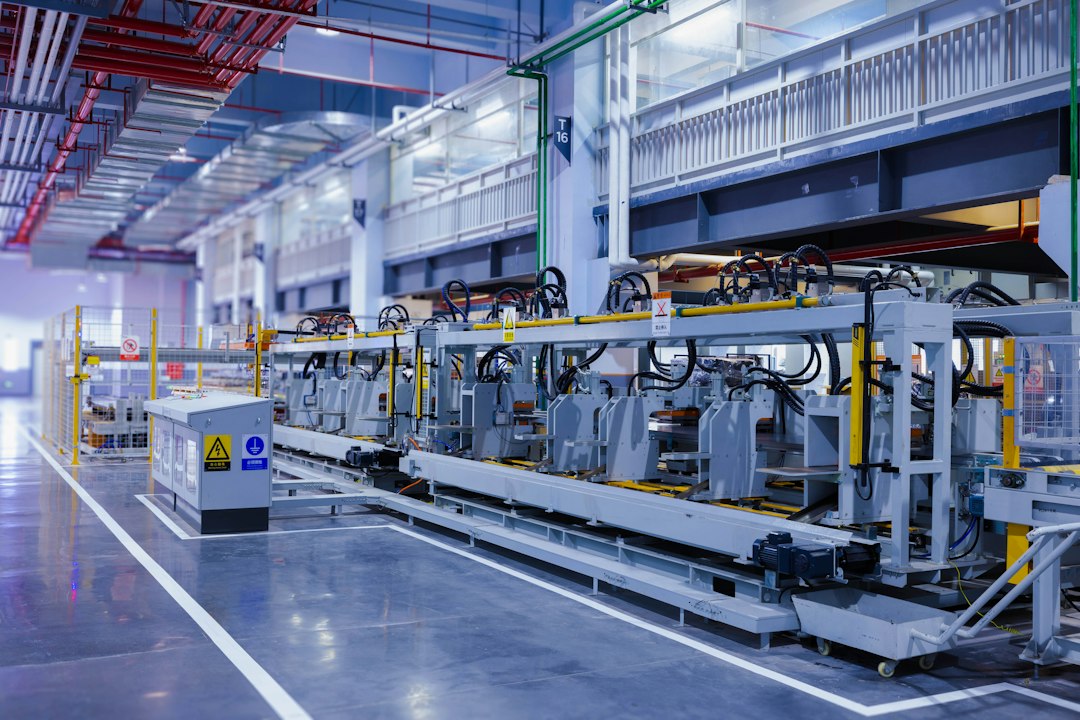
    a large machine in a large building
    Photo by Homa Appliances on Unsplash
    Key facts

    • South Korea's Supreme Court dismissed Broadcom's appeal on Oct. 27, finalizing an 18.664 billion won fine ($13.8–13.9 million, depending on exchange rate used), according to Yonhap, The Korea Herald and The Korea Times.
    • The Korea Fair Trade Commission (FTC) first imposed the penalty in September 2023 for Broadcom's conduct toward Samsung Electronics, per BusinessKorea.
    • In 2020, Broadcom reportedly demanded Samsung commit to buying at least $760 million worth of components annually for three years starting in 2021, with Samsung required to cover any shortfall, according to all four outlets.
    • The FTC found Broadcom halted purchase-order approvals, shipments, production and technical support when Samsung resisted the terms, per BusinessKorea.
    • The Seoul High Court had already ruled against Broadcom in May before the case reached the Supreme Court, according to Yonhap and The Korea Times.

    What happened

    The Supreme Court’s First Petty Bench, presided over by Justice Cheon Dae-yeop, dismissed an appeal filed by Broadcom’s U.S. headquarters and affiliated companies, according to BusinessKorea. The ruling, issued Oct. 27 and confirmed by legal sources in the following days, finalizes a Seoul High Court decision from May that had already sided with Korea’s Fair Trade Commission (FTC), as reported by Yonhap and The Korea Times.

    The case traces back to a contract Samsung signed with Broadcom in March 2020. Under the deal, Samsung committed to purchasing at least $760 million worth of Broadcom components annually for three years starting in 2021, with a clause requiring Samsung to pay the difference if actual purchases fell short, according to all four outlets.

    BusinessKorea reported that Samsung only agreed to these terms after Broadcom suspended approval of purchase orders and halted shipments, production, and some technical support — actions the FTC said were designed to force Samsung’s hand. Samsung reportedly feared disruptions to its smartphone production if it did not comply.

    Why it matters

    The FTC concluded that Broadcom’s tactics restricted Samsung’s ability to choose alternative suppliers and blocked rivals from competing for the business, according to BusinessKorea. The regulator estimated that the restrictions cost Samsung at least $160 million in additional expenses based on exchange rates at the time.

    Our read: the ruling signals that Korea’s antitrust enforcement extends firmly to foreign suppliers dealing with domestic manufacturers, even when the supplier holds significant leverage over a critical part of the supply chain. For global chip companies operating in Korea, the case underscores that aggressive supply-chain tactics can draw regulatory scrutiny and costly, multi-year legal battles.

    a large building with a clock on the front of it
    Photo by Babak Habibi on Unsplash

    Background

    The FTC first imposed the corrective order and penalty surcharge on Broadcom in September 2023, according to BusinessKorea. Broadcom challenged the decision in a lawsuit filed in November 2023, per The Korea Times and Yonhap. The case proceeded through Korea’s standard appeals process: an FTC decision, once contested, goes to the Seoul High Court, with further appeals possible to the Supreme Court, as Yonhap noted.

    The Seoul High Court sided with the FTC in May, finding the fine justified, according to Yonhap. It also reportedly determined that Broadcom used unusual means — namely the unilateral halt on parts supply — to compel Samsung into a contract whose terms were disadvantageous to the Korean company, per BusinessKorea.

    What to watch

    With the Supreme Court’s dismissal, the FTC’s fine and corrective order against Broadcom are now final, closing this particular chapter of the dispute. The case may factor into how other multinational suppliers structure long-term contracts with Korean manufacturers going forward, particularly around exclusivity and minimum-purchase clauses.

    It also reflects a broader pattern of Korean regulators scrutinizing the bargaining practices of dominant global tech and component suppliers. How Broadcom adjusts its commercial relationships with Samsung and other Korean partners in light of this outcome remains to be seen.

    Frequently asked questions

    How much was Broadcom fined?

    The Korea Fair Trade Commission fined Broadcom 18.664 billion won, reported as roughly $13.8 to $13.9 million depending on the exchange rate cited by different outlets.

    What did Broadcom do to Samsung?

    According to BusinessKorea, Broadcom pressured Samsung into a 2020 long-term supply contract by suspending purchase-order approvals, shipments and technical support, pushing Samsung to commit to buying at least $760 million in parts annually for three years.

    What did the Supreme Court decide?

    The Supreme Court's First Petty Bench, led by Justice Cheon Dae-yeop, dismissed Broadcom's appeal on Oct. 27, confirming the Seoul High Court's earlier ruling that upheld the FTC's penalty, per BusinessKorea and Yonhap.

    Sources

    This article was prepared with AI assistance from the reports listed above and automatically checked against them. See About for how we work.

  • What Caused Incheon Airport’s Check-In Meltdown on 13 Airlines

    What Caused Incheon Airport’s Check-In Meltdown on 13 Airlines

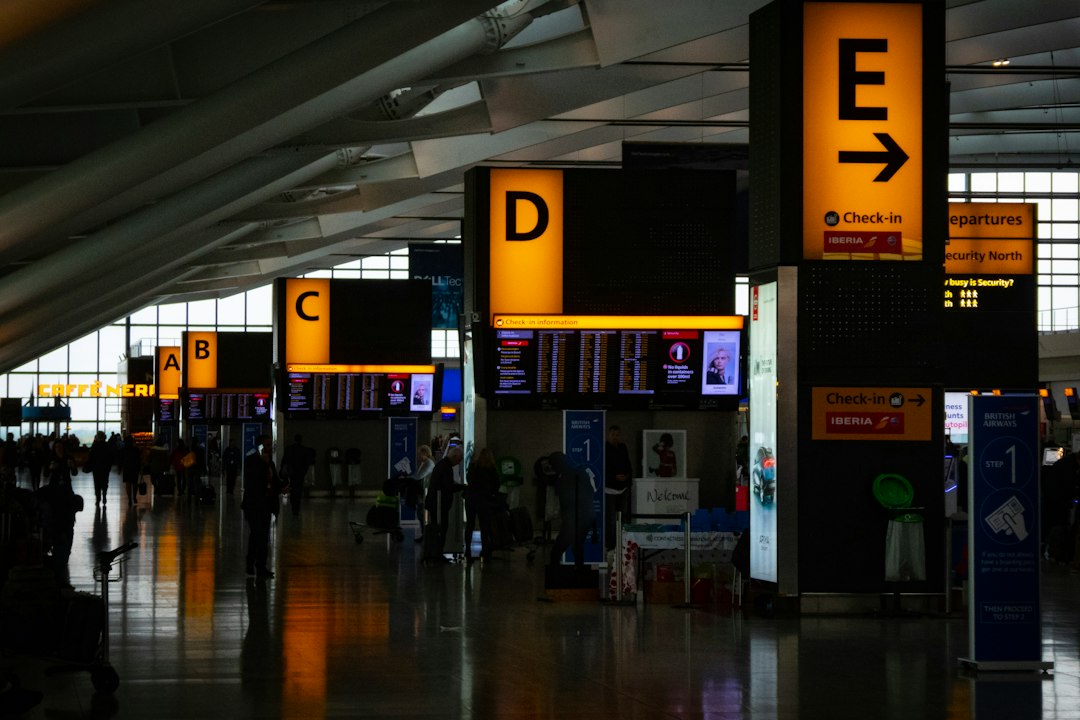
    A technical fault in the computer network linking airlines to Incheon International Airport’s check-in software triggered widespread delays on Friday, Oct. 30, 2026, leaving passengers at 13 carriers facing long waits, according to Yonhap and The Korea Times.

    building interior photograph
    Photo by Nick Fewings on Unsplash
    Key facts

    • The malfunction began around 4:30 a.m. on Friday, Oct. 30, 2026, according to Incheon International Airport Corp., as cited by Yonhap and The Korea Times.
    • Thirteen airlines were affected in total — eight operating from Terminal 1 and five from Terminal 2 — with intermittent connectivity problems, per Yonhap.
    • By 2:19 p.m., check-in processing had come to a near-total stop for three Chinese carriers: China Southern Airlines, China Eastern Airlines and Air China, The Korea Herald and The Straits Times reported.
    • The airport operator said the issue likely stemmed from instability within ARINC, a US-based global airline network provider, according to Yonhap and The Korea Times.
    • Passengers formed long lines at counters, with some saying airlines gave no estimate of when service would resume despite nearing departure times, Yonhap reported.

    What happened

    The airport operator, Incheon International Airport Corp., said the trouble surfaced at roughly 4:30 a.m. inside the digital system that connects airlines to their ticketing platforms at the country’s busiest gateway. Communication between several carriers and the airport’s check-in infrastructure became unreliable throughout the morning, with eight airlines based in Terminal 1 and another five in Terminal 2 experiencing on-and-off outages, Yonhap reported.

    The situation worsened as the day went on. By 2:19 p.m., three Chinese airlines — China Southern Airlines, China Eastern Airlines and Air China — had effectively lost the ability to process passengers at all, according to both The Korea Herald and The Straits Times. Queues stretched out from check-in desks as staff struggled to manage travelers manually, and some passengers told reporters, per Yonhap, that airline staff could not tell them when the system might be restored even as their boarding times approached.

    Why it matters

    Incheon is South Korea’s primary international airport, and a breakdown affecting over a dozen airlines at once shows how dependent modern air travel is on shared digital infrastructure. When one piece of that network falters, the effects can ripple across multiple carriers and terminals simultaneously rather than staying isolated to a single airline.

    Our read: incidents like this highlight a vulnerability in commercial aviation — airlines increasingly rely on outside vendors for core functions such as ticketing, so a single point of failure can cascade into delays affecting thousands of travelers regardless of which airline they booked with.

    a sign that is in front of a building
    Photo by Jametlene Reskp on Unsplash

    Background

    The airport corporation traced the likely source of the problem to ARINC, a US-based company that operates a global data network used by airlines for operations such as passenger processing, according to Yonhap and The Korea Times. Disruptions tied to shared aviation technology providers are not unique to South Korea; airports and airlines worldwide depend on similar third-party systems to keep check-in and boarding running smoothly, and any instability in those networks can quickly affect multiple carriers at different locations.

    An airport official, quoted by The Straits Times, said that flight delays were concentrated among the airlines whose ticketing had been suspended and noted that a detailed review of the incident would follow.

    What to watch

    It remains to be seen how Incheon Airport Corp. and ARINC will explain the root technical cause once their assessment is complete, and whether any structural fixes will be announced to prevent a repeat. Travelers flying with the affected carriers, particularly China Southern, China Eastern and Air China, may want to confirm check-in status directly with their airline before heading to the airport in the near term.

    Reporting from Yonhap, The Korea Times, The Korea Herald and The Straits Times is consistent on the timeline and the airlines involved, with Yonhap and The Korea Times providing the additional detail that ARINC’s network was the suspected source of the instability.

    Frequently asked questions

    What triggered the Incheon Airport check-in disruption?

    According to Incheon International Airport Corp., as reported by Yonhap and The Korea Times, the trouble was likely linked to instability in the network run by ARINC, a US-based aviation service provider used for ticketing connections.

    Which airlines were hit hardest?

    Three Chinese carriers — China Southern Airlines, China Eastern Airlines and Air China — saw their check-in processing effectively stop by early afternoon, per The Korea Herald and The Straits Times.

    How many airlines were affected overall?

    Thirteen airlines experienced some level of disruption — eight based in Terminal 1 and five in Terminal 2 — according to Yonhap's report citing the airport operator.

    Sources

    This article was prepared with AI assistance from the reports listed above and automatically checked against them. See About for how we work.
  • South Korea’s Top Banks Hit Record Profits as Scrutiny Grows

    South Korea’s Top Banks Hit Record Profits as Scrutiny Grows

    South Korea’s largest banking groups closed out the first nine months of the year with record profits, even as financial regulators sharpen their focus on cybersecurity lapses and governance failures across the sector.

    Modern office building with blue facade and gray facade
    Photo by Abdul Ridwan on Unsplash
    Key facts

    • KB Financial Group's nine-month net profit reached a record 5.79 trillion won, up 13.1 percent from a year earlier, according to the Korea Herald.
    • Shinhan Financial Group also posted a record nine-month profit of 5.03 trillion won, with third-quarter profit up 11.3 percent year-on-year, per the Korea Times.
    • Combined third-quarter net profit at KB, Shinhan, Hana and Woori totaled 5.76 trillion won, the Korea Times reported.
    • Hana posted its highest quarterly profit since its 2015 merger with Korea Exchange Bank, while Woori was the only one of the four to see profit fall, down 15.7 percent.
    • Financial Supervisory Service Governor Lee Chan-jin pressed banking executives on cybersecurity and internal controls following a string of data breaches, the Korea Times reported.

    What happened

    KB Financial Group reported its strongest nine-month performance ever, with net profit climbing 13.1 percent from the same period last year to reach 5.79 trillion won, according to the Korea Herald. The gain was largely fueled by a surge in fee income tied to brokerage activity and investment products, which jumped 38.5 percent to 4.09 trillion won over the nine-month stretch. Quarterly results told a slightly different story: KB’s third-quarter profit of 1.91 trillion won marked a step down of 4.3 percent from the prior quarter’s peak, even though it remained well above year-ago levels.

    Shinhan Financial Group posted similarly strong numbers, with its own nine-month profit setting a new high at 5.03 trillion won, the Korea Times reported. Its third-quarter profit of 1.58 trillion won represented an 11.3 percent increase from a year earlier. Hana Financial Group logged a third-quarter profit of 1.22 trillion won, its best quarterly showing since the 2015 merger that combined Hana Bank with Korea Exchange Bank. Woori Financial Group broke from the pack, with third-quarter profit sliding 15.7 percent to 1.04 trillion won — still enough to mark its second straight quarter above the 1 trillion won mark, a first since the group’s founding in 2019. Altogether, the four groups’ combined third-quarter profit reached 5.76 trillion won, per the Korea Times.

    Why it matters

    These results show South Korea’s banking sector remains highly profitable, with fee-based businesses like brokerage and asset management increasingly supplementing traditional lending income. That diversification has helped firms like KB post standout growth even when trading conditions cooled later in the period.

    Our read: the profit figures arrive just as regulators are demanding more from these same institutions on risk controls. That timing puts pressure on banking groups to prove that strong earnings aren’t masking weaknesses in how they manage emerging threats like cyberattacks.

    A dense cityscape in Seoul, South Korea, under a warm orange sky at night
    Photo by Mathew Schwartz on Unsplash

    Background

    South Korea’s financial holding companies have consolidated significant market power over the past decade, with a handful of large groups dominating retail and corporate banking alongside brokerage and insurance arms. This structure allows cross-selling of financial products, which has become a growing profit driver. At the same time, concentrated market power has drawn ongoing attention from regulators concerned about systemic risk and consumer protection.

    According to the Korea Times, a recent string of cyberattacks and resulting data leaks across the financial industry has heightened concerns about the sophistication of threats, including tools powered by artificial intelligence. Financial Supervisory Service Governor Lee Chan-jin reportedly urged banking executives to strengthen their security systems and internal oversight during a meeting this week.

    What to watch

    Analysts and industry officials will likely watch whether fee income from brokerage and investment products can sustain its growth pace into the final quarter, given that trading activity already showed signs of softening in KB’s case. Regulatory follow-through is another factor to track, as supervisors continue pressing financial groups on data security and governance standards.

    Woori’s performance also bears watching, since its profit decline stood out against gains at its three largest peers. Whether that trend continues or reverses could shape how the broader sector is perceived heading into next year.

    Frequently asked questions

    Which South Korean bank posted the biggest nine-month profit?

    KB Financial Group led with a record 5.79 trillion won in net profit for the first nine months, according to the Korea Herald.

    Did all four major banking groups see profit growth?

    No. While KB, Shinhan and Hana posted gains, Woori's third-quarter net profit fell 15.7 percent to 1.04 trillion won, per the Korea Times.

    Why are regulators paying closer attention to these banks now?

    A recent wave of cyberattacks and data leaks, combined with governance concerns, prompted the Financial Supervisory Service to demand stronger accountability from financial holding companies.

    Sources

    This article was prepared with AI assistance from the reports listed above and automatically checked against them. See About for how we work.