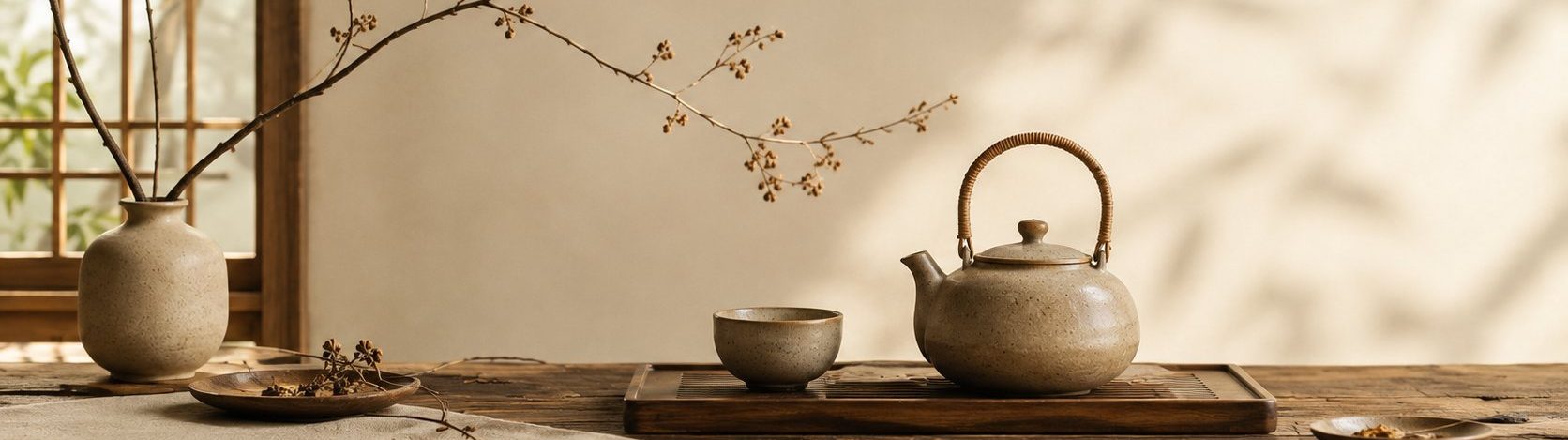
Slow Living, Asian Wisdom

블로그

  • The Seasonal Wisdom of Chinese Solar Terms: Living in Rhythm with Nature

    An Ancient Clock Without Hands

    Ask a farmer in rural Shaanxi when to plant sorghum, and he might not check an app. He’ll tell you it’s three days past Guyu, the “grain rain” term, when the soil finally holds enough moisture to sprout seeds without rotting them.

    This isn’t superstition. It’s the residue of a system that predates thermometers, satellites, and even the printed calendar—one that Chinese farmers refined by watching the sky for centuries.

    Twenty-Four Signposts Through a Single Year

    The system, known as the 24 solar terms (二十四节气), divides the solar year into twenty-four roughly fifteen-day segments, each tied to the sun’s position and named for what actually happens on the ground: Awakening of Insects, Grain in Ear, White Dew, Frost’s Descent.

    Traditionally, the framework took shape through generations of agricultural observation along the Yellow River basin, and was recorded in something close to its full form in the Huainanzi, a text compiled around the 2nd century BCE during the Han dynasty. It wasn’t invented by one scholar in a study; it was assembled from what worked in the fields.

    Each term carries a small, testable prediction. Jingzhe, “Awakening of Insects,” marks the point when the first spring thunder is expected to rouse hibernating creatures from the soil. You can actually listen for it.

    The Kitchen Calendar

    Long before nutritionists talked about seasonal eating, Chinese households were already doing it by the solar terms. At Qingming in early April, families in southern China make qingtuan—glutinous rice balls dyed green with mugwort or barley grass juice, eaten cool, slightly grassy, faintly sweet.

    Dongzhi, the Winter Solstice term, splits the country in two at the dinner table. In the north, families gather to make dumplings, following an old warning that skipping them on this day will leave your ears frozen through winter. In the south, people eat tangyuan instead—soft rice balls in warm syrup, round like the returning light after the year’s longest night.

    These aren’t nostalgic gestures performed once a year for show. In many households, they’re simply what’s for dinner when that date rolls around.

    Thunder, Superstition, and the Logic of Small Rituals

    Some solar term customs sound stranger out of context. In Guangdong, Jingzhe is when some people still practice “da siu yan,” striking a paper effigy with a shoe to beat away bad luck and troublesome people for the year ahead.

    It sounds theatrical, but the timing makes sense once you know the season. Insects and pests are waking up alongside the thunder—so, symbolically, is misfortune, and the ritual gives people a concrete moment to push it back out the door.

    This is the real function of the solar terms: they turn an abstract, sliding year into a series of specific, nameable moments you can act on.

    Photo by zhang kaiyv on Unsplash

    Why an Old Farming System Still Matters

    In 2016, UNESCO inscribed the 24 solar terms onto its Representative List of the Intangible Cultural Heritage of Humanity, recognizing them not as a relic but as a living system still shaping calendars, cuisine, and even traditional medicine practice across China today.

    Air conditioning and greenhouse produce have loosened our dependence on the seasons, which is exactly why the terms feel worth revisiting now. They offer something a digital calendar can’t: a built-in prompt to actually notice whether the air has changed, whether the light is different, whether something outside your window shifted overnight.

    Try It This Week

    Look up which solar term the current date falls under—there are only twenty-four, and most have a simple name in English that tells you exactly what to watch for. Then spend one afternoon this week doing what the term suggests: listen for the first thunder, notice the length of daylight, or cook one dish tied to the season instead of whatever’s easiest.

    You don’t need the whole system to start. You just need one term, and a few minutes of paying attention.

    Long before clocks, people told time by what the sky and soil were already telling them.

  • The Layered Art of Japanese Furoshiki: Wrapping as a Way of Life

    Photo by Sandra Harris on Unsplash

    The Cloth That Remembers Its Folds

    In a small grocery in Kyoto, an elderly clerk once wrapped a single watermelon in a square of indigo cotton, tucked the corners into a knot, and handed it over with a built-in handle. No tape, no box, no plastic net. The whole transaction took maybe fifteen seconds.

    That square of cloth is called furoshiki, and it does something most modern packaging can’t: it disappears back into your bag when you’re done, ready to become something else tomorrow. A grocery wrap today, a gift cover next week, a picnic mat after that.

    From the Bathhouse Floor to the Merchant’s Cart

    The name itself tells a story. “Furo” means bath, “shiki” means to spread out, and the cloth traditionally got its name from the mats bathers used to stand on while undressing at communal bathhouses, keeping their belongings separate from everyone else’s.

    Cloth wrapping in Japan goes back further still, with fabric used to bundle and protect valuables traditionally dating to the Nara period, when temple treasures were kept folded in cloth for storage. But it was during the Edo period, as bathhouse culture spread through the growing city of Edo, that the practical habit of wrapping one’s clothes and toiletries in a square cloth turned into something closer to a design tradition.

    Merchants noticed. A wrapped parcel was easier to carry through crowded streets than a rigid box, and a printed cloth signaled who you were, what shop you patronized, even what season it was.

    A Different Knot for Every Shape

    What makes furoshiki genuinely clever is that the cloth adapts to the object instead of the other way around. A book gets a simple diagonal fold called otsukai-zutsumi, tight and flat. A bottle of sake gets bin-zutsumi, where two corners twist upward into a carrying loop that also cushions the glass.

    Photo by Sandra Harris on Unsplash

    Watermelons, awkward and round, have their own method entirely: the cloth cradles the fruit like a sling, knotted at the top so the weight distributes evenly across your palm instead of straining your fingers. There are traditionally dozens of named wraps, each solving a specific problem of shape, weight, or fragility.

    Learning even three or four of these folds changes how you look at a square of fabric. It stops being decorative and starts being a tool.

    Plastic Bags, and Why the Cloth Came Back

    Furoshiki nearly vanished after the war, pushed aside by cheap paper bags and then plastic. For a few decades, wrapping cloth felt like something only grandmothers still bothered with.

    That changed as Japan’s Ministry of the Environment began actively promoting furoshiki in the 2000s as a low-effort alternative to single-use bags, distributing instructional pamphlets and holding public demonstrations. The timing lined up with a broader unease about packaging waste, and suddenly a centuries-old habit looked less nostalgic and more practical.

    Textile designers responded by printing furoshiki with contemporary patterns, bold geometric prints alongside the traditional cranes and waves, so the cloth could sit on a office desk without looking like a museum piece.

    Photo by Clay Banks on Unsplash

    Wrapping as an Act of Attention

    There’s a concept in Japanese called mottainai, a sense of regret over waste, and furoshiki carries that idea in its very construction. You don’t throw away a wrapping cloth after one use; you fold it flat and use it again next week, in a completely different shape.

    Gift-giving makes this especially visible. Wrapping a present in furoshiki takes longer than taping paper around a box, and that extra time is part of the message. You’re telling the recipient the object mattered enough to handle carefully, and the cloth itself becomes a second gift once the first one is unwrapped.

    Compare that to gift wrap destined for the trash within minutes, and the philosophy behind furoshiki starts to feel less quaint and more like a quiet argument about what things are worth.

    Try This Today

    Find any square scarf or bandana in your closet, roughly 20 inches across. Place a book or a bottle in the center, fold two opposite corners over the top, then tie the remaining two corners into a simple knot on top.

    Carry it that way for one errand this week instead of reaching for a bag. Notice how the cloth folds flat in your pocket afterward, ready for whatever you need to carry next.

    A single cloth, folded differently each time, can hold almost anything you're willing to carry with care.

  • The Graceful Art of Korean Tea Ceremony: Discovering Darye

    The Sound Before the Tea

    A kettle sits over low coals in a wood-floored room, and for a full minute nobody speaks. The host watches the water, not the guests, waiting for the exact moment the bubbles turn from a hiss to a soft rolling murmur. Only then does she reach for the cups. This waiting, more than the drinking itself, is the first thing you notice about darye, Korea’s traditional way of tea.

    Not Japan’s Chanoyu, Not China’s Gongfu Cha

    It’s tempting to lump all Asian tea rituals together, but darye follows its own logic. Where Japanese chanoyu is built on precise, almost theatrical choreography, and Chinese gongfu cha centers on repeated short infusions poured over a tightly packed clay pot, Korean darye leans toward restraint and naturalness, a value Koreans call jayeon.

    There is no single fixed script that every host must follow. Movements are unhurried and quiet rather than performed, and the emphasis falls less on technical mastery than on the mood created between host and guest, a concept rooted in jeong, the warmth of genuine care for another person.

    Roots in Temples and Scholars’ Studies

    Tea drinking in Korea traces back to contact with continental Buddhist culture, when monks began cultivating tea for use in temple offerings and quiet contemplation. Over centuries, tea moved from monastery gardens into the daily life of Confucian scholars, the seonbi, who found in tea preparation a discipline for cultivating a calm, upright mind.

    Photo by Sergey N on Unsplash

    By the nineteenth century, Korean tea culture had faded in many households, kept alive mainly in temples. The Buddhist monk Chosun Uisun helped revive it, writing “Dongdasong,” a poem-essay praising Korean tea and arguing that the spirit of tea and the spirit of Zen practice were one and the same. His writing is still cited today whenever Koreans talk about what makes their tea culture distinct.

    The Leaves Themselves

    Korean green tea is graded by when the leaves are picked, not by variety alone. Ujeon, harvested before the spring rains, produces a pale yellow-green liquor with a faint sweetness and almost no bitterness. Sejak and jungjak, picked slightly later, give a fuller body and a grassier, more vegetal cup.

    Two regions dominate Korean tea farming: Boseong, with its terraced hillsides in South Jeolla province, and Hadong, along the Seomjin River, where wild tea bushes have grown on steep slopes for generations. Water temperature matters here more than in most tea traditions; Korean green tea is typically brewed cooler than boiling, around 60 to 70 degrees Celsius, to avoid scorching the leaf and to protect its natural sweetness.

    Photo by zero take on Unsplash

    A Room Built for Quiet

    The setting matters as much as the tea. A traditional darye room uses a low wooden table called a dawon, floor cushions, and sliding doors covered in hanji, the translucent mulberry paper that softens sunlight into a warm, even glow.

    Cups and pots are often celadon, the pale jade-green glazed pottery Korea has produced since the Goryeo period, its surface sometimes etched with cranes or willow branches under the glaze. The room stays sparse on purpose. Nothing competes with the sound of water or the color of the tea in the cup.

    The Unspoken Rules of the Table

    Guests are served before the host, and cups are offered and received with both hands, a small gesture of respect rather than casual habit. A slight bow of the head, not a deep bow, acknowledges the pour.

    Nobody rushes to drink immediately. The pause before the first sip lets the guest notice the tea’s color and aroma, and it signals attentiveness to the host’s effort. These small courtesies come from

    In the quiet space between pouring and receiving, tea becomes a language of respect.
  • Finding Beauty in Imperfection: Wabi-Sabi Minimalism for Your Home

    Photo by Glauco Zuccaccia on Unsplash

    The Chip in the Mug You Never Threw Away

    There’s a mug in my cupboard with a hairline crack running from the rim down toward the handle. It doesn’t leak, not yet, but every time I pour tea into it, the crack catches the light and reminds me it’s been dropped, used, forgiven. I could replace it. I haven’t.

    That small, stubborn attachment to an imperfect object is close to what Japanese aesthetics call wabi-sabi. It’s not a design trend you can shop for in a single afternoon. It’s a way of looking at things that have weathered, faded, or cracked, and finding them more honest for it.

    Where the Words Come From

    Wabi originally described the quiet melancholy of solitude, a rustic simplicity found in modest, unadorned surroundings. Sabi referred to the beauty that emerges as objects age, the patina on bronze, the moss creeping over a stone lantern, the silvering of unfinished wood left out in the rain.

    Over centuries, these two ideas merged and were shaped deeply by Zen Buddhism, particularly through the tea ceremony tradition associated with the tea master Sen no Rikyu. Rikyu favored rough, hand-shaped tea bowls over polished Chinese porcelain, and small, unadorned tea rooms over grand halls. His preference wasn’t poverty for its own sake; it was a deliberate turn away from display and toward presence.

    This history matters because wabi-sabi isn’t decoration layered onto a room. It grew out of a spiritual practice concerned with impermanence, the Buddhist idea that nothing lasts and that trying to freeze things in a flawless state is a kind of suffering. A cracked bowl, in that light, isn’t a failure. It’s evidence of time passing honestly.

    Not the Same as “Minimalist” Instagram Rooms

    It’s worth separating wabi-sabi from the crisp, all-white minimalism that’s become a design cliché online. That look often prizes newness disguised as simplicity, glossy surfaces, matching furniture, nothing out of place.

    Photo by Vatsal Tyagi on Unsplash

    Wabi-sabi minimalism tolerates asymmetry, uneven edges, and visible signs of handwork or age. A shelf doesn’t need to be spotless plywood painted white; it can be a single slab of unvarnished cedar with a knot in the grain left exposed. The point isn’t emptiness for its own sake, but removing what’s unnecessary so the few remaining things, worn as they are, can be seen clearly.

    What It Actually Looks Like in a Room

    Walk into a home shaped by this sensibility and you’ll notice texture before color. Walls might be finished in rough plaster instead of smooth paint. Floors are often unlacquered wood that darkens and dents over years of bare feet crossing them.

    Ceramics are rarely a matched set. A tea cup might have a slightly uneven lip because it was thrown by hand, its glaze pooling darker in one spot than another. Natural materials dominate: linen that wrinkles, paper screens that yellow slightly with sunlight, iron kettles that develop rust-colored patches with use.

    Light plays a quiet role too. Rooms are often kept dim compared to Western interiors, lit by a single low lamp or the filtered glow through a shoji screen rather than overhead fixtures. Shadows are allowed to stay, not chased out of every corner.

    The Discipline of Leaving Things Alone

    One of the harder parts of this philosophy, especially for anyone used to renovating or upgrading, is resisting the urge to fix everything. A wooden table that’s scarred with water rings from decades of teacups isn’t sanded down and refinished. The marks stay, because they’re part of the object’s history.

    Photo by jack berry on Unsplash

    This requires a kind of restraint that goes against most modern home advice, which usually pushes toward “before and after” transformations. Wabi-sabi asks you to sit with the “after” that just keeps aging, without rushing to intervene.

    Bringing This Into a Home That Isn’t in Kyoto

    You don’t need a traditional Japanese house to work with this idea, but you do need to change what you reach for when something in your home shows wear. Instead of replacing a scratched wooden cutting board, oil it and keep using it.

    Choose one or two handmade ceramic pieces, a bowl or a cup with a slightly irregular shape, and use them daily rather than saving them for guests. Let a linen curtain wrinkle instead of ironing it flat. If you have houseplants, resist deadheading every fading leaf immediately; a slightly drooping branch has its own quiet shape.

    Pare down what’s on display, not to achieve a sterile look, but so the objects you keep, worn as they are, actually get noticed instead of disappearing into visual clutter.

    Try This Tonight

    Pick one object in your home that you’ve been meaning to replace simply because it’s chipped, faded, or scuffed, a mug, a cutting board, a wooden stool. Instead of setting it aside, use it tonight exactly as it is, and notice what the wear actually looks like up close.

    If you want to go a step further this week, visit a local pottery studio or a shop that sells handmade ceramics rather than a big-box store, and choose one imperfect piece, uneven glaze, a slightly off-center shape, to bring into your daily routine. Living with it, rather than reading about it, is where wabi-sabi actually starts to make sense.

    Wear is not damage to hide, but a life quietly recorded on the surface of things we use.

  • How Korean Ondol Floor Heating Shaped Traditional Home Layouts

    The Floor That Decides Where You Sit

    Step into an old Korean home in winter and the first thing you notice isn’t a fireplace or a radiator. It’s the floor itself, warm enough that you instinctively want to sit down, then lie flat against it. Your palm on the varnished paper-covered surface feels almost like touching sun-warmed stone.

    That warmth wasn’t an accident of design. It was the starting point. Korean builders didn’t add heating to a finished house plan; they built the entire house around the question of how heat would travel under the floor and where people would naturally gather once it arrived.

    Fire, Smoke, and the Shape of a House

    The system is called ondol, and its logic is mechanical before it’s cultural. A fire lit in a low hearth, the agungi, sends heat and smoke through a network of stone flues running beneath the floor slab, called gudeul, before the smoke exits through a chimney on the far side of the house.

    Because heat moves in one direction, from firebox to chimney, the kitchen almost always sat lower than the main living rooms and shared a wall with them. This is why traditional hanok kitchens feel sunken compared to the raised wooden floors of the sarangbang or anbang rooms next door.

    The chimney’s placement mattered just as much. Builders positioned it away from the entrance and prevailing wind so smoke wouldn’t blow back into the courtyard, which quietly dictated where doors, courtyards, and even neighboring buildings could sit on the property.

    A Heating System With Centuries of Memory

    Ondol’s underfloor heating principle developed over centuries, with archaeological traces of heated floor channels found in dwellings long before the technique became the standard for Korean homes nationwide. Over time it spread from northern regions, where cold winters made floor heating a practical necessity, southward into homes across the peninsula.

    By the Joseon dynasty, ondol had become close to universal in Korean residential architecture, regardless of a family’s wealth. A modest farmhouse and a yangban scholar’s house might differ enormously in scale and ornament, but both were built around the same underfloor flue system.

    Living Low: Furniture, Posture, and the Multi-Use Room

    Because the floor itself was the heat source, sitting or lying directly on it made far more sense than perching on a chair above the warm air. This single fact explains why traditional Korean furniture sits so close to the ground: low tables (soban), floor cushions (bangseok), and folded bedding (yo and ibul) rather than raised beds.

    It also explains why a single room could serve several purposes across a day. A room used for eating at a low table in the evening became a bedroom once the bedding was unrolled directly onto the warm floor, then a sitting room again once everything was folded and stored in a wall closet by morning.

    Western homes needed separate rooms labeled by function because furniture was fixed and often bulky. Ondol rooms stayed flexible because the heat, not the furniture, defined what the room could be used for.

    The Warmest Spot and the Family Hierarchy

    Not every part of an ondol floor heats evenly. The area closest to the firebox, called the arraetmok, stays noticeably hotter, while the far end near the chimney, the utmok, cools off faster.

    Photo by zero take on Unsplash

    Households used this temperature gradient socially. The warmest spot was traditionally reserved for the eldest member of the family or an honored guest, while children and younger family members sat or slept toward the cooler end. A floor plan that looks perfectly uniform on paper actually organized a household’s social order every single evening.

    From Wood Fire to Hot Water Pipes

    Modern Korean apartments still run on ondol, but almost none of them burn wood or coal anymore. Hot water circulates through pipes embedded in the concrete floor slab, heated by a gas boiler tucked into a utility closet rather than an open hearth.

    Yet the architectural habits the old system created haven’t disappeared. Korean apartments are still built with the expectation that people will sit on the floor, which is why living rooms often include low tables and why many households still keep folded bedding rather than permanent bed frames in at least one room. Underfloor heating even shaped how Korean restaurants are laid out today, with low tables and floor seating sections still common alongside Western-style chairs.

    The materials changed from stone flues to PEX piping, but the basic decision, heat the floor and let people gather on it, has stayed remarkably consistent from the Joseon countryside to a Seoul high-rise.

    Try It for Yourself

    If you want to feel the difference ondol makes rather than just read about it, book a night at a hanok stay in Jeonju’s Hanok Village or Seoul’s Bukchon district, where many guesthouses still heat rooms the traditional way with wood-fired gudeul. Notice where the staff place the bedding, and ask which spot is the arraetmok before you choose where to sleep.

    If travel isn’t an option right now, look for a Korean restaurant near you with a floor-seating section, take off your shoes, and sit for a full meal at a low table. Pay attention to how differently your body settles in when the floor beneath you is warm instead of just carpeted.

    Warmth rises from the floor, not the air, and a room arranges itself around where heat gathers.

  • The Art of Chinese Ceramic Tableware Through the Dynasties

    Photo by Didi Paul on Unsplash

    A Cup Thin Enough to See Your Fingers Through

    Hold a piece of Qingbai porcelain up to a window and you can watch your fingers move behind the wall of the cup, faint and pink like something underwater. This isn’t a trick of modern manufacturing. Potters in southern China were producing wares this thin, this pale, centuries before anyone had a word for porcelain in most of the world.

    That translucency is the whole point of Chinese ceramic tableware history: control. Not decoration for its own sake, but a slow, generations-long argument about how thin clay can go, how blue a glaze can turn, how much silence a bowl can hold before it needs a pattern at all.

    The Song Dynasty’s Case for Doing Less

    Song dynasty potters treated color the way a tea master treats silence. Ru ware, made for a brief window for the imperial court, favored a blue-green so understated that collectors still argue over whether to call it duck-egg blue or overcast sky. The glaze often carries a network of fine crackle lines, not a flaw but a deliberate effect, cooling cracks left visible on purpose.

    Guan and Ge ware from the same period pushed this further, letting the crackle darken with age and use so that a bowl looked different after a decade of tea stains than it did fresh from the kiln. There were no dragons, no landscapes, no gilded rims. A single curve and a single color were considered enough, which says something about how confident these potters were in their material.

    Cobalt Blue Arrives and Changes Everything

    Somewhere along the trade routes connecting China to Persia, cobalt ore made its way into southern Chinese kilns, and tableware stopped being quiet. By the Yuan dynasty, painters were using this imported blue to cover white porcelain surfaces with peonies, dragons, and dense scrolling vines, a style bold enough to survive shipwrecks and end up in museum vitrines from Istanbul to Manila.

    Photo by Kazuo ota on Unsplash

    Blue-and-white porcelain became China’s first true export product, carried west on the Maritime Silk Road in quantities large enough that entire cargo holds were packed with stacked plates and bowls. Ming dynasty workshops in Jingdezhen refined the style into something recognizable even today: a specific shade of underglaze blue, brushwork that leaves visible strokes rather than flat fills, and borders of repeating lotus petals or geometric key patterns running along the rim.

    What’s easy to miss is how functional this ware still was. These were plates meant to hold rice and fish sauce, not display pieces, even as they traveled thousands of miles to sit on foreign dining tables.

    The Qing Court Turns Up the Color

    If Song ware whispered, Qing dynasty tableware for the imperial court sometimes shouted. Famille rose enamels, developed with the help of new pigment technology, allowed painters to layer pink, yellow, and green in ways earlier glazes couldn’t manage, producing dishes crowded with peaches, bats, and court scenes rendered in fine, almost miniature detail.

    Imperial kilns during this period operated less like workshops and more like state institutions, with strict quotas and inspectors checking pieces meant for the Forbidden City. A slightly uneven glaze or a smudged brushstroke could mean an entire batch was smashed rather than shipped, which is part of why surviving Qing court pieces are so consistently precise under a magnifying glass.

    Photo by zhang kaiyv on Unsplash

    Jingdezhen: A Town Built Entirely Around Clay

    None of this happened in a vacuum. Jingdezhen, in Jiangxi province, sits near deposits of kaolin clay pale and fine enough to fire into true porcelain, and the town organized itself around that resource over centuries. Streets there were once lined with wood-fired dragon kilns, long sloped tunnels that could hold thousands of pieces stacked on ceramic saggars, fired in a single multi-day burn.

    Families in Jingdezhen often specialized in a single step of the process, one household mixing clay, another throwing bowls, another applying underglaze blue, another firing. This division of labor is part of why the town could supply both the imperial court and export markets simultaneously without losing consistency in glaze color or wall thickness.

    What Survives on Tables Today

    Walk through a ceramics market in modern Jingdezhen and you’ll still hear the particular high ring of porcelain being tapped by buyers checking for cracks, a habit passed down from dynasty-era quality control. Contemporary makers there now split roughly into two camps: some reproduce Song celadon or Ming blue-and-white with historical accuracy, working from museum reference pieces, while others use those same glazes on distinctly modern shapes, asymmetrical bowls, flat noodle plates, coffee cups with no dynasty precedent at all.

    Restaurants across China and in Chinese communities abroad often signal what kind of food they serve through this same visual language. A restaurant using pale celadon-style bowls is usually leaning into a quieter, tea-house atmosphere, while one using bright blue-and-white patterned plates is often nodding toward a more festive, banquet-style dining experience.

    Where to Start Looking, Literally

    If you want to see the difference between Song restraint and Qing excess without leaving your desk, search the Shanghai Museum’s online ceramics collection or the Percival David collection housed at the British Museum, both of which have high-resolution photos of Ru ware and Qing famille rose pieces side by side. For something more hands-on, look for a small blue-and-white rice bowl at a local Chinese grocery or homeware store and turn it over: the unglazed foot ring, slightly rough under your thumb, is the same detail collectors check on centuries-old pieces to judge how it was fired. That one small habit, checking the foot of a bowl before checking its pattern, is a genuinely useful way to start looking at Chinese ceramics the way potters have for generations.

    A single unglazed foot ring can carry centuries of restraint, excess, and quiet human touch.

  • Feng Shui Basics for Arranging a Peaceful Living Room

    Photo by Spacejoy on Unsplash

    Why Your Sofa Might Be Working Against You

    Picture a living room where the couch backs directly onto the front door, and every time someone rings the bell, whoever is seated feels a small jolt of unease. That reaction isn’t just about noise. In feng shui, it’s a textbook example of a “commanding position” problem — you can’t see what’s coming toward you, and your body registers that as vulnerability, even if your mind doesn’t consciously notice.

    This is the starting point for understanding feng shui in a living room: it isn’t about hanging a bamboo flute in the correct corner or buying a jade frog from a gift shop. It’s a system for observing how a space makes the body feel, refined over centuries in China through close attention to landscape, wind direction, and water flow.

    Where the Practice Actually Comes From

    Feng shui — literally “wind” (feng) and “water” (shui) — developed in ancient China as a method for siting graves, homes, and later entire cities in relation to hills, rivers, and prevailing winds. Farmers and scholars alike noticed that certain orientations toward sun, water, and mountain backing seemed to correlate with better harvests and calmer households.

    Over generations, these landscape observations were codified into a body of knowledge involving the compass, the five elements (wood, fire, earth, metal, water), and the concept of qi — a kind of vital energy believed to circulate through any environment. Imperial architects used feng shui principles when planning palace layouts, and the practice eventually filtered down into ordinary domestic life, including how a family arranged the main room where guests were received.

    That domestic layer — not the grand palace version — is what most of us are working with when we rearrange a living room today.

    The Commanding Position: Feng Shui’s Most Practical Rule

    If you take away only one principle, make it this one. Your main seating — usually the sofa — should have a solid wall behind it, a clear view of the room’s entry point, and enough distance from the door that it doesn’t feel like foot traffic will collide with your knees.

    Photo by Ariel Domenden on Unsplash

    A sofa floating awkwardly in the middle of a room, with its back to a doorway or hallway, creates a low-grade sense of exposure. You may not name it as “feng shui,” but you’ve probably felt it: a restlessness that makes you want to move the furniture without knowing why. Anchoring the sofa against a solid wall, angled so anyone sitting there can see who walks in, tends to settle that feeling almost immediately.

    Reading the Room Through the Five Elements

    Traditional feng shui maps five elements onto color, material, and shape: wood (green, rectangular forms, plants), fire (red, triangular shapes, candlelight), earth (yellow and terracotta tones, low square furniture), metal (white, gray, round or oval objects), and water (black, blue, flowing or irregular shapes). A balanced living room doesn’t need all five in equal measure — it needs enough variety that no single element dominates and starves the others.

    A room built entirely of glass, chrome, and white leather, for instance, is heavy on metal and light on wood and fire — it can read as sleek but cold, almost clinical under bright light. Adding a wooden side table, a wool throw in deep red or rust, or a cluster of leafy plants near the window brings warmth back without abandoning the room’s original character.

    This is less about strict rules and more about noticing imbalance the way you’d notice a dish that’s missing salt.

    Clutter, Sharp Edges, and “Poison Arrows”

    Traditional feng shui pays close attention to sha qi, sometimes translated as “poison arrows” — the sensation of being subtly attacked by sharp corners, exposed beams, or narrow hallways pointed directly at where people sit. A glass coffee table with knife-edge corners aimed at the sofa is a common modern offender.

    Photo by Spacejoy on Unsplash

    The fix is usually simple: round the edges with a table runner or plant, angle the furniture slightly, or swap the piece for one with softened corners. Clutter carries a related but separate weight. Stacks of mail on a side table, cables snaking across the floor, and shoes piling up near the entrance all block qi from moving freely through the room, according to the tradition — and even without invoking energy at all, a cluttered surface visibly raises stress levels every time you walk past it.

    Light, Plants, and the Bagua Map

    Natural light is treated as a carrier of qi, so heavy curtains that block daytime sun are generally discouraged unless privacy demands them. Sheer fabric in linen or cotton, in soft cream or pale green, lets light diffuse through the room rather than cutting it off at the window.

    Many practitioners also use the bagua map, an eight-sided diagram overlaid onto the floor plan to identify zones linked to areas of life — wealth, health, relationships, and so on. Applying it to a living room might mean placing a small money plant or a piece of art with rich green tones in the far-left corner from the entrance, which is traditionally associated with abundance. You don’t need to follow the bagua map with architectural precision; even a rough alignment, paired with a plant that’s actually kept alive and watered, does more good than a perfectly measured corner with a wilting fern.

    Try This in Your Own Room Tonight

    Start with the sofa. Stand at your living room’s main entrance and check whether the seating faces you or turns its back to you — if it’s the latter, spend ten minutes tonight pulling it against the nearest solid wall.

    Then do a five-minute clutter sweep: clear the coffee table, coil loose cables, and remove anything by the door that’s been sitting there for more than a week. Finally, pick one element your room is missing — a small wooden bowl, a red cushion, a trailing pothos in a terracotta pot — and add just that single piece before buying anything else. Small, deliberate changes like these are closer to how feng shui was actually practiced in Chinese households for generations: through ongoing attention, not a single dramatic overhaul.

    A room finds its calm when the furniture faces life, the clutter clears, and one true element remains.

  • Why Japanese Kitchen Tools are Designed for Small Spaces

    A Kitchen the Size of a Closet

    Stand in a typical Tokyo apartment kitchen and you can touch both walls without stretching. The stove has one burner, sometimes two. The sink is barely wide enough to fit a dinner plate sideways.

    And yet, somehow, a full meal comes out of that space: grilled fish, simmered vegetables, miso soup, steamed rice. The secret isn’t magic. It’s in the tools themselves, which are built from the ground up to work inside four square meters, not despite them.

    Why Japanese Kitchens Got So Small

    Japan’s urban housing crunch didn’t happen overnight. Cities like Tokyo and Osaka grew dense over centuries, with land scarcity pushing homes to build upward and inward rather than outward. After the mass apartment developments of the postwar decades, known as danchi, kitchens were often tucked into a single corner of a one-room or 1K layout.

    Traditionally, even rural Japanese homes kept cooking areas modest. The daidokoro, or kitchen, was typically a work area near an entrance, organized around a single hearth or a compact wood-and-charcoal stove called a kamado. Efficiency wasn’t a design trend; it was a daily necessity passed down through generations of cooks who never had extra room to spare.

    One Tool, Several Jobs

    Walk through Kappabashi, Tokyo’s kitchenware district, and you’ll notice how few single-purpose gadgets are on the shelves. A suribachi, the ridged ceramic mortar used for grinding sesame seeds, doubles as a mixing bowl and a serving dish for dressed vegetables. Its wooden pestle, the surikogi, is often carved from sansho wood specifically because the grain holds up under repeated grinding.

    The otoshibuta, a drop-lid used in simmered dishes like nikujaga, is another example. It’s a plain wooden disc, slightly smaller than the pot it sits in, but it does the job of holding ingredients submerged, distributing heat evenly, and reducing liquid, all without a dedicated appliance. A single donabe clay pot can go from stovetop to table, then double as serving ware, cutting down on dishes that need washing in a sink barely bigger than a shoebox.

    Everything Nests, Stacks, or Hangs

    Japanese steamer baskets, made of woven bamboo, are sized to sit directly on top of a wok or pot rather than requiring their own base. Several layers stack on top of each other, so you can steam dumplings, vegetables, and buns simultaneously using the steam from one pot of boiling water below.

    Storage follows the same stacking logic outside of cooking too. Nesting mixing bowls, called bousai, tuck into one another by size, and flat bamboo colanders called zaru hang from a single nail rather than taking up shelf space. Even the manaita, the wooden cutting board, is often designed to lean upright in a narrow gap between the counter and the wall, drying vertically instead of lying flat and eating into precious surface area.

    The Knife Drawer That Isn’t a Drawer

    Most Japanese kitchens skip the bulky knife block entirely. Instead, a single well-balanced knife, often a santoku or nakiri, does the bulk of the work: slicing, dicing, and mincing with one blade instead of five.

    That knife is frequently stored on a magnetic strip mounted to the wall above the counter, keeping the one precious surface clear for actual food prep. It’s a small choice, but in a kitchen where counter space might only be sixty centimeters wide, every centimeter reclaimed matters.

    Cooking with Fire, Carefully Contained

    The portable konro, a small tabletop grill traditionally fueled by charcoal, reflects another piece of this puzzle: heat sources in Japan have long been treated as temporary, moveable things rather than fixed installations. Instead of a large built-in oven, many households rely on a fish grill built directly into the stove, a narrow drawer-like compartment just wide enough for a single mackerel or two rounds of grilled onigiri.

    Photo by Clay Banks on Unsplash

    This isn’t a downgrade from a Western oven. It’s a different assumption about what a kitchen needs to do. Rather than roasting a large tray of food at once, the fish grill is built for cooking exactly enough for the people eating that night, no more, no less.

    What This Teaches About Small-Space Cooking

    The underlying philosophy here isn’t about giving something up. It’s about designing around actual daily use instead of theoretical maximum capacity. A suribachi that also serves food, a lid that doubles as a heat regulator, a knife strip that frees up counter space, these are all decisions made by people who cooked in tight kitchens for generations and refined their tools accordingly.

    That’s a useful lesson even for kitchens that aren’t physically small. Fewer tools, chosen for versatility, often mean less clutter and less decision fatigue when you’re actually cooking dinner after a long day.

    Try This in Your Own Kitchen

    Pick one drawer in your kitchen this week and count how many single-purpose gadgets sit inside it, things like an avocado slicer or an egg separator. Replace two of them with one multi-use tool: a suribachi and pestle if you already grind spices, or a wooden otoshibuta sized to fit your most-used pot.

    If you’re near a city with an Asian grocery or import store, look specifically for a bamboo steamer basket that fits the diameter of a pot you already own. Using it for even one meal this week, stacking vegetables over rice as it cooks, will show you exactly how much a single well-chosen tool can replace.

    A smaller kitchen thinks clearly when each tool earns its place through many uses, not one.

  • The Timeless Elegance of Hanbok: How Korean Traditional Dress Shapes Modern Fashion

    Photo by Anna Oliinyk on Unsplash

    A Silk Ribbon Tied at a Seoul Wedding

    Watch a Korean bride today and you might see her switch outfits mid-ceremony — a Western white gown for the vows, then a jeogori and chima in jade green and crimson for the paebaek, the family bowing ritual that follows. The fabric catches light differently than anything else in the room. It moves like water when she bows.

    That moment captures something important: hanbok in modern Korea is not a museum artifact. It is a garment people still choose to put their bodies into, on the days that matter most.

    What the Silhouette Is Actually Doing

    A hanbok for women centers on two pieces: the jeogori, a short bodice jacket that stops above the waist, and the chima, a high-waisted, voluminous skirt gathered into soft folds. Men wear jeogori paired with baji, roomy trousers tied at the ankle for ease of movement, often under a longer coat called durumagi.

    The proportions matter more than the ornamentation. The high waistline sits just under the bust, which lengthens the look of the torso and lets the skirt fall in a wide, bell-like curve rather than clinging to the body. There is no corseting, no tailored waist seam pulling fabric tight — the shape is built from geometry, not compression.

    This is a fundamentally different logic from Western dressmaking, where fit follows the body’s contours. Hanbok drapes around the body instead, leaving room to sit on a heated ondol floor, kneel, or bow deeply without a single seam straining.

    Color That Was Never Decorative Alone

    Traditionally, color in hanbok followed obangsaek, the five-direction color system rooted in yin-yang and the five elements — blue, red, yellow, white, and black. These were not chosen for taste; they marked age, marital status, and social rank. A young child’s saekdong jeogori, sewn from horizontal stripes of every color in that palette, was believed to ward off misfortune and bad energy, which is why the garment still appears at first-birthday (doljanchi) celebrations today.

    Photo by Gabriela Starzec on Unsplash

    Married women historically wore richer, deeper tones, while unmarried women’s hanbok leaned toward brighter reds and yellows. Commoners, over centuries of sumptuary custom, were largely restricted to undyed or muted cotton and ramie, while brighter silks in saturated dyes were reserved for the yangban aristocracy. Color, in other words, was a language before it was an aesthetic.

    The Fabric Question: Ramie, Cotton, Silk

    Summer hanbok and winter hanbok are not the same garment in different colors — they are built from entirely different materials. Mosi, a ramie fabric woven from plant fiber, is stiff and semi-translucent, chosen precisely because it holds its shape away from sweat-damp skin during Korea’s humid summers. You can hear it before you see it; the fabric has a dry, papery rustle when it moves.

    Winter versions use quilted or padded cotton, sometimes lined with silk, giving the chima real weight and a duller, softer sound underfoot. Silk hanbok, saved for weddings and holidays, has a different kind of shine altogether — not glossy like satin, but a muted, warm sheen that shifts subtly as the wearer moves through changing light.

    Where Hanbok Nearly Disappeared

    Hanbok’s form settled into something close to its current shape over the Joseon dynasty, a period spanning roughly five centuries during which Confucian ideas about modesty, hierarchy, and family shaped nearly every visible detail of the garment. But the twentieth century was not kind to it. During the Japanese colonial period, traditional Korean dress was actively discouraged as part of broader efforts to suppress Korean cultural identity, and Western-style clothing spread quickly through Korea’s rapid industrialization in the decades that followed.

    By the late twentieth century, hanbok had been pushed almost entirely into ceremonial territory — Lunar New Year, weddings, funerals. It became something you photographed rather than lived in, folded carefully in a closet for the one or two days a year it was needed.

    Photo by zero take on Unsplash

    The Hanbok That Broke Out of the Closet

    Something shifted over the past decade, largely driven by younger Koreans renting “saenghwal hanbok” — daily-wear hanbok — to walk the stone alleys of Bukchon Hanok Village in Seoul. Rental shops there now do brisk business fitting tourists and locals alike into simplified, easier-to-move-in versions, often in dusty pastels rather than the bold traditional palette, worn with sneakers instead of the traditional beoseon socks and rubber-soled shoes.

    Designers noticed. Korean fashion houses have folded hanbok elements into ready-to-wear lines: the jeogori’s cropped, wrapped bodice reappearing as a blouse silhouette, the chima’s high waist and A-line volume showing up in contemporary skirts cut from wool or denim instead of silk or ramie. None of this replaces ceremonial hanbok — it runs alongside it, a separate but related conversation about what Korean dress can look like on an ordinary Tuesday.

    K-pop styling and Korean period dramas have pushed this further outward, putting hanbok-inspired silhouettes in front of audiences who have never set foot in Korea. The jacket-and-skirt logic, the high waistline, the wide sleeve — these details now surface in runway collections far from Seoul, sometimes credited, sometimes not, which is its own ongoing conversation within Korean fashion circles.

    Try This Instead of Just Reading About It

    If you’re in Seoul, skip the souvenir-shop rentals near major palaces and head to a hanbok atelier in Ikseon-dong, where several small studios let you choose fabric weight and color rather than grabbing a pre-packaged set — you’ll notice the difference in how the chima moves. If you’re not traveling anytime soon, look up Lee Young Hee or Danha Studio, two Korean designers whose modern hanbok lines are documented in detail online, and compare their cut of the jeogori collar to historical examples from the National Palace Museum of Korea’s digital archive. Either way, look closely at the collar line first — it’s the single detail that tells you the most about how carefully a hanbok was made.

    To wear hanbok well is to let history move quietly with the body, not behind it.

  • Finding Stillness in Small Branches: Bonsai as a Mindfulness Practice

    Photo by Abhishek Suresh on Unsplash

    The Weight of a Pair of Scissors at 6 a.m.

    A retired schoolteacher in Omiya, Japan, wakes before sunrise not to meditate on a cushion but to walk to a bench in her garden and look at a forty-year-old juniper. She doesn’t touch it yet. She just looks, checking which branch has grown a few millimeters overnight, which leaf has yellowed at the tip.

    This looking, done daily and without hurry, is the actual practice. The pruning shears come later, and often she doesn’t cut anything at all.

    Where the Practice Comes From

    The miniature potted trees now associated with Japan trace back to penjing, the Chinese art of shaping trees and landscapes in containers, which traveled to Japan over centuries through trade and Buddhist exchange. Japanese practitioners, particularly Zen monks, adapted the technique and gave it a different emphasis: rather than recreating a dramatic landscape scene, the tree itself became the subject of attention.

    Zen temples in Japan traditionally kept trees as part of garden life, treating their slow growth as something to observe rather than rush. Over time, the word “bonsai” — literally “tray planting” — came to describe both the object and the discipline of tending it.

    The connection to mindfulness isn’t a modern marketing invention layered onto an old craft. It grew out of a genuine overlap between horticultural patience and Buddhist attention practice, where tending a living thing slowly became a way of tending the mind.

    What Your Hands Actually Do

    Wiring a branch means bending aluminum or copper wire around a limb thinner than a pencil, then rotating the branch a few degrees at a time so the bark doesn’t split. You feel resistance in your fingertips before you see it. If you rush, the wire bites too hard and leaves a scar that takes a season to grow out.

    Pruning a pine means cutting just above a node, at an angle, so water doesn’t pool on the cut and invite rot. The smell is resinous, sharper than the sap of a maple, and it stays on your fingers for hours afterward.

    Photo by Zach Reiner on Unsplash

    None of this can be done quickly. A distracted mind makes a crooked cut, a hand shaking with impatience snaps a branch that took three years to train.

    Attention as the Actual Skill

    Most mindfulness advice tells you to “focus on the breath,” which can feel abstract when your mind is loud. Bonsai gives attention something concrete to land on: the exact color where green wood turns brown, the faint give of soil that needs water versus soil that doesn’t.

    Practitioners often describe losing track of time not because the work is exciting, but because it demands a narrow, continuous kind of noticing that leaves no room for rehearsing tomorrow’s meeting. The tree doesn’t care about your schedule, and it won’t reward efficiency.

    This is different from relaxation. Your shoulders aren’t necessarily loose and your breathing isn’t necessarily slow — you’re alert, close to the plant, aware of your own hands in a way that ordinary tasks rarely require.

    The Tree Runs on Its Own Calendar

    A juniper is wired in late autumn when the sap has slowed, repotted in early spring before new growth begins, and left almost entirely alone through the heat of summer. A black pine gets its candles pinched in early summer, a decision that shapes needle length for the following year, not this one.

    This seasonal structure removes the option of forcing progress. You cannot decide on a Tuesday that you feel motivated and repot a tree that should wait until March; the plant’s biology sets the terms, not your mood.

    Photo by Rafael Bonilla on Unsplash

    Living inside that rhythm for a few years changes how a person relates to their own impatience. You start to notice the same reflex — wanting a result now — showing up in unrelated parts of life, and you recognize it faster because you’ve already watched it fail against a tree that simply won’t be rushed.

    What Bonsai Isn’t

    It’s easy to assume the goal is control: bend the tree until it matches a picture in a book. Experienced growers tend to describe it the opposite way — you’re in a long negotiation with a living organism that has its own tendencies, and the best trees look like a collaboration rather than a dictation.

    A branch that keeps growing in a direction you didn’t plan for often becomes the most interesting line in the tree, once you stop fighting it. Many growers eventually redesign their intended shape around what the tree is already doing, rather than the reverse.

    This matters for the mindfulness angle specifically. The practice isn’t about achieving stillness by dominating something smaller than you; it’s about noticing what’s actually there and responding to it, which is a much harder and more honest form of attention.

    Try This Instead of Reading Another Article About It

    Skip buying an expensive, already-shaped bonsai from a specialty shop, since caring for someone else’s finished design teaches you less than starting with something ordinary. Instead, find a small juniper, ficus, or Chinese elm from a local nursery — the kind sold as a regular houseplant, not labeled “bonsai” — and repot it into a shallow terracotta container with bonsai soil, which drains faster than standard potting mix.

    For the first three months, don’t cut anything. Just water it when the top inch of soil is dry, rotate it toward the light every few days, and spend two minutes each morning actually looking at it before you check your phone.

    If you’re in a city with a botanical garden, look up whether they keep a bonsai collection — many do, often tucked in a quiet corner few visitors find — and go stand in front of one tree for ten minutes, no photos, before you decide whether this practice is for you.

    Attention grows slowly, like a branch — best shaped by patience, not by cutting too soon.