A Kitchen the Size of a Closet
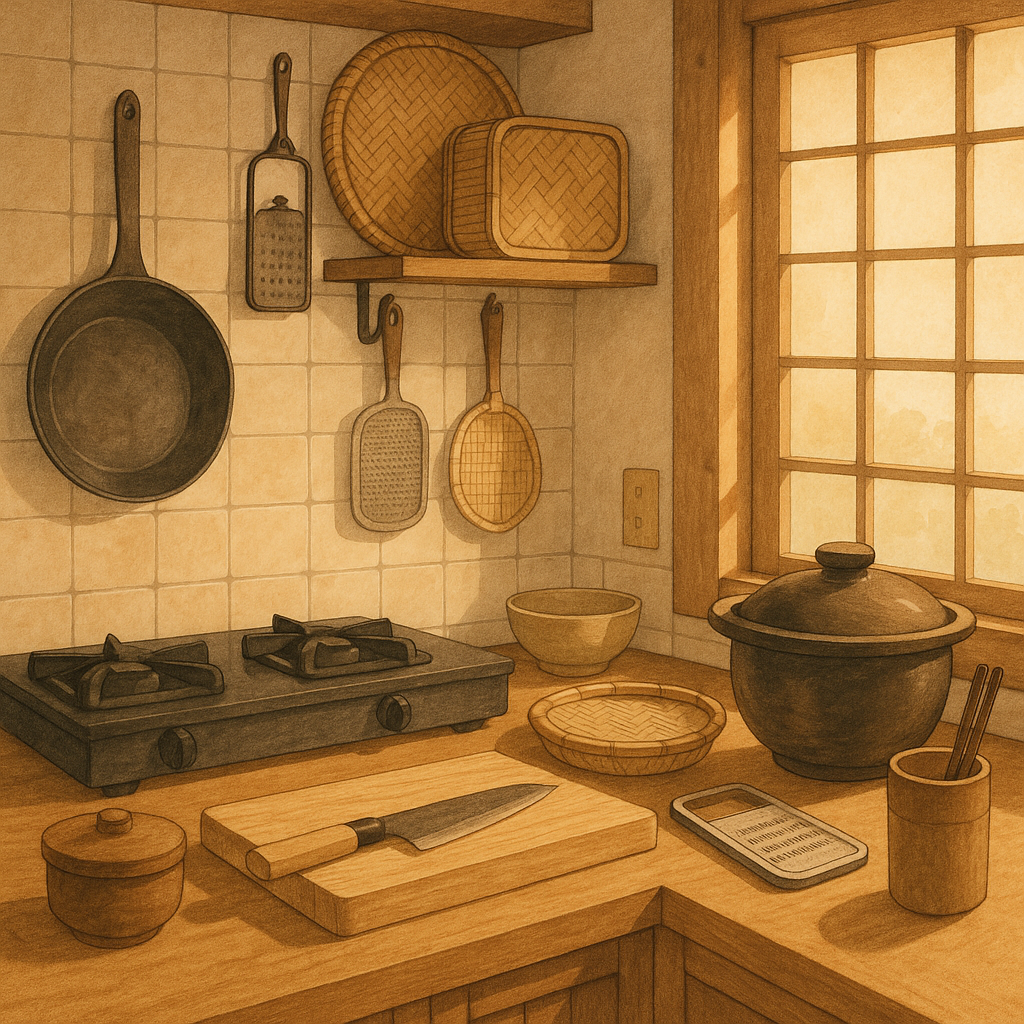
Stand in a typical Tokyo apartment kitchen and you can touch both walls without stretching. The stove has one burner, sometimes two. The sink is barely wide enough to fit a dinner plate sideways.
And yet, somehow, a full meal comes out of that space: grilled fish, simmered vegetables, miso soup, steamed rice. The secret isn’t magic. It’s in the tools themselves, which are built from the ground up to work inside four square meters, not despite them.
Why Japanese Kitchens Got So Small
Japan’s urban housing crunch didn’t happen overnight. Cities like Tokyo and Osaka grew dense over centuries, with land scarcity pushing homes to build upward and inward rather than outward. After the mass apartment developments of the postwar decades, known as danchi, kitchens were often tucked into a single corner of a one-room or 1K layout.
Traditionally, even rural Japanese homes kept cooking areas modest. The daidokoro, or kitchen, was typically a work area near an entrance, organized around a single hearth or a compact wood-and-charcoal stove called a kamado. Efficiency wasn’t a design trend; it was a daily necessity passed down through generations of cooks who never had extra room to spare.
One Tool, Several Jobs
Walk through Kappabashi, Tokyo’s kitchenware district, and you’ll notice how few single-purpose gadgets are on the shelves. A suribachi, the ridged ceramic mortar used for grinding sesame seeds, doubles as a mixing bowl and a serving dish for dressed vegetables. Its wooden pestle, the surikogi, is often carved from sansho wood specifically because the grain holds up under repeated grinding.
The otoshibuta, a drop-lid used in simmered dishes like nikujaga, is another example. It’s a plain wooden disc, slightly smaller than the pot it sits in, but it does the job of holding ingredients submerged, distributing heat evenly, and reducing liquid, all without a dedicated appliance. A single donabe clay pot can go from stovetop to table, then double as serving ware, cutting down on dishes that need washing in a sink barely bigger than a shoebox.
Everything Nests, Stacks, or Hangs
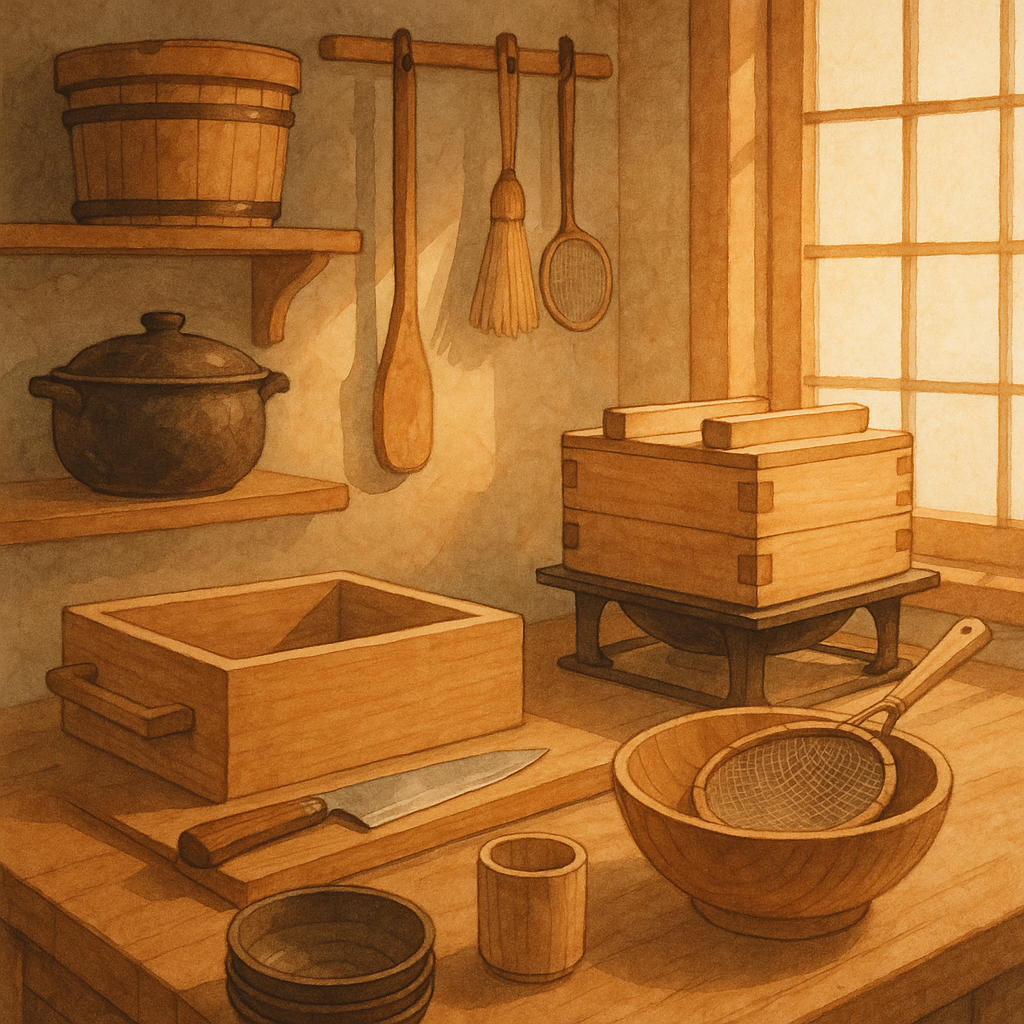
Japanese steamer baskets, made of woven bamboo, are sized to sit directly on top of a wok or pot rather than requiring their own base. Several layers stack on top of each other, so you can steam dumplings, vegetables, and buns simultaneously using the steam from one pot of boiling water below.
Storage follows the same stacking logic outside of cooking too. Nesting mixing bowls, called bousai, tuck into one another by size, and flat bamboo colanders called zaru hang from a single nail rather than taking up shelf space. Even the manaita, the wooden cutting board, is often designed to lean upright in a narrow gap between the counter and the wall, drying vertically instead of lying flat and eating into precious surface area.
The Knife Drawer That Isn’t a Drawer
Most Japanese kitchens skip the bulky knife block entirely. Instead, a single well-balanced knife, often a santoku or nakiri, does the bulk of the work: slicing, dicing, and mincing with one blade instead of five.
That knife is frequently stored on a magnetic strip mounted to the wall above the counter, keeping the one precious surface clear for actual food prep. It’s a small choice, but in a kitchen where counter space might only be sixty centimeters wide, every centimeter reclaimed matters.
Cooking with Fire, Carefully Contained
The portable konro, a small tabletop grill traditionally fueled by charcoal, reflects another piece of this puzzle: heat sources in Japan have long been treated as temporary, moveable things rather than fixed installations. Instead of a large built-in oven, many households rely on a fish grill built directly into the stove, a narrow drawer-like compartment just wide enough for a single mackerel or two rounds of grilled onigiri.

This isn’t a downgrade from a Western oven. It’s a different assumption about what a kitchen needs to do. Rather than roasting a large tray of food at once, the fish grill is built for cooking exactly enough for the people eating that night, no more, no less.
What This Teaches About Small-Space Cooking
The underlying philosophy here isn’t about giving something up. It’s about designing around actual daily use instead of theoretical maximum capacity. A suribachi that also serves food, a lid that doubles as a heat regulator, a knife strip that frees up counter space, these are all decisions made by people who cooked in tight kitchens for generations and refined their tools accordingly.
That’s a useful lesson even for kitchens that aren’t physically small. Fewer tools, chosen for versatility, often mean less clutter and less decision fatigue when you’re actually cooking dinner after a long day.
Try This in Your Own Kitchen
Pick one drawer in your kitchen this week and count how many single-purpose gadgets sit inside it, things like an avocado slicer or an egg separator. Replace two of them with one multi-use tool: a suribachi and pestle if you already grind spices, or a wooden otoshibuta sized to fit your most-used pot.
If you’re near a city with an Asian grocery or import store, look specifically for a bamboo steamer basket that fits the diameter of a pot you already own. Using it for even one meal this week, stacking vegetables over rice as it cooks, will show you exactly how much a single well-chosen tool can replace.
A smaller kitchen thinks clearly when each tool earns its place through many uses, not one.