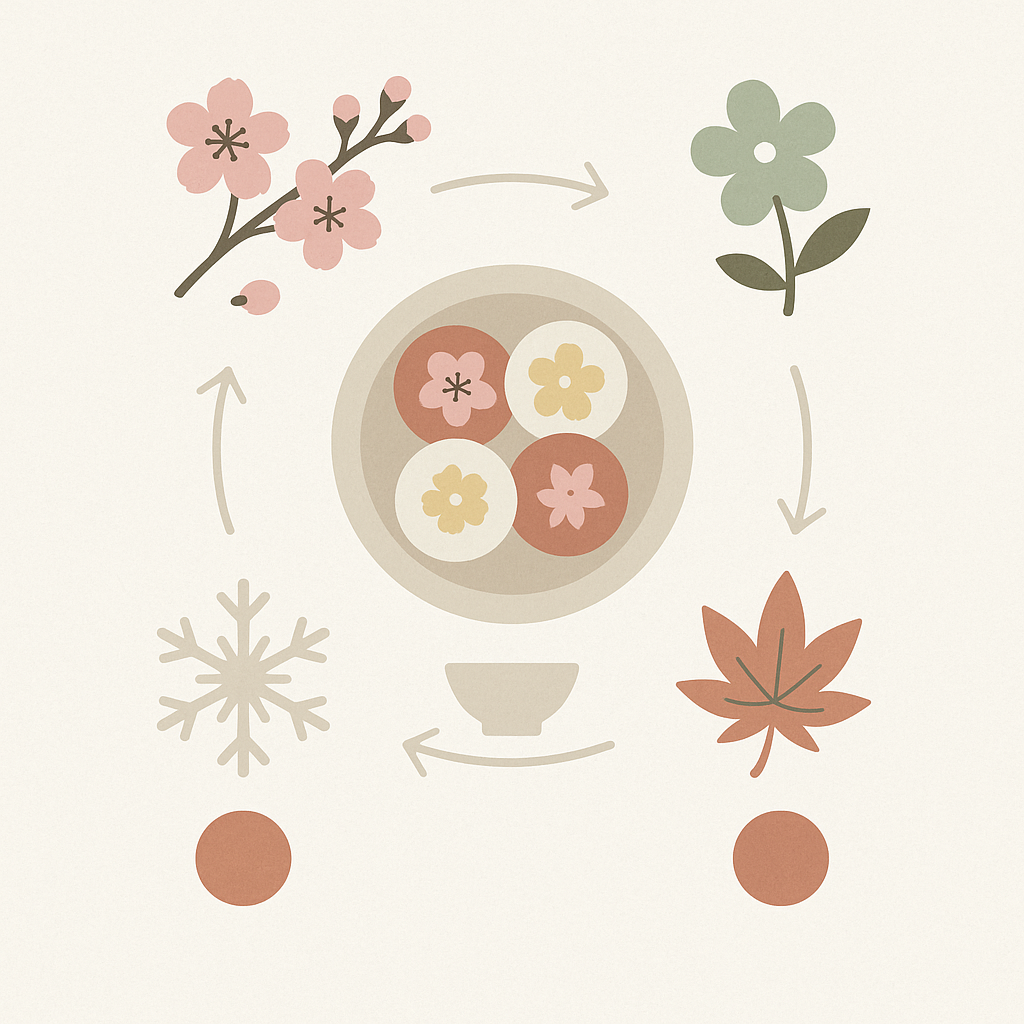
Why did Koreans start eating flowers instead of just admiring them?
The rice cake batter hits a hot, oiled griddle with a soft hiss, and before it firms into shape, someone presses three azalea petals into the pale surface. Not for decoration. The flower is the point—edible, fragrant, and gone in a bite.
This is hwajeon, a pan-fried rice cake studded with real blossoms, and it asks a question most modern cooking has forgotten to ask: what does a season actually taste like?
Traditionally, the practice is tied to agrarian life, where the arrival of a flower meant something specific about the soil, the temperature, the turning point of the year. Eating it was a way of absorbing that information, not just admiring it from a distance.
Origin: Korea, with roots traditionally traced to the Goryeo and Joseon dynasties
Region: Practiced nationwide, with strong associations to rural and royal court traditions
Era: Traditionally linked to seasonal festivals, most notably Samjinnal in early spring
Best known for: Azalea hwajeon in spring, rose hwajeon in summer, chrysanthemum hwajeon in autumn
Core value: Eating in rhythm with the natural calendar rather than against it
How does Samjinnal shape the timing of hwajeon making?
Samjinnal, the third day of the third lunar month, is traditionally regarded as the day swallows return and flowers begin to open in earnest. It marks the unofficial start of hwajeon season.
Women in villages would gather outdoors near streams or under blossoming trees, a custom sometimes called hwajeon-nori, or “flower cake play.” Cooking became inseparable from conversation, music, and simply sitting outside after a long winter indoors.
What’s worth noting is that this wasn’t a solitary kitchen task. It was a social event built around a single fragile ingredient that would only be available for a week or two.
What flowers go into hwajeon across the seasons?
Spring belongs to the azalea, known in Korean as jindallae, whose petals are thin enough to nearly melt into the rice cake once fried. Their color bleeds slightly into the batter, leaving faint pink veins across the surface.
Summer shifts to rose petals, sturdier and more fragrant, standing up better to the heat of a Korean summer kitchen. Their perfume tends to dominate, so cooks traditionally use fewer petals per cake.
By autumn, chrysanthemum takes over, giving rise to gukhwajeon, a version tied closely to the harvest season and to Chuseok-adjacent gatherings. The petals are smaller, more numerous, and scattered rather than pressed whole.
Each flower is not interchangeable. A cook choosing rose in spring or azalea in autumn would be seen as working against the calendar itself.
How is hwajeon actually made, petal by petal?
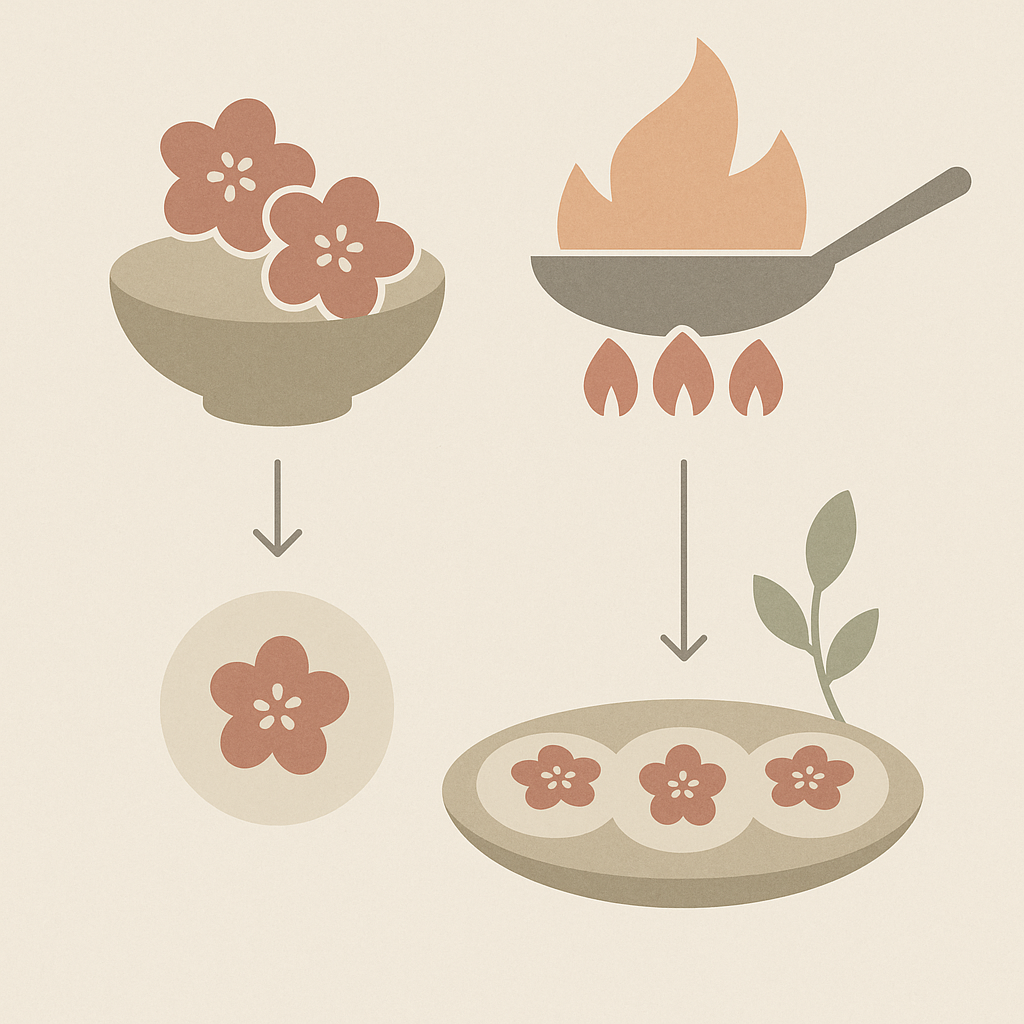
The base is glutinous rice flour, kneaded with hot water into a smooth, slightly sticky dough. Small rounds are flattened by hand, not rolled, so the thickness stays uneven and forgiving.
These discs go onto a lightly oiled pan over low heat, where they turn translucent at the edges within a minute or two. This is the exact moment the petals are pressed in, while the surface is still soft enough to hold them without tearing.

Once the underside sets, the cake is flipped briefly, just long enough to warm the flower without scorching it. A light syrup of honey or sugar water is often drizzled on top afterward, giving the finished cake a faint sheen.
Texture matters as much as appearance here. A properly made hwajeon should be chewy at the center, slightly crisp at the rim, and cool enough that the petal keeps its shape rather than wilting into mush.
Why does hwajeon still matter in modern Korean kitchens?
Contemporary Korean cooking has largely moved toward speed and convenience, which makes hwajeon feel almost deliberately inconvenient by comparison. You cannot rush a flower into bloom, and you cannot substitute one season’s petal for another’s.
Some Korean cafes and traditional tea houses have reintroduced hwajeon, often paired with herbal teas like omija or citron, as a way of slowing down a meal rather than filling a stomach. It functions less as a dessert and more as a small ceremony marking that the season has changed.
There’s also a quieter cultural argument embedded in the dish: that beauty and nourishment don’t have to be separate categories. The flower isn’t garnish sitting on top of the food. It is the food.
That distinction is easy to miss until you’ve actually eaten one and realized the fragrance lingers slightly on your tongue, well after the rice cake itself is gone.
What’s the simplest way to try this at home?
You don’t need a griddle full of rare blossoms to start understanding hwajeon. A small batch of glutinous rice flour, a pan, and a handful of pesticide-free edible flowers—violets or pansies work well outside of Korea—are enough for a first attempt.
Press one petal into one small cake before committing to a full batch. Notice how it changes with heat, how the color shifts, how the smell rises differently than it did raw.
That single experiment tells you more about hwajeon than any description can: it is a dish built entirely around paying attention to a moment that won’t last.
A flower eaten in season says more about time than any calendar hanging on the wall.