The Voice That Cracks on Purpose
Somewhere in the mountains of southwestern Korea, a young singer once stood facing a waterfall and screamed a single phrase over and over until blood specks appeared at the edges of his throat. He wasn’t in danger. He was chasing a sound called deukeum — a hoarse, weathered tone that only comes after the voice has been broken down and rebuilt through sheer repetition.
That cracked, gravelly texture is the whole point. In pansori, a beautiful voice is not the goal; a voice that has survived something is.
This is the paradox at the center of Korean pansori: a vocal tradition where technical perfection matters less than the audible evidence of struggle. Understanding that one detail changes how everything else about the art form makes sense.
Where This Sound Began
Pansori traditionally traces back to the 17th century, emerging among itinerant performers and shamans in the Jeolla region of southwestern Korea. Its roots reach into ritual narrative songs sung during shamanistic rites (gut), where a single voice would carry a spirit’s story to a gathered crowd.
Over time, these narrative songs left the ritual space and entered marketplaces, village festivals, and eventually the homes of the yangban aristocracy. By the 19th century, pansori had gained enough prestige to be performed for royal audiences, even as it kept its rougher, folk origins intact.
Of the many stories once in circulation, traditionally only five madang (full-length narratives) survive complete today: Chunhyangga, Simcheongga, Heungbuga, Jeokbyeokga, and Sugungga. Each one takes hours to perform in full — a fact that alone tells you this was never meant to be background music.
One Singer, One Drum, One Afternoon
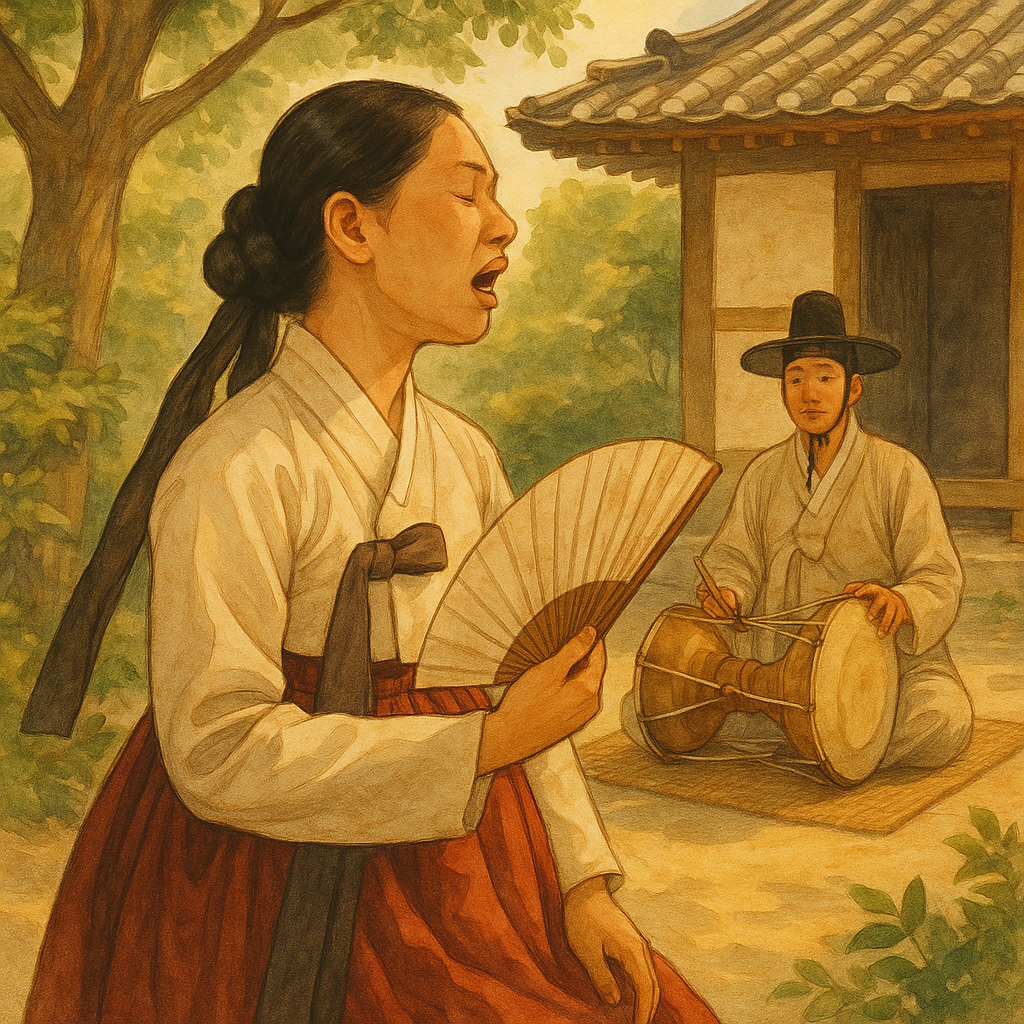
Strip away everything ornamental and pansori reduces to two people: a sorikkun (singer) and a gosu (drummer playing the barrel-shaped buk). No orchestra, no stage set, sometimes not even a proper stage — just a mat, a fan in the singer’s hand, and a drum.
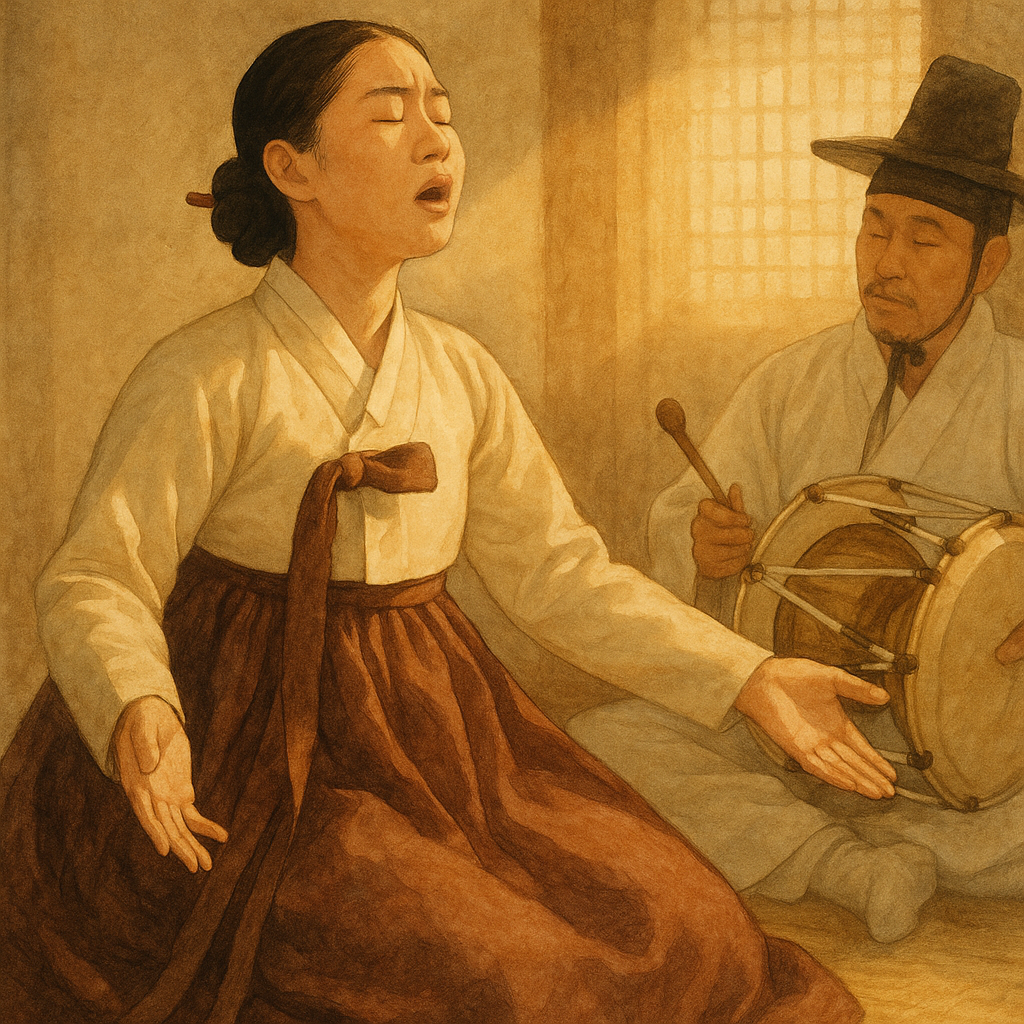
A full madang can run anywhere from three to eight hours, performed in a single sitting with only brief pauses. The singer alternates between singing and speaking, switching characters and narrating action, all while the drummer tracks rhythm patterns (jangdan) that shift with the emotional temperature of the story.
There’s something almost defiant about this minimalism. In an era of elaborate court music and ensemble performance, pansori insisted that one trained voice and one drum were enough to hold a room for an entire afternoon.
The Audience Is Part of the Band
Here’s what surprises most first-time listeners: the audience is expected to shout back. Interjections called chuimsae — words like “eol씨구,” “jota,” or “geureochi” — are called out at key moments, not as interruptions but as required participation.
A silent audience is considered a failed performance, not a respectful one. The drummer often leads these shouts too, functioning less like a metronome and more like a conversation partner egging the singer forward.
This changes the whole dynamic. Pansori was never a one-way transmission from performer to passive listener — it was built as a call-and-response event where the room’s energy shapes how the story unfolds that particular day.
Three Ways to Tell a Story at Once
A single pansori performance actually layers three distinct techniques. There’s aniri, the spoken narration that moves the plot along; sori, the sung passages that carry emotional weight; and ballim, the physical gesture and fan movement that acts out scenes.

A singer might narrate a character crossing a river in aniri, then shift into sori to voice that character’s grief, then snap open a fan to mimic a sail or a sword. Watching a skilled performer move between these three modes without any visible seam is where the craft becomes visible.
It’s closer to a one-person theatrical production than a concert, which explains why training a sorikkun traditionally takes over a decade before they’re considered ready to perform a full madang alone.
Where to Hear It Now
Pansori was recognized by UNESCO as an Intangible Cultural Heritage in 2003, a designation that helped fund preservation efforts as fewer young performers were choosing the decade-long training path. Today, the National Gugak Center in Seoul hosts regular performances, and several conservatories keep the five surviving madang alive through formal instruction.
Contemporary artists have also started pulling pansori structures into film scores and experimental theater, introducing the vocal style to audiences who’d never seek out a traditional performance on their own. The cracked voice that once echoed off a waterfall now shows up, oddly enough, in modern Korean cinema soundtracks.
None of this softened the art form’s core demand, though. Whether performed in a royal court two centuries ago or a concert hall this month, pansori still asks listeners to lean in, not sit back.
Try This Today
Search for a recording of Chunhyangga on the National Gugak Center’s online archive and listen to just the first fifteen minutes — no video, audio only. Notice the exact moment the singer’s voice roughens, and pay attention to when the drummer’s shouts land.
That’s the whole tradition in miniature: one voice, one drum, and a story that only exists because someone insisted on telling it out loud.
A voice worth hearing is one that has been broken and rebuilt by the telling itself.