Ten Thousand Cells Before a Single Drop of Color
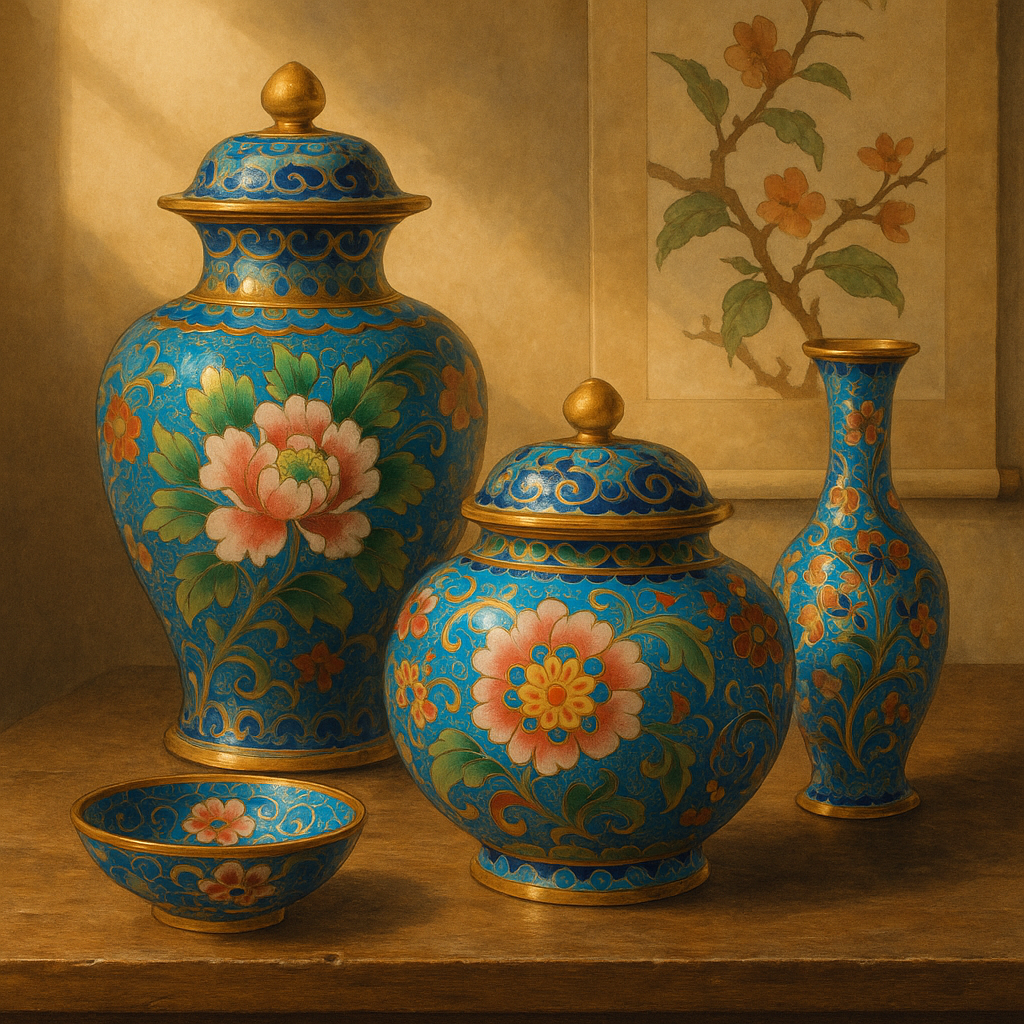
A cloisonné vase the size of a dinner plate can hold more than ten thousand tiny copper cells, each one bent from wire by hand before any enamel ever touches it. The artisan works with tweezers and a small hook, pressing thin metal ribbons into curves no wider than a grain of rice. Only after every cell sits soldered into place does the color work even begin.
This is the part most people never notice when admiring a finished piece behind museum glass. The wirework alone can take weeks, and a single crooked line means unpicking an entire section and starting over.
Where the Name “Jingtailan” Comes From
Chinese cloisonné is traditionally known as jingtailan, a name tied to the Jingtai reign of the Ming dynasty in the fifteenth century, when the technique reportedly reached a level of refinement prized by the imperial court. The craft itself likely arrived earlier, carried along trade routes from the Byzantine world through Central Asia, but it was under Ming patronage that it developed a distinctly Chinese palette and pattern language.
Deep cobalt blue became so associated with this period that the craft’s name translates roughly to “Jingtai blue.” Workshops in Beijing produced vessels for temples, palace interiors, and diplomatic gifts, and that link to imperial taste lingered for centuries afterward, long past the Jingtai era itself.
Building Color Cell by Cell
Once the wire framework is soldered onto a copper body, enamel paste goes into each cell with a small spatula, one color at a time. The paste comes from mineral pigments mixed with glass powder, and the piece then goes into a kiln, where the enamel shrinks as it fires. Because of that shrinkage, the filling and firing steps repeat several times before every cell sits flush with its wire border.

After the final firing, the surface is ground down with abrasive stones until wires and enamel are level, then exposed metal edges are gilded. What looks rough and pitted straight out of the kiln comes out glassy and smooth, closer to stained glass pressed flat onto metal than anything painted.
Colors That Carried Meaning
Turquoise and cobalt dominate older pieces partly because those pigments held up best at firing temperature, not purely for symbolic reasons. Even so, certain colors picked up meaning over generations: yellow tied to imperial authority, red to celebration, lotus motifs to Buddhist ideas of purity.
Dragon and phoenix patterns marked pieces destined for court use, while floral scrollwork covered the incense burners and vases sold into merchant households. Looking at the pattern alone, a buyer could usually guess who the object was made for.
A Craft That Nearly Disappeared, Then Didn’t
By the early twentieth century, cloisonné production had shrunk to a handful of workshops as demand shifted and skilled wire-benders grew scarce. Beijing enamel factories established later in the century trained new generations of artisans, keeping the wire-laying and enamel-filling techniques from vanishing entirely.

Working studios in Beijing today still follow a process that looks almost identical to descriptions from centuries ago, aside from electric kilns replacing wood-fired ones. Some contemporary artists have started pushing the technique toward abstract forms, moving away from the traditional dragon and lotus vocabulary altogether.
What to Look For If You Ever Hold One
Pick up a genuine piece and the weight tells you something immediately: a solid copper body, not a thin stamped shell that rings hollow. Run a finger lightly across the surface and you should feel the wire ridges just barely, since well-finished work polishes them nearly flush with the enamel.
Check the underside too. Careful, older work often shows a cleanly enameled or gilded base rather than raw, unfinished metal left exposed.
If any of this has you curious, skip the gift shop reproductions for now. Search your local or nearest major museum’s online collection for “cloisonné” or “jingtailan,” zoom into the high-resolution photos, and trace one wire cell from edge to edge with your eyes. It’s the fastest way to see, up close, exactly how many decisions went into a single square inch.
Beauty here is not applied to metal — it is built into it, wire by wire, fire by fire.